Chicago Tops Orkin’s 2026 Bed Bug Cities List Again as Vacation Hot Spots Climb the Ranks
Newcomers like Tampa and Myrtle Beach reinforce importance of pest preparedness ahead of busy travel season
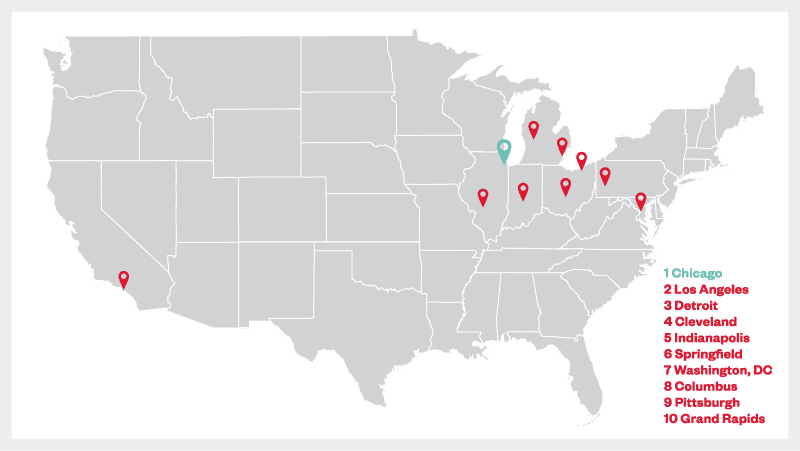
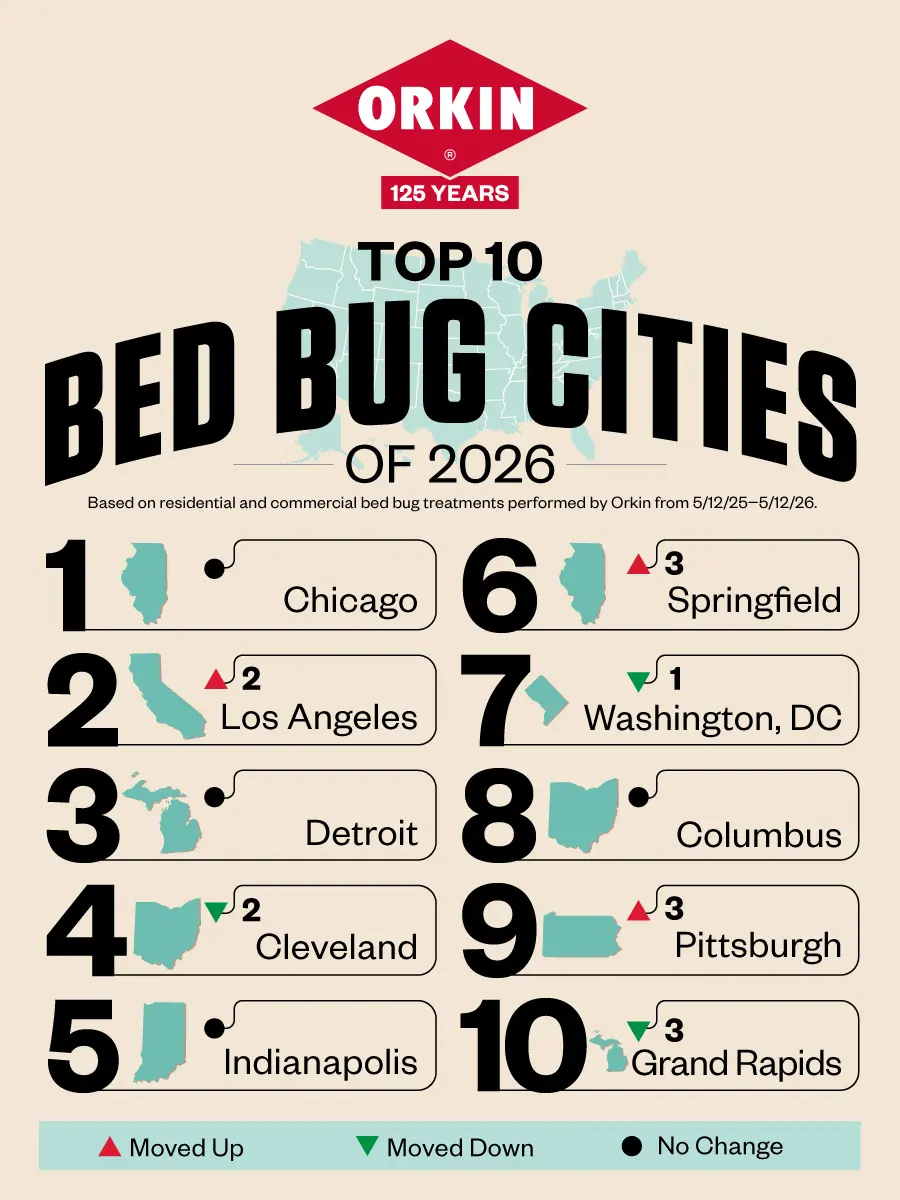
ATLANTA (July 7, 2026) – As summer travel ramps up, Orkin’s 2026 Bed Bug Cities List highlights several destinations experiencing increased bed bug activity, including the addition of high-growth vacation destinations Tampa and Myrtle Beach. Chicago retained its position as the nation’s city with the highest rate of bed bug infestations, with Los Angeles, Detroit, Cleveland and Indianapolis rounding out the top five.
Ohio is the most represented state on this year’s list with six cities ranking in the top 50, reinforcing a broader trend of Midwestern cities appearing among the nation’s bed bug hotspots. While bed bugs can be found anywhere people live and travel, densely populated cities and environments with high resident and visitor turnover, such as apartments, dormitories and hotels, can create more opportunities for the pests to spread simply due to the movement of high numbers of people.
Many cities where bed bug activity has been the worst in the last year are also some of the country’s most popular travel destinations and are expected to welcome large numbers of visitors for major concerts, festivals and sporting events throughout the summer and beyond. As visitors move through hotels and other accommodations, Orkin encourages vigilance against bed bugs, which can hitchhike home in luggage and other personal belongings. Knowing how to inspect hotel rooms and luggage before unpacking can help prevent an unwanted souvenir from making the trip home.
This year’s rankings are based on treatment data from metro areas where Orkin performed the most bed bug treatments from May 12, 2025, to May 12, 2026. The list includes both residential and commercial bed bug treatments.
-
Chicago
-
Los Angeles (+2)
-
Detroit
-
Cleveland, Ohio (-2)
-
Indianapolis
-
Springfield, Ill. (+3)
-
Washington, D.C. (-1)
-
Columbus, Ohio
-
Pittsburgh (+3)
-
Grand Rapids, Mich. (-3)
-
Denver (+3)
-
New York (+3)
-
Milwaukee (-3)
-
Baltimore (-3)
-
Cincinnati (-2)
-
Raleigh, N.C. (+7)
-
St. Louis (+1)
-
Charleston, W. Va. (+1)
-
Davenport, Iowa (+2)
-
Flint, Mich. (-4)
-
Atlanta (-4)
-
Philadelphia (+3)
-
Dallas (+1)
-
Oklahoma City, Okla. (+10)
-
Cedar Rapids, Iowa (-5)
-
Hartford, Conn. (+9)
-
Charlotte, N.C. (+5)
-
Peoria, Ill. (+5)
-
South Bend, Ind. (-2)
-
Seattle (+9)
-
Richmond, Va. (-3)
-
Youngstown, Ohio (-10)
-
Greenville, S.C. (-3)
-
Nashville (+10)
-
Buffalo (+2)
-
Omaha, Neb. (-10)
-
San Francisco (+5)
-
Dayton, Ohio (+5)
-
Norfolk, Va. (-8)
-
Knoxville, Tenn. (-11)
-
San Diego (+8)
-
Toledo, Ohio (-6)
-
Las Vegas (+3)
-
Syracuse, N.Y. (+6)
-
Fort Wayne, Ind. (-7)
-
Tampa, Fla. (new to top 50)
-
Miami (-6)
-
Minneapolis (-8)
-
Kansas City, Mo. (new to top 50)
-
Myrtle Beach, S.C. (new to top 50)
“Travel season brings excitement, but it also makes awareness especially important,” said Dr. Shannon Sked, Orkin entomologist and National Technical Director. “Bed bugs are resilient pests that can be difficult to control once introduced into a home or hotel room, and they are skilled at hiding in cracks, crevices and personal belongings. A quick inspection of hotels or short-term rentals while traveling, or belongings before unpacking at home, can help travelers reduce the chance of bringing bed bugs home.”
Several cities saw notable shifts this year, including Nashville and Oklahoma City, which each climbed 10 spots, while Youngstown, Omaha and Knoxville recorded some of the largest declines. These year-over-year changes highlight the persistent and evolving nature of bed bug activity across the nation.
Know before you go: Bed bug prevention tips
Bed bugs are notoriously difficult to detect because they are tiny. Adults measure just 3/16 inch long, while immature nymphs are even smaller, and their flattened bodies allow them to hide in hard-to-spot locations. Primarily nocturnal, these blood-feeding pests often target sleeping humans and can easily spread by hitchhiking on luggage, purses and other personal belongings.
Because bed bugs can remain hidden for weeks before being discovered, travelers may unknowingly bring them home and not realize until long after a trip has ended. Orkin recommends the following steps to help prevent travelers from accidentally spreading bed bugs in 2026.
During travel, remember the acronym S.L.E.E.P. to inspect for bed bugs:
-
Search the room for signs of infestation, looking for bed bugs, which are small, flat, oval-shaped insects that are reddish-brown and about the size of an apple seed as adults but almost translucently cream colored as nymphs. Other signs of bed bugs include ink-like speckled stains on fabrics, shed exoskeletons around crevices of beds and furniture and a sweet, musty smell.
-
Lift sheets, curtains and cushions to check for bed bugs or signs of bed bugs before settling in.
-
Elevate your luggage onto racks and keep it away from the bed or other furniture.
-
Examine your luggage carefully while repacking and again when you return home.
-
Place all dryer-safe clothing from your luggage in the dryer for 30 to 45 minutes at the highest heat setting upon returning home.
“Changes in the rankings can be influenced by a variety of factors such as travel trends, treatment resistance strains and educational campaigns to the public. Still, one thing remains constant: bed bugs continue to be a concern in communities across the United States, regardless of socioeconomic demographics, sanitation facilities maintenance levels. Because infestations rarely resolve on their own, addressing signs of bed bugs early can help limit their spread and make treatment more effective,” said Sked. “If there's any sign of bed bugs, it’s important to involve a trained professional, like the Pros at Orkin, right away.”
With 125 years of experience managing bed bugs and access to state-of-the-art tools and products, Orkin is well-equipped to assess bed bug problems, provide training for hospitality teams and implement strategic treatment plans to help rid homes and businesses of infestations while delivering lasting protection.
For more information about bed bug prevention and bed bug control, visit Orkin.com.
About Orkin, LLC
Founded in 1901, Atlanta-based Orkin is an industry leader in essential pest control services and protection against termite damage, rodents and insects. Orkin has 358 owned and operated branch offices and 47 franchises in the U.S. The company also has international franchises and subsidiaries in Canada, Europe, Central America, South America, the Caribbean, the Middle East, Asia, the Mediterranean, Africa, and Mexico. Orkin is committed to protecting public health by helping prevent and control pests as well as educating consumers on the potential health risks posed by these pests. As such, since 2020, Orkin has partnered with the American Red Cross® to inform the public about the health threats of mosquitoes while boosting our country’s blood supply through monetary contributions and blood donations. Orkin is committed to hiring the world’s best to help protect the places where we live, work and play. Learn more about careers at Orkin here. Visit Orkin.com for additional information. Orkin is a wholly-owned subsidiary of Rollins Inc. (NYSE: ROL). Follow us on Facebook, Instagram, TikTok and LinkedIn.