Help Keep Pests Away from Your Summer BBQ This Season
Key Takeaways
-
Pests can quickly ruin your summer BBQ, but preventative backyard pest control measures can keep them at bay.
-
Simple steps like covering food, eliminating standing water, and using natural repellents can make a big difference.
-
Non-toxic solutions ensure your family, pets, and guests stay safe while you enjoy a pest-free gathering.
-
Consistent pest control routines can prevent infestations before they start.
-
Protect your summer fun with effective, affordable strategies tailored for your home and outdoor space.
Summer BBQs are an all-inclusive resort for pests. Help keep them away through backyard pest prevention by covering food, sealing trash, using fans, and scheduling an Orkin Pro visit before your guests arrive.
You fire up the grill, the burgers sizzle, and the guests arrive, closely followed by uninvited bugs. Pests do not crash your cookout by accident; they are drawn to the warmth, food, and sugary drinks. Here is how to identify what is attracting the six most common backyard pests and how to keep them off the guest list.
Why Do Summer BBQs Attract So Many Pests?
Peak pest activity coincides almost perfectly with peak grilling season. Mid- to late summer is classified as "High Season" for pest activity, mosquitoes, ants, wasps, and other warm-weather insects are at their most active precisely when people spend the most time outdoors.
Warm temperatures accelerate insect life cycles and increase feeding activity. Add an outdoor meal into the mix, with grilled proteins, sugary beverages, and open trash bins, and you've essentially rung the dinner bell for every bug in a half-mile radius. Understanding what attracts each specific pest is the first step toward keeping your cookout enjoyable for the right crowd.
What Attracts Mosquitoes to a Cookout?
Mosquitoes are relentless, and they have biology on their side. Mosquitoes can detect carbon dioxide from up to 150 feet away. Every person at your BBQ is exhaling a continuous stream of it. Once mosquitoes close in, they use heat, sweat, and body odor to zero in on their preferred target.
A few other things work in their favor at outdoor gatherings:
-
Lactic acid: Physical activity, think lawn games and dancing, causes the body to secrete lactic acid through the skin, which mosquitoes find irresistible.
-
Alcohol: Drinking beer or cocktails increases ethanol in your breath and raises body temperature, both of which make you more attractive to mosquitoes.
-
Dark clothing: Dark-colored garments retain more heat than lighter ones, making wearers a bigger target.
-
Standing water: Any container holding even a small amount of water, a cooler lid, a forgotten bucket, a clogged gutter nearby, can become a mosquito breeding ground.
Mosquitoes are also weak fliers, which is one of the most underrated facts about them. A steady breeze or an outdoor fan can disrupt their flight patterns significantly.
What Attracts Flies to a BBQ?
Flies are equal-opportunity opportunists and are drawn to food odors—particularly grilled meats and sugary drinks. The combination of warmth, moisture, and the smell of cooking meat is essentially irresistible to them.
House flies are also strongly attracted to garbage. A trash bin left open near the food table creates a two-for-one attraction: flies come for the garbage and stay for the burgers. Grease buildup on an uncleaned grill adds another draw, as the lingering scent of old cooking residue signals an easy meal.
Flies are more active in warm weather, and they can contaminate food quickly upon landing. Covering dishes between servings isn't just about keeping things warm, it's a genuine health protection measure.
Why Do Ants Show Up at Outdoor Gatherings?
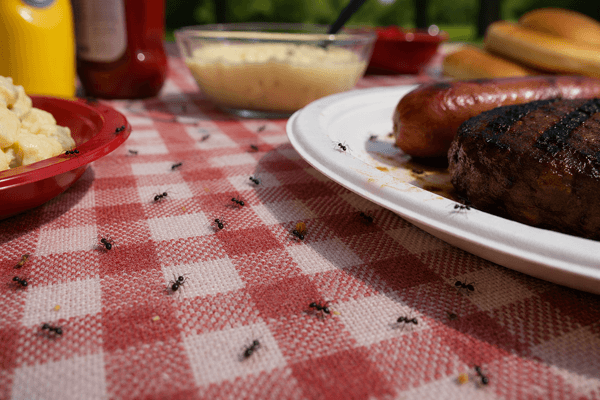
Ants are master foragers, and your cookout table is essentially a treasure map to them. They're attracted to both sweet and protein-rich foods, sugar spills, fruit salad, grilled meats, and even greasy grill grates all register as valuable resources.
A single ant locates food and immediately lays a pheromone trail for thousands of others to follow. What starts as one ant investigating a spilled lemonade can become a column of hundreds within minutes.
Ants build their colonies in lawns, under patio stones, and beneath deck boards, often just feet from where you're setting up your folding chairs. Crumbs and small spills on the grass or ground near your dining area are all the invitation they need.
What Attracts Wasps and Bees to a Cookout?
Wasps are the party guests nobody asked for and nobody knows how to get rid of politely. They're drawn to two main food groups at BBQs: proteins and sugars. That means grilled chicken and soda are equally appealing. Sugary drinks, juice, soda, and sweetened cocktails, are especially attractive to wasps and bees.
Unlike bees, which are primarily interested in flower nectar and become aggressive only when threatened, yellow jackets (a common type of wasp) are genuinely aggressive foragers. They'll hover over open cans of soda, investigate every uncovered plate, and get agitated when swatted at, which is exactly when stings happen.
Wasp and hornet nests grow larger as summer progresses. A nest that was the size of a golf ball in May could be a grapefruit by August. Checking for nests under eaves, decks, and in nearby trees before hosting a gathering is a smart precautionary step.
What Draws Cockroaches to a Backyard BBQ?
Cockroaches at a backyard cookout might seem surprising, but it's more common than most people realize. Cockroach activity surges in warm, humid conditions—exactly the conditions of a summer evening BBQ. Grease, food residue, and moisture around outdoor grills create an ideal environment for roaches to investigate.
In very hot weather, cockroaches that typically stay outdoors may become more active near food sources. An unclean grill with grease buildup and food scraps, combined with open garbage and spilled drinks, creates the kind of conditions that attract cockroaches from surrounding areas. Cleaning the grill thoroughly before and after use, and keeping the area around it free of debris, goes a long way toward making your outdoor setup less appealing to them.
What Are the Top Tips for Backyard Pest Prevention?
1. Eliminate Standing Water Beforehand
Walk your yard before the party and tip out any containers holding water—buckets, planters, cooler lids, birdbaths, and gutters. Removing standing water is the single most effective step for reducing mosquito activity around your gathering. Even small amounts of stagnant water can support mosquito breeding.
2. Cover Food and Beverages at All Times
Keep food covered with mesh tents or aluminum foil between servings. This blocks flies from landing and contaminating dishes, prevents wasps from investigating open plates, and cuts off the food odors that attract ants. Beverages deserve the same treatment, use lids or drink covers to keep wasps and flies out of cups and cans.
3. Set Up Fans in the Dining and Seating Area
Fans serve double duty: they keep guests comfortable and create air currents that interfere with flying insects. Mosquitoes, flies, and gnats are all weak fliers that struggle against consistent airflow. Even a couple of portable fans pointed toward the seating area can meaningfully reduce pest pressure throughout the event.
4. Keep Trash Sealed and Away from Dining Areas
Position trash bins at a distance from your food table and grill, and use bins with tight-fitting lids. Garbage is a primary attractant for flies, wasps, and cockroaches. Emptying bins regularly throughout the event prevents overflow, which is when things really get out of hand.
5. Clean the Grill Before and After Use
Old grease and food residue on a neglected grill are a beacon for flies, cockroaches, wasps, and ants. Scrub the grill grates before lighting up, and give everything a thorough cleaning once the grill has cooled after the event. A clean grill is also just a better grill, so this one is really a win on all counts.
Pre-Party BBQ Pest-Prevention Checklist
Run through this checklist before guests arrive:
✅ Empty all standing water in the yard—buckets, planters, birdbaths, and gutters
✅ Tidy the landscaping—mow the lawn, trim shrubs, and remove overgrown vegetation where pests hide
✅ Clean outdoor tables and the grill thoroughly, removing any grease or food residue
✅ Cover all food and keep it covered between servings
✅ Keep beverages covered with lids, cups, or drink covers
✅ Place trash bins away from the dining area with tight-fitting lids
✅ Have EPA-registered insect repellent available for guests—look for products containing DEET or oil of lemon eucalyptus
✅ Schedule a professional pest control visit before the party—ideally a week or more in advance, to give treatments time to take effect
Don't Leave Pest Prevention to Chance
A checklist gets you far. But if you're dealing with a persistent mosquito problem, an established wasp nest nearby, or signs of cockroach activity around your outdoor space, the most effective move is to call in a professional before the party—not after.
Orkin Pros are trained to assess your specific yard, identify active pest threats, and apply targeted treatments based on both the pest type and your geographic zone. With over 125 years in business and several locations across the country, Orkin exterminators bring science-backed solutions to your backyard, so you can focus on the potato salad and leave the pest management to the experts. And with a money-back guarantee and free touch-up visits, you can host knowing you're protected.
The best BBQ is a bug-free one. Schedule a visit with your local Orkin Pro before your next outdoor gathering and take one very important task off your plate.