Pest Control for Museums: How to Help Protect Collections from Insects and Rodents
Key Takeaways
-
Integrated Pest Management (IPM) uses a mix of non-chemical and chemical approaches to help museums manage and protect against pests.
-
Several pests — including many types of moths, beetles, termites, silverfish and rodents — can damage paper, books, textiles, taxidermy, wood and other collection materials.
-
Storage rooms, display areas, receiving spaces and quiet locations near doors, windows, drains and walls should be monitored closely.
-
New acquisitions, loans, packing materials and returned objects should be inspected and isolated before entering collection areas.
-
Treatment methods must be selected according to the materials involved and coordinated with conservation professionals.
Museum pest control is a specialized form of Integrated Pest Management (IPM) designed to help protect collections, archives, exhibits and historic artifacts from insects, rodents and other pests. Museum IPM programs combine monitoring, documentation, exclusion, sanitation and targeted treatments to reduce pest pressure while supporting long-term collection preservation.
From antique textiles and wooden artifacts to rare books and taxidermy, museum collections often contain materials that pests can use as food or shelter. A proactive pest management strategy helps identify vulnerabilities early, allowing museums to respond before pests threaten valuable collections.
What Makes Museum Pest Control Different?
Museum pest control differs from traditional commercial pest control because helping to protect collections often requires preventive strategies that account for sensitive materials, historic buildings and conservation practices. The goal is to help manage pests while minimizing risk to irreplaceable artifacts.
While many commercial facility managers focus primarily on operations and their property, museums must also help preserve irreplaceable collections. Pest management decisions may impact artifacts that cannot be repaired or replaced.
Pests can be introduced through:
-
New acquisitions
-
Traveling exhibits
-
Loaned collections
-
Packing materials
-
Vendors and deliveries
-
Visitor traffic and staff
-
Building openings and structural gaps
As a result, museum pest prevention often involves close collaboration among curators, conservators, facilities personnel and pest management professionals.
What Is Museum Integrated Pest Management (IPM)?
Museum Integrated Pest Management (IPM) is a systematic approach to preventing, monitoring and managing pests while minimizing risks to artifacts, collections and exhibits.
Rather than relying primarily on pesticides, IPM focuses on:
-
Routine inspection and monitoring
-
Pest identification
-
Trend analysis and documentation
-
Building exclusion and maintenance
-
Environmental management
-
Good housekeeping and sanitation practices
-
Targeted treatments when necessary
The goal is to identify pest activity early and help address the conditions attracting them before an infestation becomes widespread.
Which Museum Collections Are Most Vulnerable to Pests?
Different pests target different collection materials. Understanding which materials are at risk can help guide monitoring efforts.
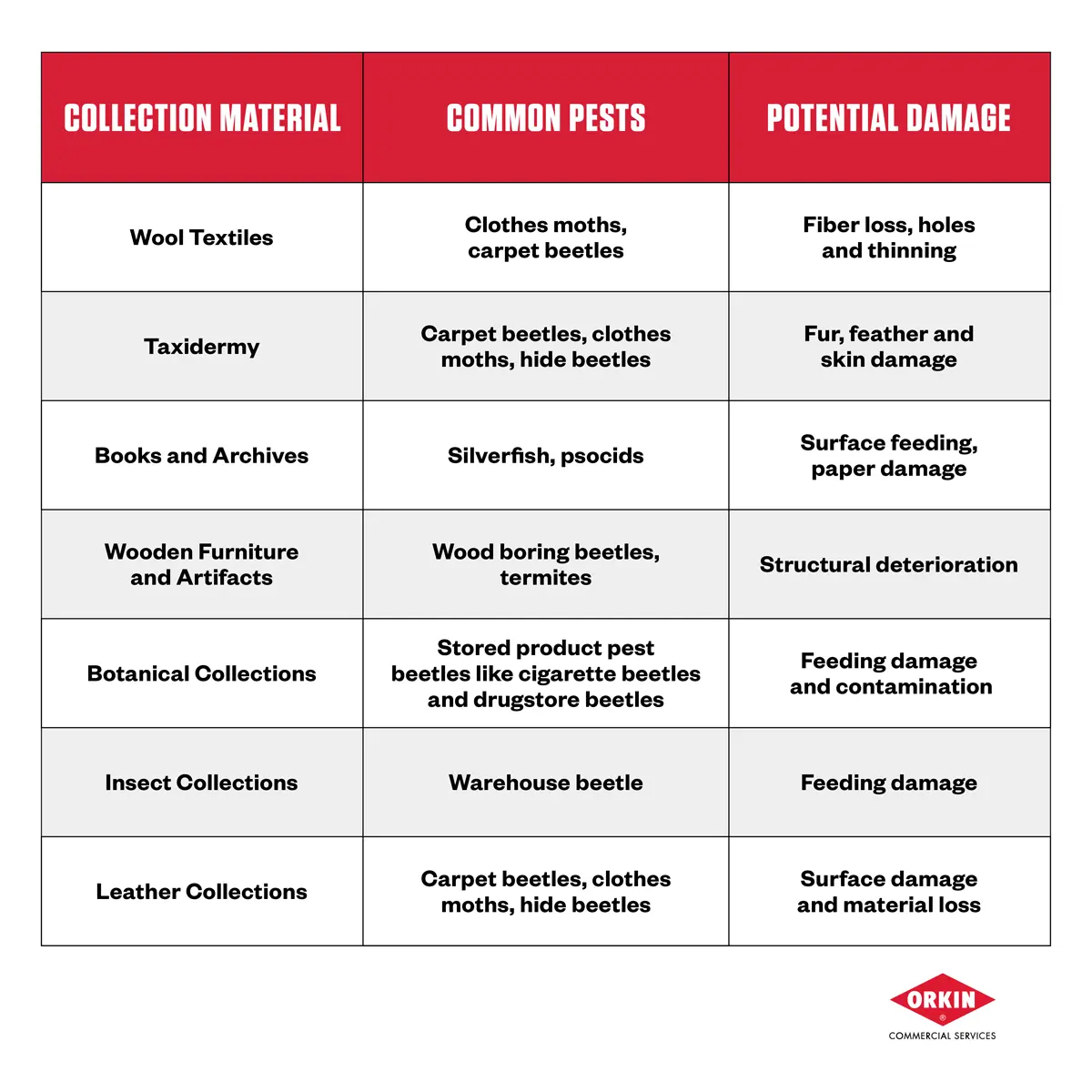
Objects made from wool, silk, fur, feathers, paper, leather, wood and dried plant materials often require closer monitoring because they can serve as food sources for collection pests.
Which Pests Commonly Threaten Museums?
The most common museum pests vary by the collection, building and local environment. Some pests damage artifacts directly, while others contaminate storage areas or create structural concerns around the property. Common museum pests include:
-
Psocids (commonly known as booklice)
-
Furniture beetles (and other wood boring beetles)
Not every insect that enters a museum is a collection pest. For example, flies or spiders may be incidental rather than directly harmful to objects, but their presence can still signal conditions that may need to be addressed. Correct identification can help museums determine what the pest eats, where it breeds and which collections may be at risk, while informing appropriate prevention and management measures.
Where Should Museum Teams Check First for Pests?
Museum teams should be aware of areas that may provide pests with access, food, moisture or an opportunity to remain undisturbed.
These areas should be discussed with and evaluated by your pest control provider, including:
-
Collections storage rooms
-
Archive and library storage areas
-
Floors and wall edges
-
Doorways and windows
-
Receiving and unpacking areas
-
Mechanical rooms
-
Landscaping and vegetation immediately surrounding the building
What Are the Signs of Museum Pest Activity?
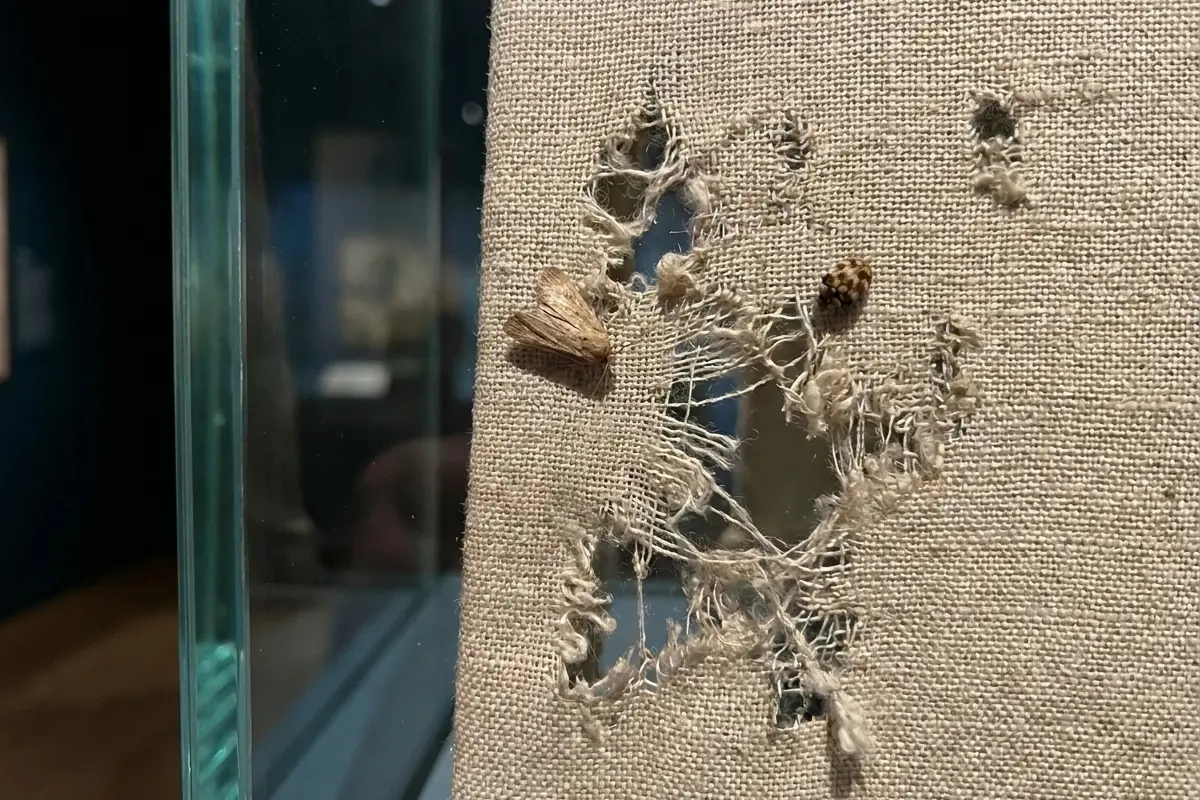
Early identification can help limit the amount of collection material affected by pests and make it easier to locate the source. Watch for:
-
Thinning in textiles
-
Bald patches on fur or feathers
-
Webbing, cocoons or visible larvae
-
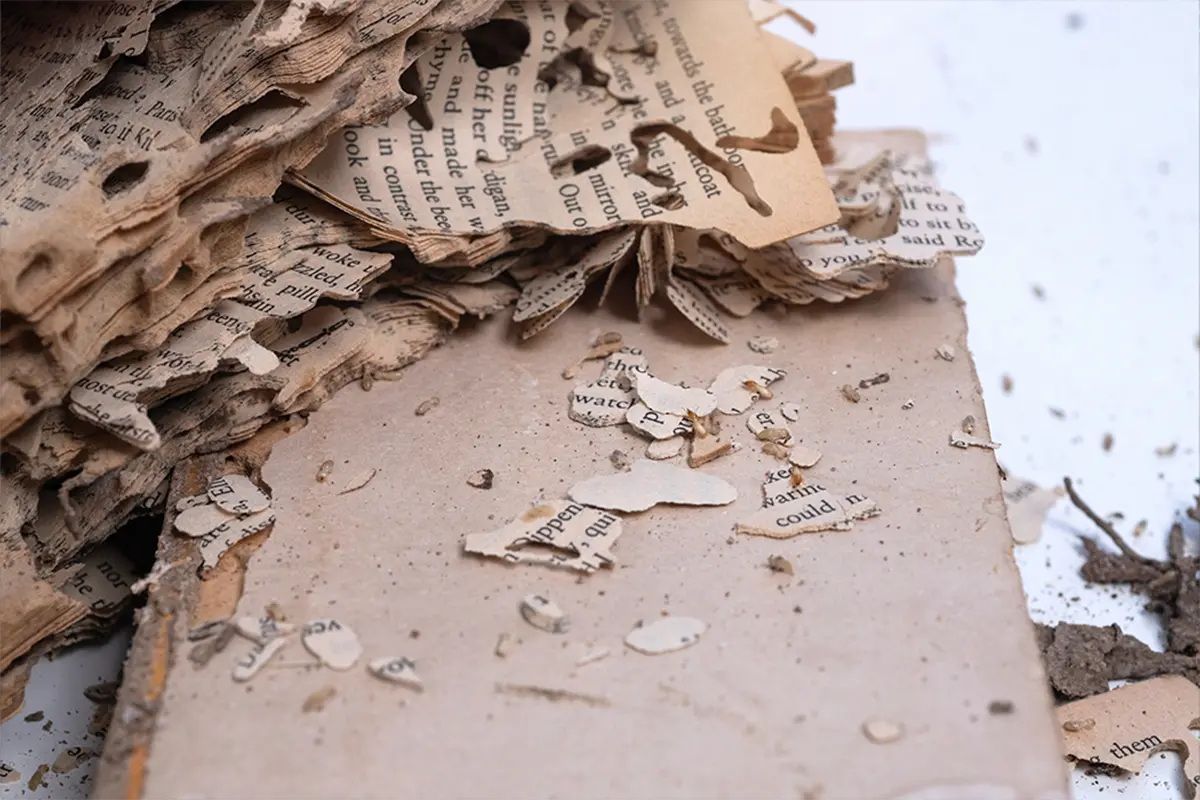
Frass (pest waste or droppings) around or beneath an object
-
Fine wood powder below furniture, frames or structural wood
-
Holes in wood or other damage created by wood-infesting insects
-
Gnaw marks, rodent droppings or nesting material
-
Pest activity concentrated around a particular case, cabinet or storage zone
Museum Pest Control Checklist
Use this museum pest control checklist to identify vulnerabilities and areas of concern to discuss with your pest control provider. Your provider can help develop and implement an IPM program based on your facility, collections and pest risks.
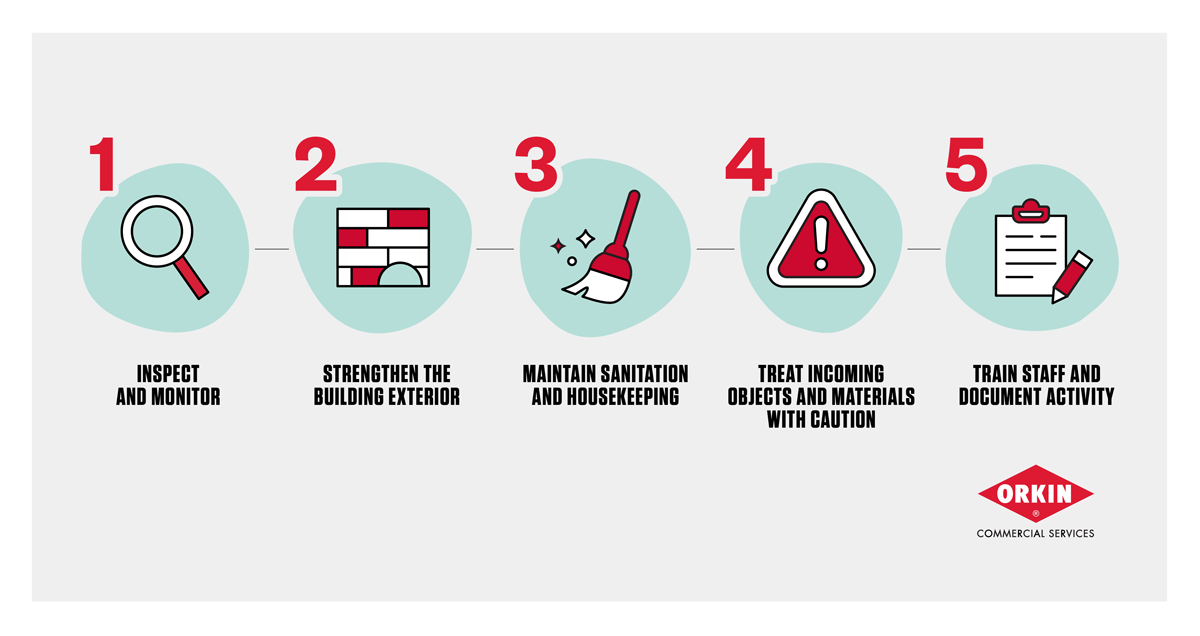
Inspect and Monitor
A pest monitoring program may include:
-
Identifying vulnerable collections, galleries, storage rooms and other areas of concern.
-
Strategically placed pest monitors in likely harborage areas, pest pathways and near potential entry points.
-
Pheromone-based monitors when appropriate based on pest history and the susceptibility of museum objects.
-
Routine monitor inspections on a schedule recommended by your pest control provider.
-
Documentation of pest activity, including the pest, quantity, life stage (if known), location and date.
-
Review of monitoring findings to identify trends by location, season and previous reporting periods.
-
Exterior inspections and monitoring to help identify and address pest activity before pests make their way indoors.
Strengthen the Building Exterior
-
Replace worn or missing door seals and screens.
-
Seal cracks, crevices and utility penetrations where appropriate.
-
Correct gaps around loading, receiving and service entrances.
-
Keep surrounding vegetation maintained and away from the structure where possible.
-
Ensure proper air filters on HVAC systems are in place.
Maintain Sanitation and Housekeeping
-
Clean beneath shelving, cases and furniture.
-
Keep storage areas orderly so objects and surfaces can be inspected.
-
Establish clear food and beverage policies for collection areas.
-
Monitor temperature and relative humidity in sensitive spaces.
Treat Incoming Objects and Materials With Caution
-
Designate a receiving and examination area away from established collections.
-
Inspect acquisitions, borrowed or returned objects and packing materials for pest activity.
-
Isolate incoming objects until they have been examined and cleared.
-
Consult a conservator before freezing, heating or otherwise treating an object.
Train Staff and Document Activity
-
Train staff to have clear reporting procedures for pest sightings and object damage.
-
Establish clear responsibilities with your pest control provider for monitoring, reporting and reviewing pest activity.
-
Include curators, conservation, facilities, custodial and security teams in the program.
-
Document structural repairs, cleaning needs and pest control recommendations.
Why Integrated Pest Management Matters in Museums
Addressing only the insects you can see may leave the underlying issue unresolved. An infested object, moisture problem, structural gap or overlooked food source can allow pest activity to continue.
Integrated Pest Management (IPM) helps museums prevent pest problems before they threaten collections. IPM goes beyond reactive pest control to help proactively prevent infestations with a combination of comprehensive inspections, monitoring programs, non-chemical solutions and targeted treatments.
Why Professional Pest Control Is Important for Museum IPM
Professional pest control providers can offer specialized expertise throughout a museum’s Integrated Pest Management (IPM) program, from identifying pests and inspecting vulnerable areas to recommending and implementing corrective actions. Pest management professionals should be involved in the development and execution of the program, so pest risks can be identified, documented and addressed before they pose a potential risk to collections.

How Orkin Can Help Prevent Pests at Museums
Orkin’s IPM approach is the gold standard for our commercial pest control services. The five-step Orkin Pro Process delivers more with every service, starting with a thorough inspection and diagnosis of any pest presence, precise treatment and prevention work grounded in science, and rigorous reporting so you always know we’re getting the job done right.
With the best-trained professionals in the business — experienced in sensitive commercial environments and knowledgeable about common pest offenders in museums — your Orkin Pro’s goal is to work with your museum curators, conservation and facilities teams to help control the immediate problem without creating unnecessary risk to collections, visitors or employees. From assessing pest activity and structural vulnerabilities, to then developing a customized commercial pest control plan to meet your museum’s unique needs, you’ll find absolute confidence in your Orkin team.
Talk with an Orkin Pro about creating a pest prevention plan tailored to your museum, historic property or collections facility.
More Pest Control Resources