Commercial Rodent Prevention Checklist: How to Help Keep Rats and Mice Out of High-Risk Buildings
Key Takeaways
-
Rodents often enter commercial buildings through small gaps around loading docks, doors, utility lines and other exterior openings.
-
Mice can squeeze through openings as small as a dime, while rats can fit through gaps about the size of a quarter.
-
Inspect loading docks, receiving areas and storage rooms regularly — they're often the first places where rodent activity appears.
-
Rodent exclusion helps keep rodents out by sealing the gaps and openings they use to enter commercial buildings.
-
Good sanitation, clutter reduction and careful shipment inspections help make your facility less attractive to rodents.
-
Routine inspections and timely repairs help prevent small vulnerabilities from becoming recurring infestations.
Commercial rodent prevention focuses on identifying and correcting the conditions that attract rodents before they become a problem. A successful prevention program combines exclusion, sanitation, facility maintenance, monitoring and employee awareness to help reduce opportunities for rodents to enter, survive and thrive within a facility.
High-risk facilities such as warehouses, food processing plants, restaurants, healthcare facilities, manufacturing plants and multifamily properties often face greater rodent pressure because of frequent deliveries, food sources, waste handling or heavy occupant traffic. Addressing those risks early can help reduce contamination, property damage, operational disruptions and compliance concerns before rodents become established.
What Is Commercial Rodent Prevention?
Commercial rodent prevention is a proactive approach to helping to reduce the risk of rats and mice entering and establishing themselves inside a facility. It combines exclusion, sanitation, facility maintenance, monitoring and employee awareness to help address the conditions that support rodent activity before infestations occur.
Why Is Rodent Prevention Important?
A rodent problem doesn't stay small for long. Rats and mice can contaminate far more food than they consume through droppings, urine and shed hair, putting product integrity at risk. They can also damage facilities and equipment, disrupt daily operations and increase the risk of regulatory and food safety compliance violations. Proactive rodent prevention goes beyond removing rodents, it's an essential part of protecting food safety, maintaining operational efficiency and preserving your brand reputation.
How Do Rodents Get Into Commercial Buildings?
Most rodents enter commercial buildings through small structural gaps and frequently used access points. Common trouble spots include loading docks, worn door sweeps, utility penetrations, cracks and crevices and openings around doors, vents and service lines.
Mice can squeeze through openings as small as a dime, while rats can enter through gaps approximately the size of a quarter. Even minor structural deficiencies can provide enough space for rodents to gain access.
You're already managing inventory, employees and inspections. The last thing you need is a rodent finding its way inside through a gap no one noticed. Facilities with frequent deliveries, open dock doors and heavy shipment traffic face greater risk because rodents can enter with incoming goods or take advantage of busy receiving areas.
Where Should Businesses Inspect for Rodent Activity?
Start with the entry points that give rodents the easiest path in and the highest chance to stay hidden.
These resourceful pests seek out warm, protected spaces with easy entry points and little human activity, allowing them to establish themselves unnoticed. They commonly travel along structural lines and remain concealed in low-visibility areas, making early detection challenging.
Inspect areas such as:
-
Door sweeps and properly sealed exterior openings
-
Loading dock doors, dock levelers, bay doors, fire doors and personnel doors
-
Windows and window frames
-
Utility penetrations, service entry points and gaps around pipes, conduits and utility lines
-
Exterior vents and ventilation openings
-
Building façades, walls and foundations for cracks, gaps and holes
-
Receiving areas and loading zones
-
Storage rooms and low-traffic spaces
-
Trash compactor chutes and waste collection areas
Every successful rodent prevention program begins with a secure facility. Rats and mice are relentless in their search for food, water and shelter, exploiting even the smallest structural vulnerability to gain access.
Commercial Rodent Prevention Checklist
Use this practical checklist to inspect common rodent entry points, attractants and maintenance issues around your facility.
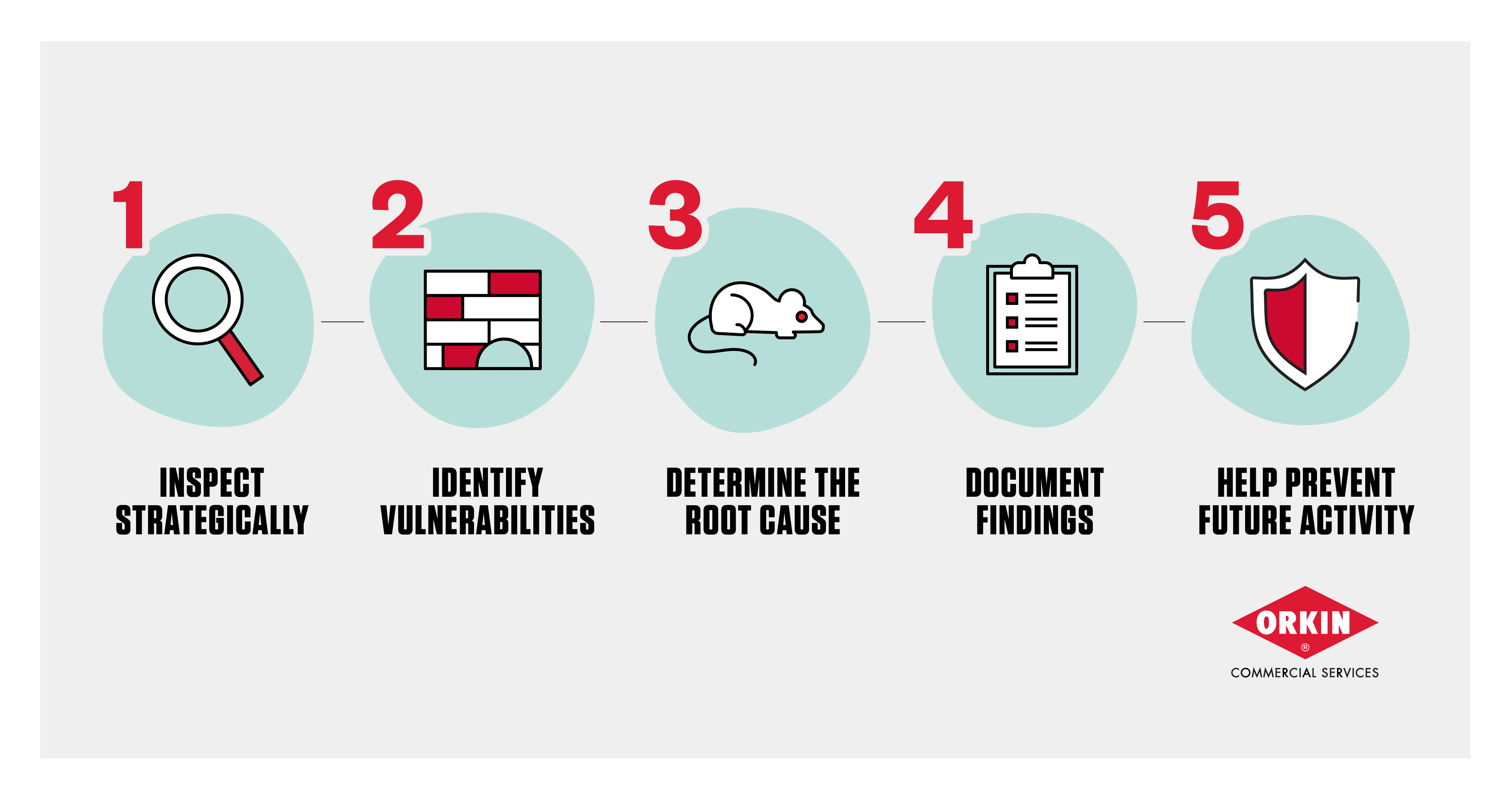
Inspect Strategically:
-
Begin where rodent activity, damage or sightings have been reported.
-
Expand the inspection outward systematically so no surrounding area is overlooked.
-
Look for droppings, gnaw marks, rub marks, grease trails, nesting materials and damaged packaging.
-
Inspect receiving areas, incoming shipments and storage spaces for signs of rodent activity.
Identify Vulnerabilities:
-
Inspect warm, secluded and low-visibility areas where rodents are likely to travel, nest and thrive.
-
Check loading docks, doors, windows, vents, utility penetrations and service entry points for gaps or damage.
-
Examine spaces around pipes, conduits, dock levelers, equipment and exterior openings.
-
Note damaged door sweeps, worn seals, cracks, holes and other structural vulnerabilities.
Determine the Root Cause:
-
Determine the rodent species and the extent of the activity.
-
Identify possible food, water, shelter and harborage sources.
-
Trace likely travel routes, nesting areas and entry points.
-
Evaluate sanitation, storage, waste management, landscaping and maintenance conditions that may be contributing to the problem.
Document Findings:
-
Record signs of rodent activity, structural deficiencies and conducive conditions.
-
Document the location and severity of each finding.
-
Track corrective actions, exclusion repairs, sanitation improvements and follow-up results.
-
Review records for recurring patterns that may require additional attention.
Help Prevent Future Activity:
-
Seal entry points and repair damaged exclusion materials.
-
Improve sanitation, waste handling, storage and moisture control.
-
Remove clutter and reduce exterior vegetation or debris that may provide harborage.
-
Maintain routine inspections and monitoring to verify that corrective actions remain effective.
Why Rodent Exclusion Matters
Orkin’s rodent control service emphasizes protecting food safety, product integrity and brand reputation. By identifying vulnerabilities, eliminating entry points and implementing science-based control measures, Orkin helps facilities reduce rodent pressure and maintain an environment that supports regulatory compliance and operational excellence.
When to Bring Professional Help for Rodents
Some facilities are simply more attractive to rodents. Warehouses, food and beverage facilities, restaurants, healthcare facilities, manufacturing plants and multifamily properties often face higher rodent pressure due to frequent deliveries, food storage, waste handling and constant foot traffic.
For these facilities, rodent prevention should be part of routine operations, not just a response to an infestation. If you're dealing with recurring rodent activity or inspection findings, an Orkin Pro can identify entry points, recommend exclusion measures and develop a prevention plan tailored to your operation. The goal is to help reduce risk, support compliance efforts and help keep rodents where they belong: outside.
Talk with an Orkin Pro about building a rodent prevention plan tailored to your facility.