Does DIY Ant Control Work?
Key Takeaways
-
DIY methods are temporary: Most at-home remedies act as repellents and don't offer a permanent solution for ant infestations.
-
Pantry items may fall short: Substances like vinegar, cinnamon, and lemon might disrupt ant trails, but they won't eliminate the colony.
-
Proper ant control is strategic: Effective removal requires identifying the specific ant species and targeting the nest directly.
-
Professionals offer reliability: When DIY methods fail, professional pest control is the safest and most effective way to handle an infestation.
Ants become a nuisance not because they enjoy making a homeowner’s life miserable but because they search for the ant’s necessities for life - food, water, and shelter. This is why your kitchen and bathroom are prime targets for ants. When ants are determined to make your house their new home, ant colonies will spread rapidly, so getting rid of them as quickly as possible is important.
While some ant species are just a nuisance, others can cause damage to your home or even pose health risks. Identifying the type of ant is the first step to effective control. From there, you can decide whether to try a DIY method or call in a professional. As soon as you spot signs of ants, it’s best to act fast.
What to Do If You Find Ants in Your Home
Finding ants in your home is frustrating, but fixable. Here’s how to deal with them:
-
Find the Source: Follow their trail to entry points such as cracks, plumbing gaps, or gaps around windows and doors. Try to trace ant trails back to the nest if possible.
-
Identify the Ant Species: Knowing whether you’re dealing with carpenter ants, odorous house ants, pavement ants, or fire ants helps you target solutions more effectively.
-
Clean Thoroughly: Wipe up crumbs, sweep and vacuum floors, clean up pet food, and keep all food stored in airtight containers. Don't forget under appliances and around sinks where moisture can attract ants.
-
Remove Scent Trails: Wash ant trails with soap and water or a mixture of vinegar and water to erase pheromone paths.
-
Seal Entry Points: Use caulk or weather-resistant sealant to block access through cracks, crevices, and gaps around foundations, windows, and doors. Repair damaged seals and screens.
-
Eliminate Standing Water: Fix leaky pipes and avoid leaving standing water in sinks or pet bowls overnight.
-
Call Pros if Needed: For major infestations, professional pest control can provide effective solutions.
Common DIY Ant Control Methods
People often ask if common household items are the secret to stopping an infestation. Before you start throwing every condiment in your pantry at them, let’s look at what actually works as a treatment for ants at home.
1. Vinegar Ant Repellent
White vinegar is a popular natural home remedy for ant control, as its strong scent disrupts the ants' pheromone trails, which they use to navigate and communicate. Spraying a solution of white vinegar and water along entry points, countertops, and other areas where ants are active can help deter them temporarily.
However, while vinegar may repel ants and remove their trails, it doesn’t address the root of the infestation. Additionally, the lingering smell of vinegar can be unpleasant, and once it dissipates, the ants are likely to return, making this method more of a short-term fix than a long-term solution.
2. Diatomaceous Earth for Ants
Diatomaceous earth is a natural, non-toxic powder made from the fossilized remains of tiny aquatic organisms like diatoms and crustaceans. It works as an effective ant control method by causing physical damage to the exoskeletons of ants, leading to dehydration and death. Sprinkling diatomaceous earth along ant trails, entry points, and other problem areas can help reduce ant populations. It’s essential to follow the product label and instructions carefully to ensure safe and effective use.
While diatomaceous earth can be effective in certain situations, it only works on ants that come into direct contact with the powder. It doesn’t eliminate the entire colony, making it less effective for larger infestations.
3. Does salt kill ants?
Salt is sometimes hailed as a natural ant deterrent. While it can dehydrate and kill a few ants if applied directly, its effectiveness as a long-term solution is minimal. Sprinkling salt near entry points may temporarily discourage ants, but it won't eliminate the source of the infestation or destroy the colony.
Salt is not a comprehensive solution. It works best as a short-term deterrent but won’t address the root of the problem, making it unsuitable for severe infestations.
4. Will cinnamon kill ants?
The short answer is no, cinnamon won't kill ants. However, does cinnamon repel ants? Yes, it does. The strong smell of cinnamaldehyde, a compound in cinnamon, messes with the pheromone trails ants use to navigate. It's like a smokescreen for their GPS.
You can sprinkle ground cinnamon, place cinnamon sticks, or spray cinnamon essential oil mixed with water near entry points.
However, cinnamon offers only a temporary solution. Its scent dissipates within a day or two, allowing ants to return. Furthermore, highly concentrated cinnamon oil can irritate skin and is toxic to pets, so use it with caution.
5. Essential Oils for Ants
Essential oils like peppermint and lavender can naturally repel ants. Their strong scents disrupt the ants’ pheromone trails, confusing them and deterring them from your home. Mix a few drops with water and spray along ant paths or entry points. You can also soak cotton balls and place them strategically.
Remember, essential oils are a temporary fix, requiring frequent reapplication as the scent fades. Some oils can irritate skin or harm pets, so dilute them and use them responsibly. For long-term ant control, combine essential oils with other pest management strategies.
6. Lemon Juice and Ants
Do lemons keep ants away? Kind of. The acidic oil in citrus peels, called d-limonene, is toxic to ants and masks their trails. You can use a spray made from lemon juice and water, focusing on entry points like windowsills and doorways. Or, if you're feeling a bit more rustic, try leaving lemon peels in places ants frequent, such as cupboards, countertops, or even directly in their trails.
This method offers temporary relief at best. While it might confuse ants for a short while, it's not a powerful or lasting solution for getting rid of the colony for good.
7. Coffee Ground & Ants
Used coffee grounds are believed to repel ants due to their strong scent, which may interfere with the ants' ability to follow scent trails. Sprinkle grounds around entry points, such as cracks, windowsills, and doorways, or directly onto ant trails.
Don't expect coffee grounds to be your ant-exterminating superhero. Sure, they might ward off a few scout ants with their pungent aroma, but they're not going to take down the whole colony. You'll need to refresh them often, too, because that scent fades faster than a good meme. Think of this as a sidekick, not the main event.
8. Does baking soda kill ants?
Baking soda is another popular household item often touted for its pest-fighting properties. The idea behind using baking soda to eliminate ants is that when the ants ingest it, it reacts with their digestive system and creates gas that they cannot expel, ultimately killing them. To use baking soda against ants, you can mix it with powdered sugar in a small dish or along their trails. The sugar works as bait to lure the ants in, while the baking soda delivers the fatal punch.
While baking soda may eliminate individual ants, it’s not a guaranteed solution for addressing the entire colony. Ants are highly organized, and if the queen remains untouched, she will continue to reproduce, prolonging the problem. Baking soda may be a short-term fix, but it’s not the most effective method for long-term ant control.
9. Borax for Ants
Unlike the repellents above, killing ants with Borax (or boric acid) is a method designed to eliminate them. When mixed with something sweet like sugar or syrup, ants will carry the bait back to their colony. The borax acts as a slow-acting poison that disrupts their digestive system, eventually killing them and, ideally, other members of the colony, including the queen.
Success depends entirely on the ants taking the bait back to the nest. This can take several days and isn't a guaranteed win. It's also crucial to remember that borax is toxic and must be kept far away from children and pets. It can also cause skin irritation and kill your plants if not handled carefully.
10. DIY Ant Traps and Repellent
Understanding how ants enter your home is crucial for both eliminating an existing infestation and preventing future ones. When using do-it-yourself ant control products, it's important to place them in strategic locations where ants are commonly seen entering and exiting the home, such as wall voids, cracks in walls or floors, and gaps around doors. Always ensure that any commercial products are stored safely and used strictly according to the product label.
While homemade ant remedies can provide temporary relief, they often fall short of effectively managing an infestation. This is primarily because DIY solutions may not target the specific ant species invading your home.
How to Prevent Ants at Home
Long-term prevention is the best way to keep ants out:
-
Regular Cleaning: Sweep, mop, and wipe down surfaces daily, especially in the kitchen and dining areas.
-
Store Food Wisely: Use airtight containers for food, including pet food. Clean up spilled food immediately.
-
Take Out Trash Promptly: Empty garbage regularly and use bins with tight-fitting lids.
-
Fix Leaks and Reduce Moisture: Check for leaks under sinks and appliances and repair them promptly.
-
Landscape Management: Keep shrubs, trees, and mulch trimmed back from the house. Remove yard debris and wood piles that can harbor ant colonies.
-
Seal the Home’s Envelope: Caulk cracks and holes, replace damaged weather stripping, and repair ripped door and window screens.
-
Move Pet Bowls: Don’t leave pet food out overnight. Wipe up spills and consider placing bowls on a tray with a bit of soapy water to deter access.
The Downside of DIY Ant Control
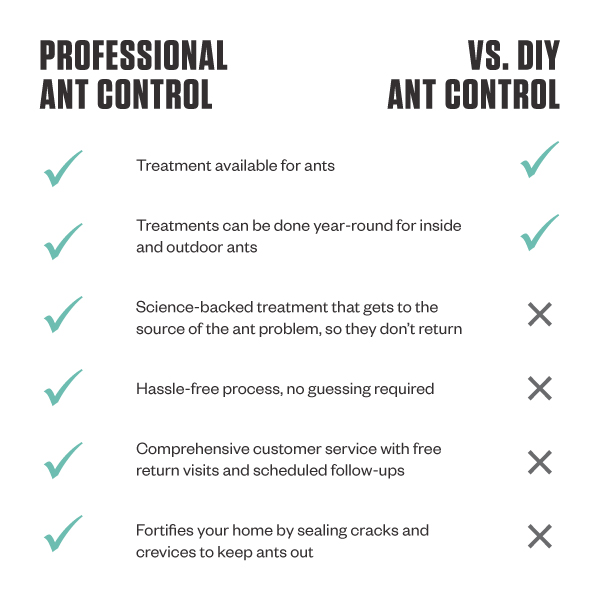
Different ant species require different treatment strategies, and without proper identification, the control methods used may only address visible ants and not the root of the problem, such as the colony.
Moreover, DIY products may focus on areas of the home that are not the primary sources of infestation, leading to a recurrence of the issue. For long-term results, professional pest control services are often more effective, as they tailor treatments to the specific ant species and the unique conditions of your home.
Benefits of Professional Ant Control
If you've tried everything and the ants are still marching in, it's time to put away the pantry spices and contact an Orkin Pro. Once ants invade, they can be difficult to eliminate, but your Orkin Pro will provide reliable and effective ant control for your home and family.
Ants can nest in various locations in and around your house, which is why Orkin Pros perform a thorough inspection to identify the source, species, and most effective control strategy.
Following the inspection, your Orkin Pro will design a customized ant control program to help eliminate ants inside your home or wherever they may be found. With expert knowledge and the right equipment, you can trust an Orkin Pro to effectively address ant infestations and other pest-related issues.
More Information On Ants
What Do I Do If I Have Ants In My Sink And Walls?
Find out what you should do if you have ants in your sinks and walls.
Learn about tips on getting rid of ants in your car.
While there are many ready-to-use boric acid bait and control products available, DIY ant control products may be ineffective at treating an entire ant infestation.
Have ants crawling from your walls? Learn about what to do to help get rid of them.
While any species of ant can be difficult to prevent and manage, effective ant control depends on proper identification of the ant infestation inside your home, knowledge of nest locations and the ant’s preferred foods.