Mole Facts & Information
Protect your home or business from mole rodents by learning techniques for identification and control.
Mole Treatment
How do I get rid of moles?
Before calling in the cavalry, homeowners can attempt to manage a mole issue on their own. Here are a few practical steps to take:
-
Locate Active Tunnels: Moles abandon many of their hunting tunnels. To find an active main runway, poke a small hole in a few straight tunnels and mark them with a flag. Check back in 24 hours; if the hole is repaired, you have found an active route.
-
Set Mechanical Traps: Harpoon, scissor, or choker-loop traps are the most reliable DIY control methods. Place them carefully over the active tunnels you identified.
-
Install Underground Barriers: If you have a specific garden bed you want to protect, bury galvanized hardware cloth at least two feet deep, leaving a few inches above ground to block tunneling.
-
Apply Castor Oil Repellents: Liquid or granular castor oil repellents can sometimes make the soil smell and taste unappealing, encouraging moles to pack their bags and move on.
-
Skip the Gimmicks: Ultrasonic vibrating spikes, chewing gum, mothballs, and flooding the tunnels with a garden hose are not proven to work. Save your money and your water.
What Orkin does to get rid of moles?
Orkin Pros are trained to help manage moles and similar pests. Since every yard or home is different, your Orkin Pro will design a unique wildlife management program for your situation.
Keeping moles out of your home is an ongoing process, not a one-time treatment. Orkin’s exclusive A.I.M. solution is a continuing cycle of three critical steps — Assess, Implement and Monitor.
Orkin can provide the right solution to keep moles in their place...out of your home.
Frequently Asked Questions
Behavior, Diet & Habit
Understanding Moles
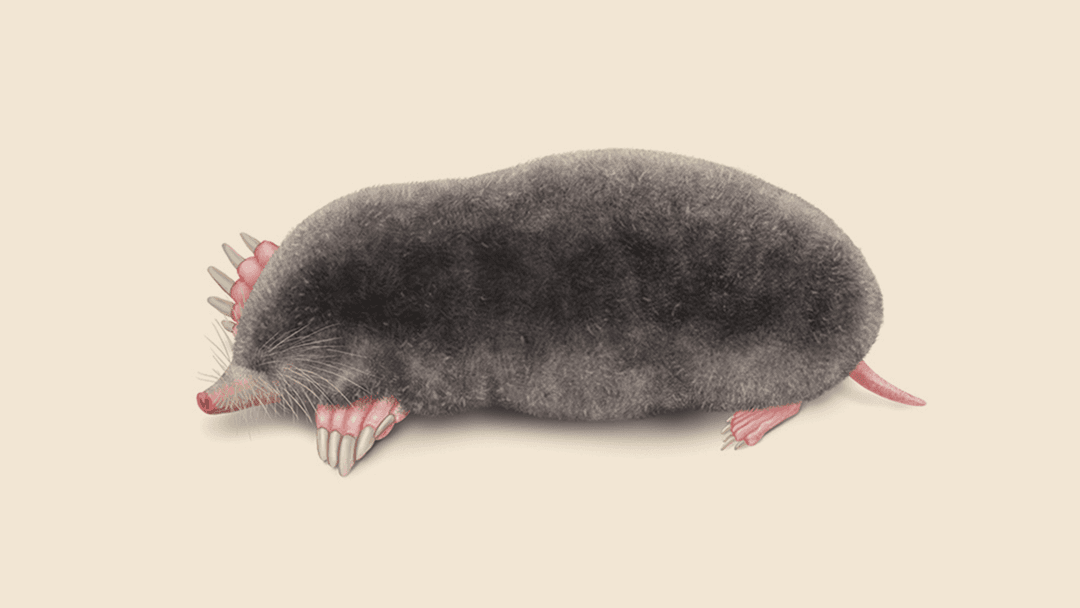
What do moles look like?
Moles are nature’s skilled underground engineers. Unlike herbivores, they rely on a diet of earthworms and soil insects, and their tunneling can dramatically change the landscape beneath lawns and gardens. If you happen to see a mole above ground (which is rare), here is what you would observe:
-
Size: Small and cylindrical, typically ranging from 4 to 8 inches in length depending on the species.
-
Color: Covered in velvety, dense fur that is usually gray or dark brown, providing protection and flexibility for moving through soil.
-
Features: They lack visible ears, have tiny or nearly closed eyes, and a pointed snout used for sensing prey underground.
-
Limbs: Moles have short, powerful forelimbs with broad, spade-shaped paws and strong claws designed specifically for digging extensive tunnel systems.
What do moles eat?
Moles are insectivores, not herbivores. Their primary diet consists of earthworms, grubs, and other insects found in the soil. Moles are constantly digging and hunting in their tunnels, consuming nearly their own body weight in food daily to fuel their high-energy lifestyle. While their search for food can disrupt your lawn, it also helps control underground pest populations by aerating the soil and eating invertebrates.
Where do moles live?
Moles thrive underground, where they construct intricate tunnel systems. Their habitat and behaviors are influenced by factors such as soil composition and moisture. Common mole habitats include:
-
Moist, Loamy Soil – Moles prefer moist, loose soils that are easy to tunnel through and support a healthy population of earthworms and insects.
-
Lawns and Gardens – Well-watered lawns and cultivated gardens provide ideal habitats for moles due to the abundance of their preferred prey.
-
Meadows and Woodlands – Natural meadows or forest floors are common environments for moles, where they can build extensive tunnel networks while remaining hidden from predators.
Moles are highly adaptable within their preferred environments but tend to avoid dry, sandy, or heavily compacted soils where food sources are limited.
How do moles build their tunnels?
Moles are expert diggers, using their strong, broad forefeet with large claws to create intricate tunnel systems underground. These tunnels serve two main purposes:
-
Feeding Tunnels – Located just beneath the surface, these shallow tunnels allow moles to hunt for earthworms, grubs, and other soil-dwelling insects.
-
Living Tunnels – Deeper tunnels serve as the moles’ nests, providing space for resting and sheltering from predators and environmental extremes.
The soil displaced during digging forms visible mounds, often called molehills, which are a tell-tale sign of mole activity.
Are moles harmful to your lawn?
While moles are sometimes admired for naturally aerating soil, they can cause significant damage to lawns and gardens due to their feeding and tunneling habits. Common issues include:
-
Soil mounds or "molehills" scattered across your yard.
-
Wilting or dying plants caused by disrupted roots, not because moles eat the roots but due to tunneling activities.
-
Weakened soil structure resulting in uneven ground and potential stress to grass and plants.
If you’re noticing these signs, it may be time to consider safe and effective pest control solutions to keep your yard in top shape. Prevention and early action are key to minimizing further damage from moles.
More Mole Facts
Indoor activity that seems like a mole is more likely caused by a mouse, since moles typically live outdoors and tunnel through soil rather than entering homes.
Can You Get Rid of Moles in My Yard?
Moles can cause extensive lawn damage by creating surface ridges and deep tunnels while searching for insects and earthworms. Effective mole control focuses on identifying active tunnels and using proven methods, such as trapping, to reduce activity and protect turf and landscaping.
Orkin offers professional mole control services designed to manage underground activity and protect lawns through targeted wildlife management solutions.
Moles are not known to transmit communicable diseases to humans or pets, as they primarily live underground and have limited contact with people.
What Made These Small, Round Holes in My Yard?
Small, round holes in a yard can be caused by a variety of pests, including insects like cicadas or ground‑nesting wasps, as well as animals such as skunks, moles, or voles searching for food. Identifying the size, location, and surrounding activity helps determine the cause and the most effective control approach.
How to Identify Voles vs. Moles
Moles and voles cause different types of lawn damage, with moles creating raised tunnels and soil mounds while voles form surface runways and chew plant roots and stems.