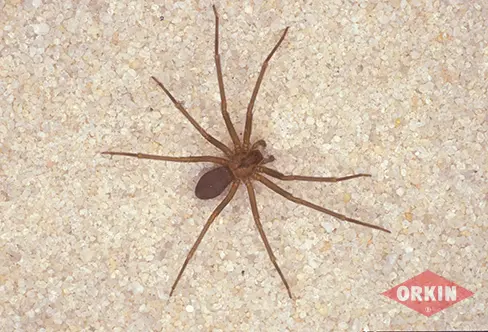
Finding a brown spider at home can be alarming, especially if you think it’s a brown recluse, but proper identification can prevent unnecessary panic. Many harmless spiders share similar coloring and size, leading to frequent misidentifications that spark unwarranted fear. While brown recluses can pose health risks in certain areas, many of their look-alikes are harmless and even beneficial, helping control other pests in your home.
What Makes a Brown Recluse Unique?
Identifying a brown recluse spider requires a close look at its unique features to avoid confusing it with harmless lookalikes. Here are the key characteristics to watch for:
-
Violin Marking: Look for a dark brown, violin-shaped marking on the top of the spider's body (the cephalothorax), with the "neck" of the violin pointing toward the back.
-
Eye Pattern: Unlike most spiders with eight eyes, the brown recluse has six eyes arranged in three pairs, forming a neat semicircle.
-
Legs: Its legs are uniformly light brown, with no stripes, bands, or noticeable spines.
-
Size: A fully grown brown recluse has a body about 3/8 of an inch long, and its leg span is roughly the size of a U.S. quarter.
-
Geographic Range: The brown recluse is established in sixteen states: Alabama, Arkansas, Georgia, Illinois, Indiana, Iowa, Kansas, Kentucky, Louisiana, Mississippi, Missouri, Nebraska, Ohio, Oklahoma, Tennessee, and Texas. Outside these areas, brown recluses are extremely rare and typically limited to buildings where they've been inadvertently transported. If you live outside the brown recluse's natural range, the spider you've found is almost certainly a harmless look-alike.
By spotting these traits, you can better identify a brown recluse and avoid misidentification.
10 Brown Recluse Look-Alikes
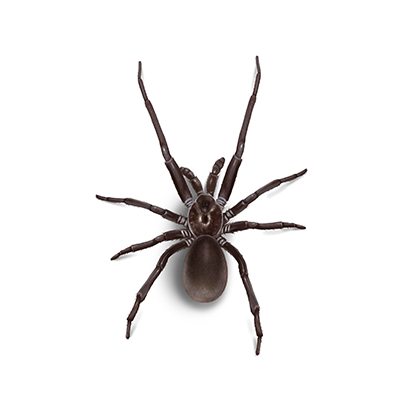
1. Southern House Spider
Key Features: Female southern house spiders are dark gray with an overall size of about 2 inches including legs. Males share similar brown coloring and body size with brown recluses, making them frequent subjects of misidentification.
How It Differs: Southern house spiders have eight eyes grouped closely together, unlike the brown recluse's six-eye pattern. They also lack the distinctive violin-shaped marking and possess extended, thin pedipalps.
Where It's Found: Primarily in southern United States regions, these spiders construct webs in gaps found in home exteriors and farm buildings.
2. Wolf Spider
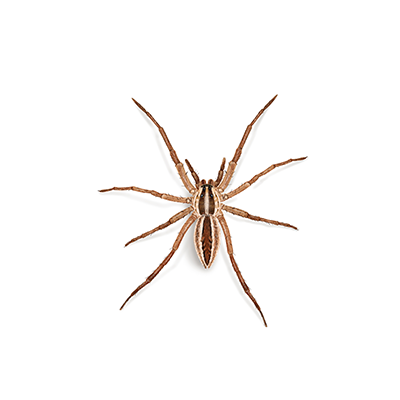
Key Features: Slightly larger than brown recluses, wolf spiders display black, brown, gray, or tan coloring with dark stripe markings. They possess excellent eyesight with two prominent, large front eyes.
How It Differs: Dark stripes distinguish wolf spiders from brown recluses, which have uniform coloring. Wolf spiders also have the standard eight-eye arrangement and lack the violin-shaped marking.
Where It's Found: Common throughout the United States, wolf spiders prefer ground-level habitats and don't typically build webs.
3. Cellar Spider (Daddy Long Legs)
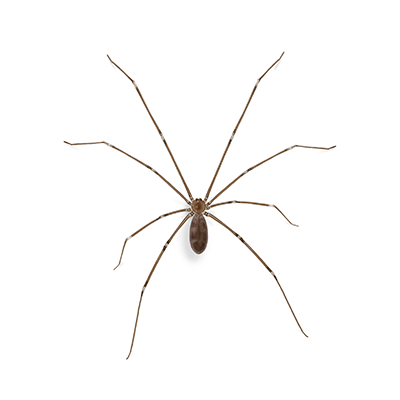
Key Features: Light brown or gray coloring with extremely long, slender legs and small bodies. They build webs in basements, crawl spaces, and under furniture.
How It Differs: The most obvious difference is their notably long, thin legs. They can also be found in large webs. Despite some brown coloring and occasional dark markings near the eyes, cellar spiders are harmless and don't bite humans.
Where It's Found: Dark, humid areas like basements, crawl spaces, and garages throughout most of the United States.
4. Hobo Spider
Key Features: Solid brown coloring with minimal markings and yellow accents. They build distinctive funnel-shaped webs and stay close to ground level.
How It Differs: Hobo spiders lack the violin-shaped marking and create funnel webs, unlike brown recluses' irregular retreat webs. Recent studies show their bites don't typically cause serious harm.
Where It's Found: Primarily in the Pacific Northwest, with some populations in the Midwest and Arizona.

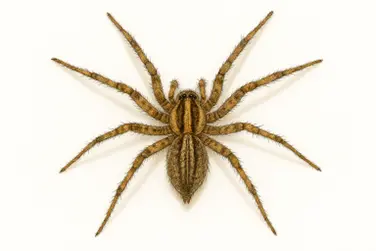
5. Grass Spider
Key Features: Brown coloring with darker stripe patterns running along the body. They create sheet webs with funnel-shaped retreats.
How It Differs: Grass spiders have multiple colors on their legs and abdomen, violating the brown recluse's uniform coloring rule. Their web-building behavior also differs significantly.
Where It's Found: Outdoor areas in grass, shrubs, and gardens, occasionally entering homes in fall.
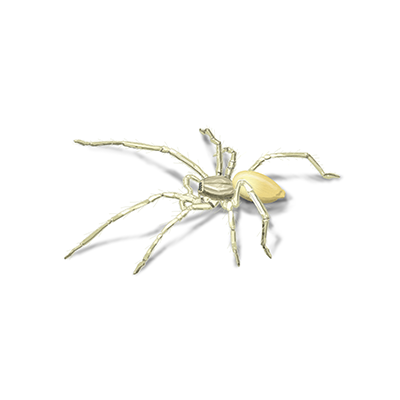
6. Yellow Sac Spider
Key Features: Pale yellow to light brown coloring with a slightly darker abdomen. They're small, active hunters that don't build traditional webs.
How It Differs: Yellow sac spiders have eight eyes and lack the violin marking. Their coloring tends toward yellow rather than the brown recluse's consistent brown tones.
Where It's Found: Both indoor and outdoor environments throughout the United States, often found in corners and under furniture.
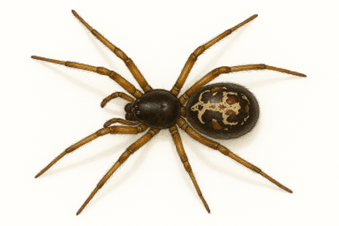
7. False Widow Spider
Key Features: Dark brown to black coloring with a bulbous abdomen. Some species have markings that can be confused with other dangerous spiders.
How It Differs: False widows have eight eyes and typically display darker coloring than brown recluses. They also lack the distinctive violin marking.
Where It's Found: Western United States, with some species expanding their range eastward.
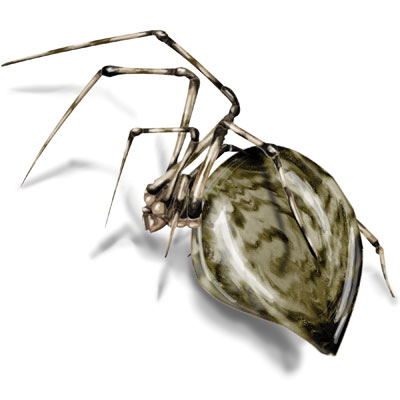
8. American House Spider
Key Features: Small, dark brown spiders with patterns or banding on their bodies. They spin messy, irregular webs in corners and hide with their egg sacs.
How It Differs: American house spiders have rounder bodies and distinctive patterns, unlike the brown recluse's uniform coloring. They also have eight eyes and lack the violin marking.
Where It's Found: Common throughout the United States in homes, particularly in corners, basements, and unused areas.
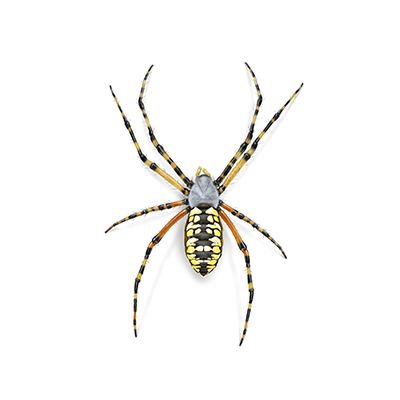
9. Orb Weaver Spider
Key Features: Highly variable in color and size, but many species display brown tones. They create distinctive circular webs.
How It Differs: Orb weavers have multiple colors on legs and abdomens, with many species featuring spines perpendicular to their legs. Their web-building behavior is completely different from brown recluses.
Where It's Found: Gardens and outdoor areas throughout the United States, occasionally entering homes.
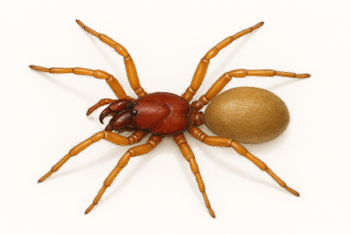
10. Woodlouse Spider
Key Features: Distinctive reddish body with tan or brown back sections and notably large fangs (pedipalps). The glossy exterior and cream-colored belly make them unique.
How It Differs: Woodlouse spiders lack the violin marking and have a distinctive two-tone coloring. They also have six eyes that are grouped into sets of 3. While they can bite if handled, they don't cause serious damage like brown recluse bites.
Where It's Found: Under rocks, woodpiles, mulch, and dense vegetation, sometimes near home foundations.
What to Do If You Think You've Found a Brown Recluse
If you think you've found a brown recluse, first things first: stay safe. Look closely from a distance, maybe with a flashlight or magnifying glass. What should you look for? That violin-shaped mark on its back, six eyes grouped in pairs, and legs that are all one color. Don't try to touch it! Instead, gently trap it under a glass and slide a piece of paper underneath. Remember, these spiders aren't aggressive and only bite if they feel threatened. You can then release it outside or get professional help if you're unsure.
When to Contact Professional Pest Control
Contact professional pest control services if you discover multiple spiders, find evidence of an established population, or cannot safely identify the species yourself. Orkin Pros are trained to identify brown recluses and other spiders then develop targeted treatment strategies.
Call your local Orkin branch to learn more about our spider control services.
More Spider Resources
What Kind of Spiders Do I Have?
Spiders come in all different shapes and sizes but usually have specific features.
What are the World's Biggest Spiders?
Learn more about the biggest spiders in the world.
What are the World's Deadliest Spiders?
Learn more about the most dangerous spiders in the world.
What Do Spider Bites Look Like?
Get familiar with what different spider bites look like, which spider they could be from and what to do if bitten.