Why Pest Control Is Critical to Your Business Continuity Plan

Key Takeaways
-
Include pest control in your continuity plans when normal business operations change or disruptions occur.
-
Proactive inspections and regular monitoring can help catch changes in activity early, while exclusion and sanitation can help prevent pest problems.
-
A clear pest control response plan should define who reports pest activity, how sightings are documented and when to contact a pest control provider.
-
An experienced pest management partner can help you adjust your pest control program as your facility needs change.
When the unexpected happens, the last thing you need is another problem to manage. Severe weather, temporary closures and operational disruptions can create new conditions for pests, and your pest management approach should be ready to adapt.
Incorporating pest control into your business continuity plan can help you stay ahead of changing conditions and reduce the risk of inventory loss, sanitation issues, property damage, facility closures and costly downtime caused by pest activity. The goal is simple: help keep pest issues from becoming one more disruption on your list.
How Does Pest Control Support Business Continuity?
Pest control can support business continuity by helping you prepare for pest risks that may change when normal operations are disrupted. The goal is to keep prevention, monitoring and response efforts aligned with changing conditions at your facility.
A pest control plan can help you:
-
Protect facilities and infrastructure
-
Reduce pest-related operational interruptions
-
Support compliance and audit readiness
-
Protect inventory and assets
-
Maintain sanitation and facility standards
-
Identify pest risks before they become larger issues
Orkin’s Integrated Pest Management (IPM) approach focuses on both proactive strategies and long-term prevention to help protect your property through changing conditions.
The key is to account for pest management before a disruption happens, and then adjust your program as facility conditions and operations change.
How Should Your Pest Control Plan Adapt During a Disruption?
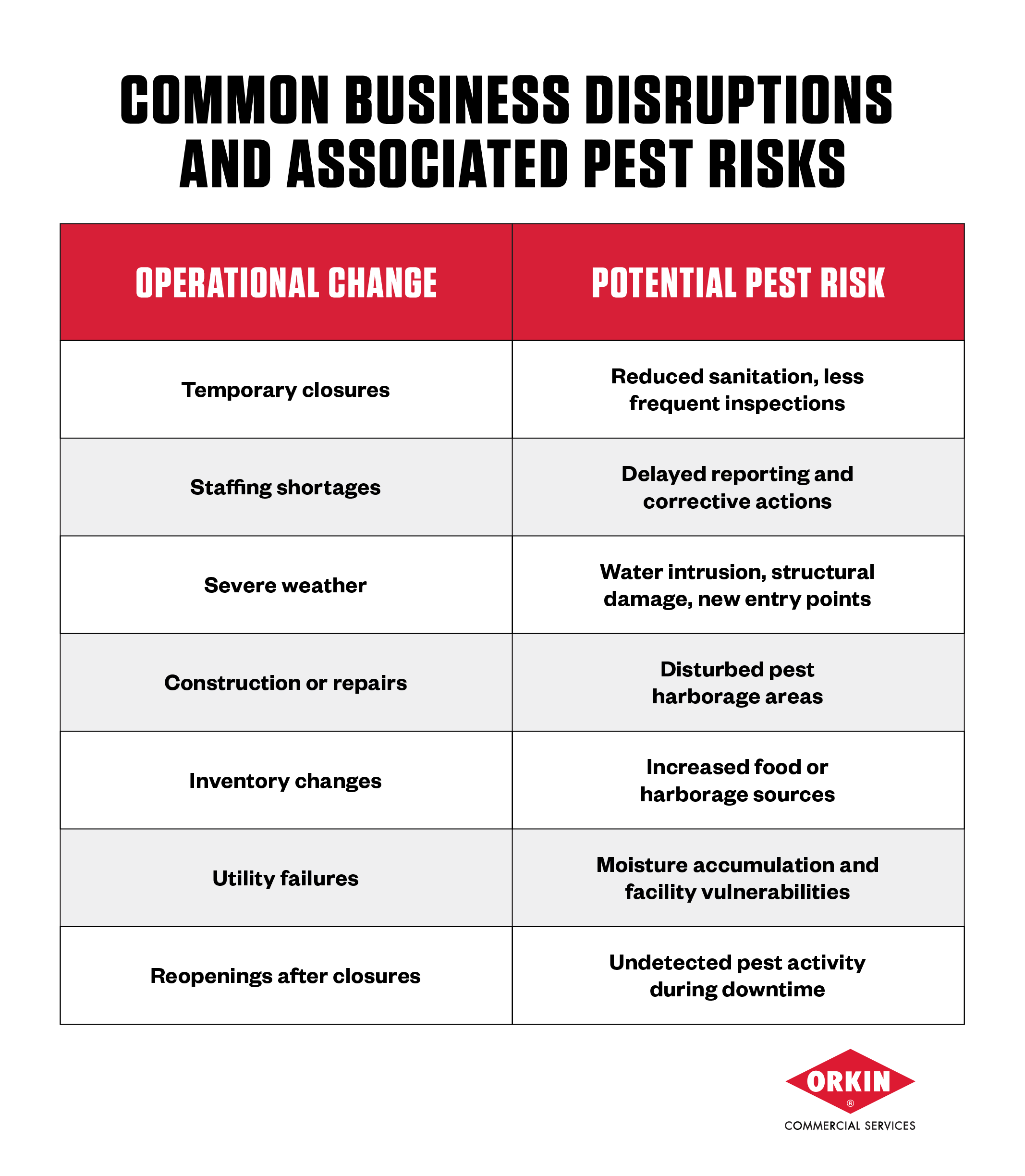
When operations are disrupted, your usual pest risks can change quickly. Temporary closures can interrupt sanitation and inspections. Severe weather can create moisture and new entry points. Staffing changes, construction or utility failures can leave vulnerabilities unnoticed. Your pest control plan should account for those changing conditions so prevention, monitoring and response efforts can adjust with them.
Review your pest control plan whenever conditions at your facility change, including:
-
Temporary closures or reduced operations
-
Facility damage or emergency repairs
-
Changes in staffing or day-to-day routines
-
Reopenings or operational changes
-
Changes in inventory, facility use or sanitation routines
Why Pest Risks Can Increase During Operational Disruptions
Changes in sanitation, staffing, maintenance and building conditions can create new sources of food, water, shelter and access for pests. At the same time, reduced inspections or altered routines can allow activity to go unnoticed longer. The exact risk depends on what changed — and for how long.
Here are some common examples:
How Can You Prepare for Changing Pest Risks?
A little preparation can go a long way toward keeping pests from becoming another problem on your list. Start simple with these three steps:
1. Recheck Potential Entry Points After a Disruption
Severe weather, construction, repairs or other disruptions can create new ways for pests to get inside. After a disruption and once conditions allow, inspections and pest exclusion services can help identify new vulnerabilities and address potential access points before normal operations resume. An Orkin Pro can help you check for:
-
New cracks or gaps around doors and windows
-
Damaged door sweeps, seals or weather stripping
-
Gaps around utility penetrations following repairs
-
Structural damage that may create new openings
-
Changes or damage around loading docks
-
Roofline damage or new access points
2. Make Sanitation Routines Resilient
When operations change, everyday sanitation tasks can be easier to overlook. Consistent sanitation practices help reduce food, water and shelter sources that attract pests.
During periods of reduced activity:
-
Maintain trash removal schedules whenever possible
-
Store waste in sealed containers
-
Address spills as soon as they occur
-
Repair leaks promptly
-
Continue drain maintenance
-
Remove clutter and address pest harborage areas

3. Give Your Team a Clear Role
During a disruption, employees can help identify and report pest activity or new vulnerabilities as facility conditions and routines change.
Staff should understand:
-
Common signs of pest activity
-
Reporting procedures
-
Areas of concern within the facility
-
Documentation requirements
-
Escalation processes
Use Orkin’s Staff Training Checklist to help employees know what to watch for, what to report and when to speak up.
What to Monitor When Operations Change
Your business operations might pause, but pests don’t. Whether business slows down, restarts or changes unexpectedly, regular monitoring can help you catch pest activity and new vulnerabilities before they become bigger problems.
Keep an eye on:
-
New pest sightings or changes in existing activity, including rodents, flying insects and crawling insects
-
Leaks, standing water and other excess moisture
-
Cracks, gaps or damage that could provide pest access
-
Roofs, gutters and exterior materials following severe weather
-
Damaged property or inventory, where applicable
When conditions allow, continue facility walk-throughs during periods of reduced activity. Always document what you find and work with your pest management provider to adjust your program as conditions change.
Industry-Specific Business Continuity Considerations
Operational disruptions don’t create the same pest risks for every business. Your continuity plan should account for the conditions, people and priorities unique to your facility.
Here’s what to keep on your radar across five common facility types:
-
Food & Beverage Processing Facilities: Shifts in production schedules, sanitation routines or inventory flow can create opportunities for stored product pests, rodents and flies. Maintain inspections, sanitation and pest monitoring in production, storage and receiving areas during disruptions.
-
Healthcare Facilities: Staffing shortages, altered patient flow or interrupted facility routines can make everyday pest prevention harder to maintain. Continue monitoring patient care zones, foodservice spaces, waste areas and other pest-prone locations to help support sanitation standards and facility protection.
-
Warehousing & Logistics Facilities: Fluctuating inventory, shipping delays or reduced loading dock activity can give pests more opportunities to access products and packaging. Keep receiving areas, storage zones, loading docks and exterior entry points on the inspection list.
-
Hotels and Hospitality Properties: Temporary closures and reduced occupancy don’t mean pests check out, too. Continue inspecting guest rooms, kitchens, laundry areas, waste zones and other pest-prone spaces for signs of rodents, cockroaches, bed bugs and other pests.
-
Apartments, Condos and Multifamily Properties: Reduced maintenance, fluctuating occupancy or limited access can allow pest activity to go unnoticed. Keep common areas, waste zones, utility spaces, building exteriors and potential entry points in your regular monitoring routine.
What should a pest control response plan include?
Even with a proactive pest control plan, sometimes pests can still make it inside your facility. Your business continuity plan should include a clear pest response process.
A Pest Control Response Plan Should Define:
-
Who reports pest activity
-
How sightings are documented
-
Who reviews pest reports
-
When management is notified
-
When the pest control provider is contacted
-
How corrective actions are tracked
-
How follow-up inspections are scheduled
No continuity plan can account for every pest risk. But with proactive prevention, ongoing monitoring and a trusted partner ready to respond, you can help make sure pests aren’t the next unexpected item on your list.
Make sure your pest control plan is ready. Connect with an Orkin Pro.