Zoo Atlanta
Where Pest Control Meets Animal Care: The Unsung Partnership Powering Zoo Atlanta
Managing pests in a zoo environment requires careful coordination, strict safety awareness and a deep respect for the animals, staff and guests who interact within the space every day. Zoo Atlanta needed a pest management partner who could work within that complexity while minimizing disruption to daily operations. Through a science-led Integrated Pest Management (IPM) program and close collaboration with the Zoo Atlanta team, Orkin helped reduce pest activity across the property. The result is a trusted partnership built on communication, preparation and a shared commitment to protecting animals, staff and guests.
At most zoos, visitors see wonder — towering giraffes, playful primates and powerful lions resting just feet away. What they don't see is the invisible work required to protect those animals, their food sources, their habitats and the people who care for them every day.
At Zoo Atlanta, care for animals happens 24/7. As part of that care plan, Orkin visits the Zoo three days a week before gates open and animal care teams have finished morning routines. It's where modern pest control and applied zoology intersect — and where Orkin has quietly helped redefine what responsible Integrated Pest Management (IPM) looks like in one of the most sensitive, and pest conducive, environments imaginable.
Why Zoos Are One of the Most Complex Environments for Pest Control
Zoos present a level of complexity that few environments can rival. Effective pest control programs must account for:
-
Live animals that require strict safety precautions
-
Open food and feed storage that can attract rodents and insects
-
Naturalistic habitats that mimic pest-friendly environments
-
Constant water sources that support fly and mosquito activity
-
Public guests moving throughout the property daily
-
Regulatory oversight and animal welfare standards
And that’s just in public spaces. Behind the scenes, there’s a labyrinth of care facilities, each with their own unique requirements.
Since April 2016, Orkin's Atlanta Commercial branch team has worked within these constraints, coordinating service schedules around animal behavior and husbandry practices. Some services occur at first light before the Zoo opens, while others are deliberately coordinated to accommodate the animals’ daily schedules. It’s pest management choreographed around animal welfare.
"Dan, [our Orkin Pro], came in and watched what we were doing, but most of all, he thought, ‘What do I really need to change?’ He didn't just follow us around going, 'Okay, we'll put bait there.' He thought everything through every time, and that was really the start of this fantastic care that Orkin has given us."
— James B., Senior Curator of Animal Care Projects, Zoo Atlanta
How Integrated Pest Management (IPM) Works in Zoos
Early in the partnership as Orkin took over the pest management responsibilities, a pest challenge in sensitive animal areas tested trust and long-held assumptions on how successful pest control should work. As the program shifted from surface-level, conventional treatment programs to a more targeted and science-led IPM approach, pest activity became more visible — signaling that issues were being addressed at their source instead of being temporarily suppressed.
Paired with shared responsibility for sanitation, storage and structural exclusion within the pest control program, the Orkin and Zoo Atlanta teams saw an opportunity for even more collaboration. It was clear that Orkin’s approach, using more hospitable management tactics, required an increase in communication to explain what was being done, why it was better for the animals and what to expect; including a temporary increase in pest sightings.
The breakthrough came when quarterly meetings began, bringing animal care, facilities, leadership and pest control teams into the same room. With additional support from Orkin's technical experts — including specialists in urban entomology, pest behavior and exclusion — the conversation shifted from uncertainty to science, and from reaction to prevention.
"It was a journey to trust." — Rachel Davis, Director of Communications, Zoo Atlanta
Over time, treatment plans became predictable and trusted. The quarterly meetings eventually became unnecessary as communication and clarity had been built into an everyday aspect of the partnership.
"I used to work at a primate research facility doing animal care, so I understand what the keepers manage every day. I used my experience to tell them, 'Hey, I know what you're going through,' and that's how I was able to think through treatment. We have to think about the animals being in that area, the people in that area and the public. It's a lot more than simply treating for pests."
— Dan Wilson, Service Manager, Orkin
More Than Service: Working With a Trusted Partner
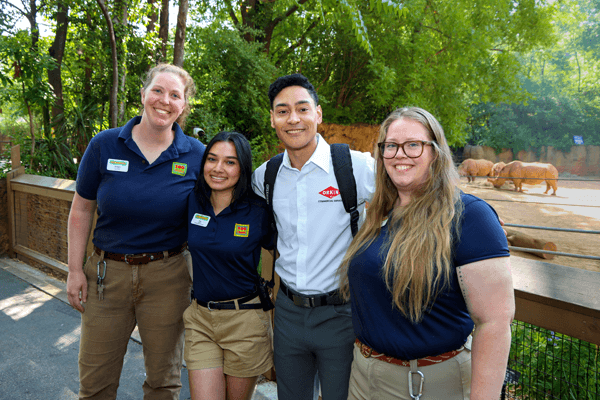
At Zoo Atlanta, Orkin Pros aren't just vendors — they're team members.
They carry radios and know which channels to use when reaching the team at the restaurant versus the carousel or primate areas. They check in with the team, review the complaint log and respond to direct emails from departmental leads who alert them to issues before they even arrive on property.
Behind that day-to-day coordination is a rigorous training foundation. Orkin Pros complete one of the pest control industry’s most comprehensive training programs, including more than 160 hours of hands-on training, followed by ongoing education and advanced certifications throughout their careers. That preparation helps ensure technicians follow strict safety protocols and work closely with facility teams to coordinate access, protect sensitive areas and deliver effective pest management with minimal disruption.
"We like your Pros, and we like having them come here…we trust them. That's huge, especially if you're walking [near] a lion. You have to trust that those people will behave as they really need to behave to keep themselves and the animals safe."
— James B., Zoo Atlanta
The Zoo team values that every pest control decision is made with animals, staff and guests in mind, prioritizing preventive tactics and least-impact management decisions for the animal, staff and public welfare first and foremost. Over time, what started as a vendor relationship has become a trusted partnership, built on shared goals: protecting animals, people and the integrity of the zoo environment.
This isn't a transactional relationship. It's a partnership built on respect.
What Results Can Zoos Expect from Integrated Pest Management
At the end of 2025, Zoo Atlanta underwent its five-year accreditation inspection by the Association of Zoos and Aquariums (AZA) — one of the most rigorous evaluations in the industry.
The inspectors noted, "We didn't see any sign of pests anywhere in the zoo."
Even in unused storage buildings — spaces that would typically harbor rodents or insects — inspectors found no pest activity.
"To have that called out was pretty special." — James B., Zoo Atlanta
But the real measure of success isn't just the absence of pests. It's what that absence makes possible: animal care professionals who can focus on animal welfare without worrying about pest control. Keepers who trust the people moving through sensitive spaces. A guest experience unaffected by visible pest activity. And a working friendship between the Orkin Pros and Zoo Atlanta staff.
Pests Hate Us, Your Animals & Guests Will Love Us
In a sensitive environment where wildlife and human systems increasingly overlap, what's happening at Zoo Atlanta isn't just pest control.
It's applied ecology. It's animal behavioral science. It's deep industry knowledge on-site. It's a relentless pursuit to guarantee the gold standard of pest control — powered by an excellent partnership that respects biology, education and shared responsibility. But more than anything, it’s a relationship built upon common goals, care and concern.
FAQs About Pest Control at Zoos
How do zoos control pests without harming animals?
Zoos use Integrated Pest Management (IPM) programs designed for environments with live animals. These programs prioritize prevention, monitoring and targeted treatments while coordinating service with animal care teams to help protect animals, staff and guests.
What pests are common in zoos?
Common zoo pests include rodents, cockroaches, ants, flies and mosquitoes, which are attracted to food, water and naturalistic habitats. Effective programs monitor feed storage, managed waste and animal areas where pests are most likely to develop.
Why is Integrated Pest Management used in zoos?
Integrated Pest Management addresses pest problems at their source while supporting animal welfare. The approach focuses on monitoring, sanitation and environmental adjustments to help reduce pest activity safely.
How often should zoos schedule pest inspections?
Zoos often require frequent inspections and monitoring, sometimes multiple times per week. Regular visits help detect early pest activity and allow services to be scheduled around animal care routines.
How does pest control help protect animals in a zoo environment?
Pest control programs help protect animals by reducing pests that can spread disease, cause stress or disrupt animal care areas. Integrated Pest Management focuses on monitoring, sanitation and targeted treatments coordinated with animal care teams to help safeguard animal health while maintaining a stable environment.