Raccoons Facts & Information
Protect your home or business from raccoons by learning techniques for identification and control.
Raccoon Treatment
How do I get rid of raccoons?
How to Keep Raccoons Away
-
Remove outdoor pet food: Feed pets indoors. If you must feed them outside, pick up bowls and spilled food before dark.
-
Secure your trash: Use heavy-duty garbage cans with latching or lockable lids. Raccoons have incredibly dexterous paws that can open simple containers.
-
Clean up yard debris: Rake up fallen tree fruit, remove low-hanging bird feeders at night, and clear away brush, woodpiles, or old logs that offer easy shelter.
-
Install physical barriers: Electric fences around gardens and ponds can deter hungry scavengers. Use metal flashing or guards on trees to prevent them from climbing onto your roof.
-
Seal entry points: Block access to chimneys, attics, and spaces under porches using ¼-inch hardware cloth or heavy materials.
What Orkin Does to Get Rid of Raccoons
Orkin Pros are trained to help manage raccoons and other pests. Since every yard or home is different, our Orkin Pro will design a unique wildlife management program for your situation.
Keeping raccoons out of your home is an ongoing process, not a one-time treatment. Orkin can provide the right solution to keep raccoons in their place...out of your home. Schedule a free wildlife control inspection to see how Orkin can help.
Frequently Asked Questions
Behavior, Diet & Habits
Understanding Raccoons
What do raccoons look like?
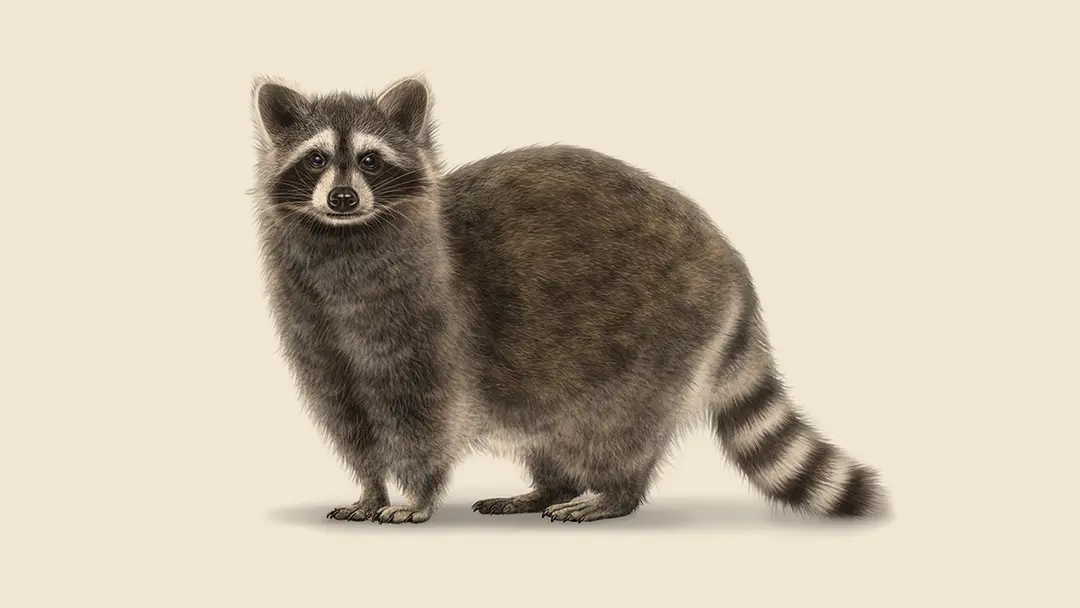
Raccoons are easily recognized by their distinct black "bandit" mask, which helps reduce glare and improve their night vision. Their dense, salt-and-pepper gray fur and bushy, ringed tail are also trademark features.
These clever mammals have a hunched posture because their hind legs are longer than their front ones. Their front paws are surprisingly like human hands, with five nimble fingers that can open jars and unlatch gates. Their hind legs are just as impressive, with ankle joints that can rotate 180 degrees, allowing them to climb down trees headfirst. Adult raccoons typically weigh between 10 to 30 pounds, but don't be surprised if city-dwelling raccoons are heavier, they've been known to enjoy our leftovers.
Where do raccoons live?
While they are naturally drawn to moist woodland areas near streams, raccoons are highly adaptable and can thrive in farmlands, suburbs, and even busy cities.
In the wild, raccoons den in hollow trees, ground burrows, or brush piles. However, in residential areas, they seek out warm, dry, and safe places to raise their young. Raccoons can squeeze through small openings to access these spots, so it's common to find them in or around your home. They often maintain several dens and rotate between them every few days. Common raccoon den sites in and around your home include:
-
Attics: The warmth and insulation make attics an ideal shelter.
-
Chimneys: Uncapped chimneys provide a secure, hollow space similar to a tree.
-
Crawl spaces: The dark, undisturbed areas beneath a house are perfect for a den.
-
Garages and sheds: These structures offer protection from the elements.
-
Under decks or porches: The space beneath elevated structures provides a safe hiding spot.
What do raccoons eat?
Raccoons eat nearly any available food, including insects, vegetables, fruits, nuts, corn, fish, bird eggs, rodents, and dead animals. In cities and suburbs, raccoons will eat food they find on the ground and often break into and feed off items left in garbage cans. Raccoons are not experts at hunting prey, but they may at times catch and consume young mice, birds, squirrels, beetles, grasshoppers, and worms. However, raccoons often feed on human food waste from trash cans. Raccoons are infamous for raiding trash cans to scavenge for human food scraps. Overall, raccoons have a diverse diet that allows them to adapt to various environments and food sources, making them highly adaptable and successful in the wild.
What do raccoon droppings look like?
Raccoon droppings are tubular, have blunted ends, and are usually dark in color, though coloration is subject to change depending on what the raccoon has recently eaten. Undigested food like berries, nuts, or grains can be present in the raccoon scat.
Do raccoons hibernate?
When the weather gets colder, they enter a dormant state of sluggishness and lethargy. During this time, raccoons slow their metabolism and fall asleep in their dens with their tails wrapped around them for warmth. Unlike hibernation of many mammals, it only lasts a few weeks. Raccoons often seek out warm areas in a home or other heated structures during these times of reduced activity.
More Racoon Wildlife Management Tips
Orkin provides Wildlife Management services for squirrels, raccoons, and more in some parts of the country.
To get rid of raccoons outside your home, start by removing potential food sources such as open garbage containers.
If raccoons are on your roof, start by sealing all entry points such as vents and chimneys.