Effective Pest Control for Golf Course and Country Club Facilities
Key Takeaways
-
Golf course and country club facilities can face pest pressure across their properties, from outdoor spaces to clubhouses, shops, restaurants and service areas.
-
Common pests around golf course and country club facilities include mosquitoes, rodents, ants and flies.
-
Dense landscaping, foodservice and storage areas can create conditions where pests thrive, both outdoors and indoors.
-
Regular monitoring, sanitation, drainage maintenance and exclusion efforts can help reduce pest risks before they affect guest experiences.
-
A tailored pest control plan can help protect guest comfort, clubhouse operations and your property’s reputation
Golf courses and country clubs include a range of facilities that can face different pest pressures. From clubhouses and kitchens to patios, water features and maintenance buildings, the goal isn’t to wait until guests notice. It’s to identify the conditions attracting pests and address them early.
Mosquito activity around outdoor spaces or rodent activity behind the clubhouse can affect more than a day on the course. These issues can impact property conditions, guest comfort and the reputation you have built.
While golf course teams manage agronomic issues and pests affecting playing surfaces, Orkin can help manage pest pressures around clubhouses, foodservice areas, event spaces, maintenance facilities and other operational areas.
Why Do Golf Course Facilities Attract Pests?
Pests look for three things: food, water and shelter. Golf properties can offer favorable conditions across dozens of acres.
Common factors that contribute to pest activity include:
-
Irrigation and drainage: Wet areas, standing water and drainage issues can create favorable conditions for mosquitoes and other pests.
-
Ponds and water features: While these are often important course features, they require consistent monitoring for mosquito activity.
-
Dense landscaping: Trees, shrubs, mulch, flower beds and unmanaged vegetation can give pests shelter.
-
Food and waste areas: Clubhouse kitchens, patios, beverage carts, trash stations and event spaces may attract flies, ants, rodents and other pests.
-
Outbuildings and storage: Maintenance buildings, equipment sheds and storage rooms can offer rodents quiet, protected places to hide.
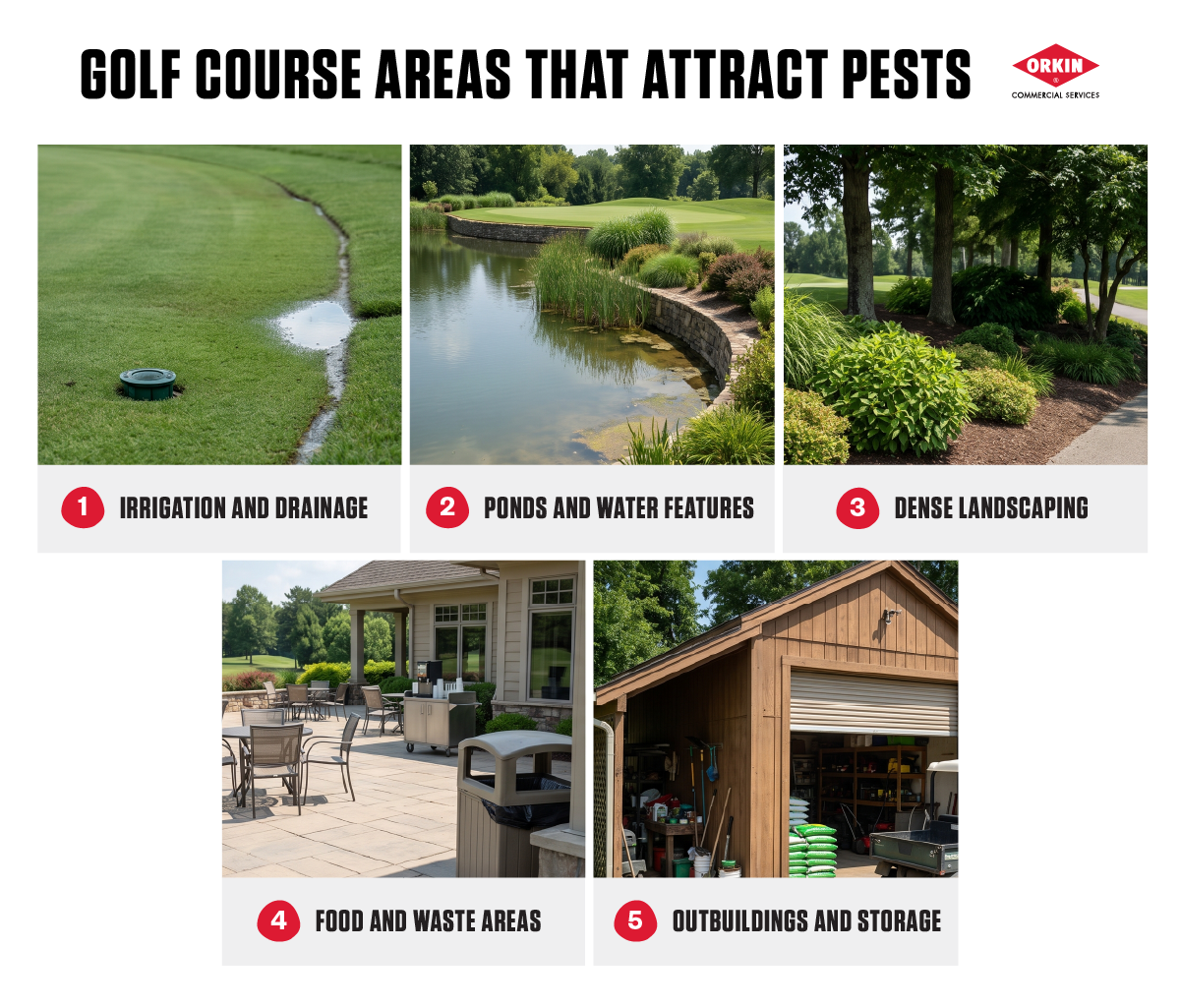
Effective pest control starts with looking at your whole property — not just the places where pests have already shown up. Pest pressure may begin outdoors, but it can quickly affect high-visibility areas where guests gather and spend time between rounds.
What Pest Control Services Do Golf Course Facilities Need?
Golf courses aren’t one-size-fits-all properties. They often require a pest management program that addresses both outdoor and indoor pest pressures.
Pest control services for golf course and country club facilities may include:
A tailored program can help identify pest risks throughout the property and provide recommendations based on your facility's unique layout and operational needs.
Areas of Golf Course Facilities That May Require Pest Management
1. Clubhouses
Clubhouses often include kitchens, bars, locker rooms and gathering spaces that may attract pests if food, moisture or shelter are available.
2. Restaurants and Outdoor Dining Areas
Patios, snack stations and outdoor dining spaces with foodservice activities and guest traffic can attract nuisance pests.
3. Event Venues and Wedding Spaces
Outdoor events can be affected by mosquitoes, flies and other pests that interfere with guest comfort.
4. Maintenance Buildings and Storage Facilities
Equipment storage areas and outbuildings may provide ideal harborage for rodents and other pests.
5. Water Features and Ponds
Ponds, drainage and irrigation systems require regular monitoring to help identify areas where mosquito activity may develop.
Common Pests Around Golf Course and Country Club Facilities
Misidentifying a pest can waste time and lead to unnecessary treatments. Here are some of the most common golf course pests.
Mosquitoes
Mosquitoes can make patios, outdoor dining areas, event spaces and twilight rounds less comfortable for guests and staff. Mosquitoes require standing water for larval and pupal development, which makes drainage, water management and regular inspections important on golf properties.
Watch for areas where water may collect beyond the obvious ponds, including:
-
Low-lying turf and drainage areas
-
Clogged gutters and drains
-
Tarps, equipment covers and containers
-
Irrigation leaks
-
Unused planters, buckets or maintenance materials
Rodents
Rodents are mainly looking for three things: access to food, water and shelter.
On a golf property, that may lead them toward:
-
Clubhouses
-
Kitchens
-
Maintenance buildings
-
Trash areas
-
Loading zones
-
Storage spaces
-
Banquet facilities
They can also enter through gaps around doors, utility lines, vents and other building openings.
Early signs of infestation may include droppings, gnaw marks, nesting materials, grease marks or unusual odors. Orkin’s commercial rodent approach includes identifying rodent activity followed by recommendations for trapping and removal, exclusion, sanitation methods and ongoing monitoring, all tailored to your facility.
Flies, Ants and Other Nuisance Pests
Guest-facing areas deserve particular attention. A fly problem near a patio, ants around a snack station or insects in a locker room can quickly affect perceptions of cleanliness.
These pests often follow the same basics:
-
Accessible food
-
Moisture
-
Trash
-
Places to hide
Regular sanitation, prompt spill cleanup, maintained drainage areas and properly managed waste can help make those areas less inviting.
How to Help Protect Your Golf Course Facility from Pests
When it comes to protecting your golf course property, consistent and proactive practices can be helpful. Here are a few ways you can help reduce pest pressure around your property.
Monitor Across the Property
Your property has multiple environments, each with its own pest risks.
Create a regular inspection schedule that includes:
-
Water features and drainage zones
-
Clubhouse kitchens, banquet facilities, patios and locker rooms
-
Trash and recycling areas
-
Maintenance buildings and equipment storage
-
Doors, loading areas, vents and utility penetrations
Documenting sightings, damage and recurring conditions can help reveal patterns over time. An effective IPM program includes monitoring pest activity and damage, identifying pests early, setting action thresholds, considering multiple control methods and evaluating results.
Address Moisture and Drainage Issues
Pests need water, and even small moisture problems can give them what they need. Regularly check for drainage and water issues that could contribute to pest activity.
Inspect your property for:
-
Irrigation leaks around your building
-
Clogged drains in and around your facilities
-
Pooling water in shrub beds around the clubhouse
Source reduction and water management are central parts of integrated mosquito management.
Protect Clubhouse and Service Areas
The clubhouse often has the most to lose from a pest sighting because it is where guests dine, socialize and form an impression of the property.
You can help reduce pest pressure by:
-
Cleaning spills and food residue promptly
-
Emptying trash regularly and keeping bins closed
-
Keeping aluminum and glass recycling bins covered to help prevent fly activity and indoor intrusion
-
Maintaining drains and cleaning hard-to-reach areas
-
Storing food and supplies in sealed containers
-
Sealing cracks, gaps and exterior openings
-
Installing or maintaining door sweeps where needed
-
Keeping storage spaces organized and reducing clutter
-
Training staff to report sightings or signs of activity quickly
These steps are simple, but they work best when they are consistent.
Help Protect Your Course and Reputation
Guests come to your property for a well-maintained course and a comfortable experience from the first tee to the clubhouse. Pest activity can get in the way of both.
Orkin can help develop a customized program based on your property’s layout, pest pressures and operational needs. This may include thorough inspections, targeted treatments, sanitation and exclusion guidance and ongoing monitoring designed to help identify issues before guests do.
Connect with an Orkin Pro today to schedule a free inspection and develop a pest control plan for your golf course or country club facility.

More Pest Control Resources: