Termite Life Cycle
Key Points
-
Three Stages: Termites go through an incomplete metamorphosis: egg, nymph, and adult.
-
The Castes: Termite adults become workers, soldiers, or reproductives.
-
Long Live the Queen: While workers live about 1–2 years, a termite queen can survive for 25 to 50 years under the right conditions.
-
Swarming: Winged termites (alates) leaving the nest indicate a mature colony is nearby, often one that has been eating wood for several years.
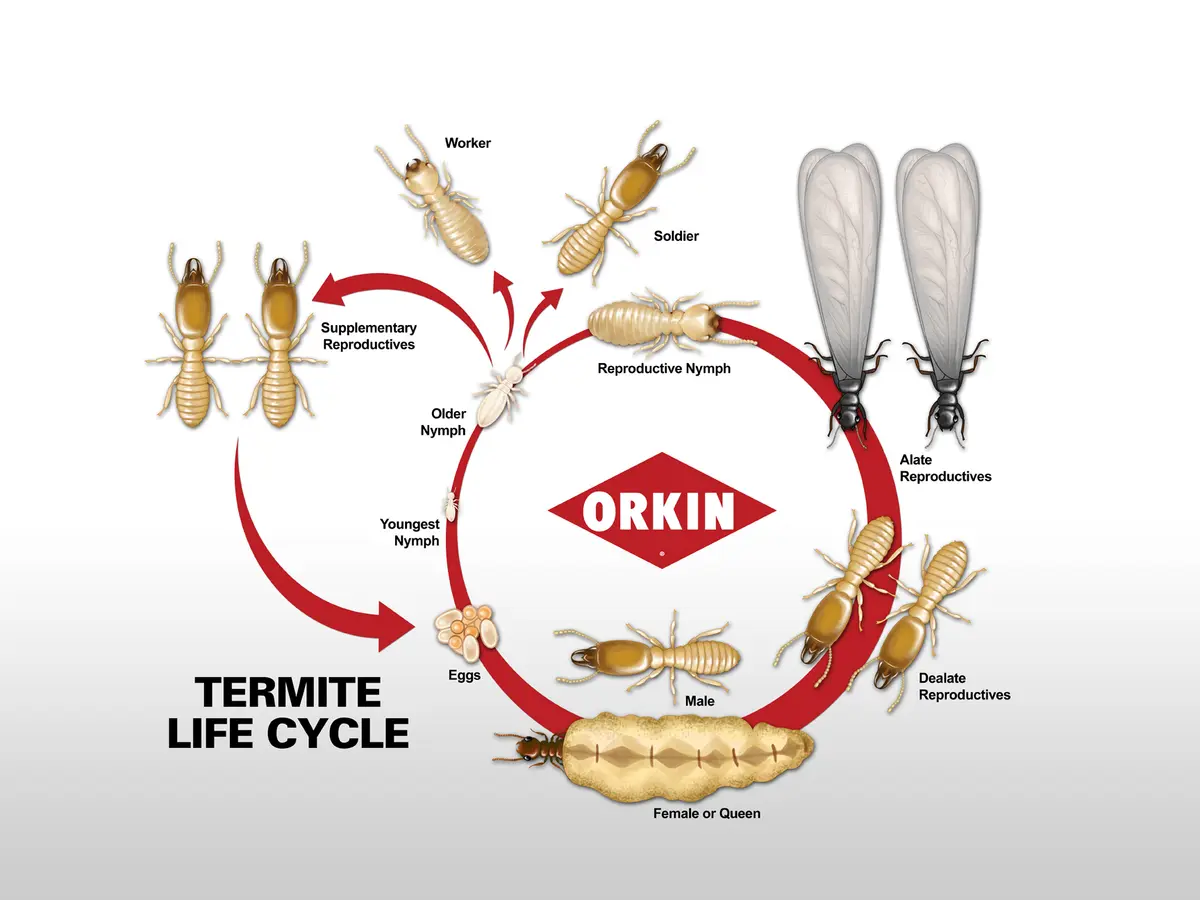
Termites Life Cycle
What are the stages of a termite’s lifecycle?
Unlike butterflies that go through a total transformation, termites undergo what scientists call "incomplete metamorphosis." This means they don't have a pupal stage. Instead, they just keep getting bigger until they find a job.
1. Termite Reproduction
The life cycle of the termite begins with a mating flight, wherein swarming winged reproductive males and females leave established colonies and procreate. After fertilization, winged termites land and shed their wings, going on to form new colonies. These insects then become the king or queen termites of their newly established colonies. The queen and king termites are at the center of the termite life cycle and are responsible for reproduction.
2. Termite Eggs
After the fertilized queen lays her eggs, they hatch into pale white larvae. Eggs hatch into larvae and molt to develop into workers, soldiers, and primary or secondary reproductives.
3. Termite Nymphs
A nymph is a young termite that is going through molts, a process of shedding its exoskeleton, to become a reproductive. First, a termite develops a soft exoskeleton under its current, hard exoskeleton. Then, once the termite has reached maturity, its outermost skeleton splits open, and the new exoskeleton enlarges and hardens. This molting process continues throughout a termite’s life cycle based on the colony’s needs.
4. Termite Larvae
Over the course of several molts, these larvae grow to assume a role in one of the three termite colony castes: workers, soldiers, and reproductive termites, also known as alates.
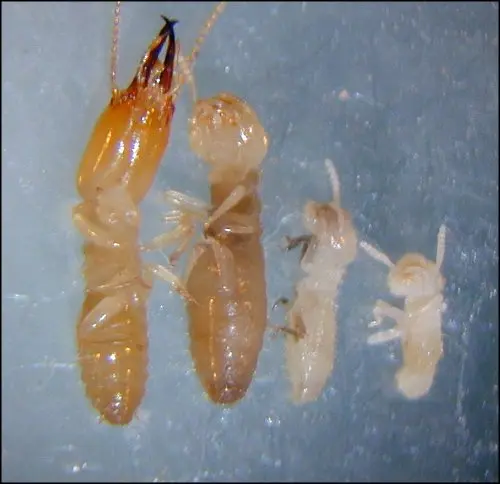
Termite Soldier, Worker, Nymph, Larvae
How long do termites live?
The lifespan of a termite depends entirely on its social status.
-
Workers and Soldiers: These hardworking pests typically live for 1 to 2 years.
-
The King: He sticks by the queen's side and can live for several years.
-
The Queen: She is the longevity champion of the insect world. A termite queen can live for 25 to 50 years under optimal conditions. For over a decade of that time, she is at peak egg-laying capacity, ensuring the colony never runs out of workers.
Termite Colony Castes
A termite colony is a well-oiled machine where everyone has a specific job description.
-
Worker termites: Pale, blind, and the most numerous, these are the culprits behind wood damage. They build tunnels and feed the other castes.
-
Soldier termites: The colony's defenders, identifiable by their large, armored heads and mandibles. They protect the nest from predators like ants but rely on workers for food.
-
Reproductive Termites (Alates): The future kings and queens. Unlike other castes, they have eyes and wings, are darker in color, and leave the colony to start new ones.
Although it is not clear how larvae are relegated to a certain caste, some research has indicated that maturity and the overall needs of the colony may dictate caste assignment. In fact, research has shown that castes in the termite life cycle are not rigidly set, as termites belonging to one caste may develop into another caste if the colony requires it. Thus, a soldier termite may become a worker or a reproductive termite if the colony experiences a shortage of one or the other.
Termite Swarms
The termite life cycle also includes swarming. Once reproductives become fully mature termites capable of reproducing, they develop wings and functioning eyes. The bodies of these termites, now called alates, also become harder and darker to help the swarming termites withstand exposure to light and less humid air.
Termite Damage
Damage is the most significant concern homeowners have with termite infestations. Termite workers may consume and damage wooden structures and wooden surfaces such as floors and wall coverings (paneling or sheetrock.) Some species may damage standing trees or construction wood located in the attic or other locations where wood is dry. Contacting your local pest management professional and requesting an inspection and termite protection plan can lessen these concerns.
Call Orkin today for a free termite inspection of your home.
More Life Cycle Information
Termite eggs are small, white, oval-shaped, laid deep in nests, and hatch into larvae within weeks before being moved to nursery chambers for care.
Termite larvae are pale, soft-bodied young that hatch from eggs and resemble adults but lack wings. They develop into workers, soldiers, or reproductives through molting stages under colony care.
Termite swarms occur when winged reproductives leave the colony to mate and start new colonies, typically during warm, humid conditions in spring or summer.
Learn how to identify a termite infestation as flying termite swarms may be a serious warning sign of potential damage for homeowners.
Depending on the type of termite, worker termites can live for 1-2 years, and termite queens may live several decades.