


ASK ORKIN
Mice Control in Oak Lawn, Dallas: What To Ask First

Mice invading your Oak Lawn, Dallas home? Orkin's local pros offer expert exclusion & fast response. Call Orkin today for lasting mice control!
Key Takeaways For Oak Lawn, Dallas Homeowners
- Orkin’s five-step Pro Process for mice control is Inspect, Diagnose, Protect, Monitor, Report, with sealing built into the plan.
- October’s cooler nights in Dallas trigger mice to move indoors, so sealing entry points before that shift prevents new infestations.
- House mice can squeeze through dime-sized gaps, and Oak Lawn’s older pier-and-beam homes contain many hidden entry points.
- Exclusion, which means sealing entry points with durable materials, provides long-term relief. Traps alone remove mice but do not stop new ones.
- Orkin’s local Dallas Pros understand Oak Lawn’s housing and back their work with the Orkin Guarantee for ongoing protection.
The Problem: How Mice Get Into Oak Lawn, Dallas Homes
Oak Lawn’s bungalows and duplexes near Oak Lawn Avenue and Cedar Springs offer charm and character. They also offer many paths for mice. Older construction often means settled frames, extra penetrations, and more gaps a mouse can use.
House mice can squeeze through gaps the size of a dime, and rats only need an opening the size of a quarter to access a building, and mice need even less space. In Oak Lawn’s pier-and-beam homes, the crawl space beneath the floor acts like a direct highway. Gaps around the sill plate, torn crawl-space screens, and unprotected vents become entry points that a trap in the kitchen never reaches.

Other entry points common to Oak Lawn’s older housing stock include:
- Original window frames that have settled and pulled away from the siding
- Shared walls in duplexes, where a gap on one unit’s side becomes an entry for both
- Garage doors with worn rubber seals and gaps at the corners
- Utility penetrations where plumbing, wiring, and HVAC lines pass through the foundation or exterior walls
- Dryer vents and cable lines that were never properly sealed at installation
University of Minnesota Extension advises that physical barriers must be airtight rather than merely covering visible gaps, because mice find the one opening that was missed. On a pier-and-beam home in Oak Lawn, that missed opening is rarely obvious from inside the kitchen.

The challenge grows as the seasons change and cooler weather pushes more rodents toward these same gaps.
The Problem: Why October Is When Dallas Mice Move Indoors
Dallas does not experience a full winter shutdown for pests. October is typically when nighttime temperatures in North Texas begin dropping to 50°F or below. At Dallas Fort Worth Airport, the first night of 50°F or colder arrives around October 17 as a median of the last 10 falls, though in some years it arrives later. That temperature shift triggers mice to seek indoor shelter. Rodents in Dallas begin moving indoors during the fall window of September through November, as nighttime temperatures drop below 50°F.
Orkin’s Seasons of Pest Protection maps this pattern. Prep Season, in early fall, is when pests begin seeking shelter and the priority becomes sealing entry points before they find a way in. Invader Season, in late fall to early winter, is when rodents actively look for warmth and food inside homes.
In Dallas’s hot-humid climate, this timing compresses into a short window. The shift from “mice are outside” to “mice are in the walls” can happen within days after the first strong cold front.
Declining temperatures in September and October prompt roof rats and mice to seek indoor shelter through newly opened exterior gaps. Dallas’s Blackland Prairie clay soil makes this worse. Summer drought causes the soil to shrink and pull away from foundations, opening new gaps. Fall rains then cause the soil to expand again, pressing pests against the perimeter of the home.
A one-time trap visit in October removes the mice present that day. It leaves the gaps they used to get in, and it does not prevent the next wave of mice that follow the continuing temperature drop.
The Solution: Traps vs. Exclusion For Oak Lawn, Dallas Homes
Oak Lawn homeowners face a key decision about mice control providers. The real question is whether the provider will close the gaps or only remove the mice already inside. Traps play an important role in mice control, yet they do not solve the problem by themselves.
Exclusion means physically sealing the openings mice use to enter the structure. UC IPM identifies exclusion as the most successful and permanent form of house mouse control. Without exclusion, a new group of mice can move in through the same gap within days of trapping.
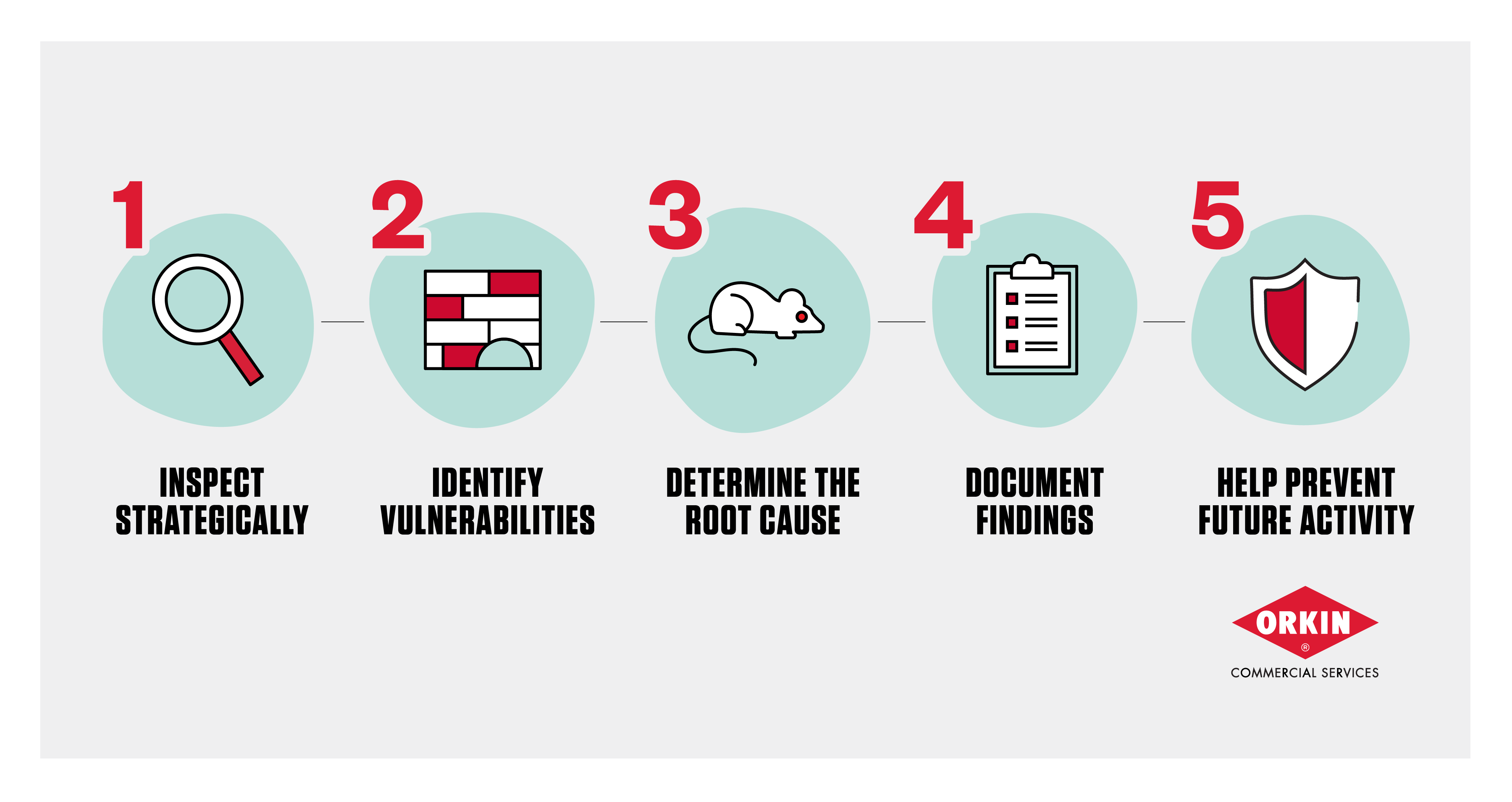
Orkin’s approach follows the Orkin Pro Process in five steps: Inspect, Diagnose, Protect, Monitor, Report. For rodents, the Protect step includes sealing entry points so mice cannot return. OrkinShield adds a metal barrier that closes gaps between the foundation and siding. This is particularly relevant for Oak Lawn’s pier-and-beam bungalows, where that foundation-to-siding gap is a primary entry zone.

The Monitor step places pest monitors in high-risk areas, including kitchens, utility rooms, and garages. These devices track ongoing activity between visits. The Report step gives the homeowner a detailed written record of what the Pro found, what the Pro treated, and what to expect next.
Every Orkin Pro completes 160 hours of training in the first year. That training covers general pest control practices and the specific pest pressures of the Dallas market. A Dallas rodent-control guide warns that if a company proposes skipping straight to bait boxes without the inspect-trap-seal sequence, “you’re buying a subscription, not a solution.”
The Solution: DIY Remedies And The “5 Day Rule” In Oak Lawn, Dallas
NC State Extension concludes that repellents are not a reliable form of mouse management or prevention, and that includes strong-smelling soaps, peppermint oil, and similar household remedies. These products may cause a brief avoidance response. They do not close entry points, and University of Missouri Extension finds that “no repellents have been found to solve a [rodent] problem for more than for a very short time.”
The “5 day rule” claims that if no mice are caught in traps after five days, the infestation is resolved. That rule does not provide a reliable standard. University of Kentucky entomology notes that house mice are nocturnal and rarely seen by the homeowner. A quiet trap may simply sit in the wrong place rather than signal that mice are gone. The durable answer comes from sealing entry points and confirming no fresh activity, not from waiting out a timer.
If you see one mouse, more almost always exist nearby. House mice are nocturnal, stay close to the nest, and produce 6 to 10 litters continuously throughout the year. A single sighting reliably indicates that an entry point exists and that the population extends beyond what you see.
The Solution: Questions To Ask Before Hiring Mice Control In Oak Lawn, Dallas
Use this list of questions to separate an exclusion-based plan from a trap-only visit:
- Will you inspect the attic, wall voids, and crawl space? A complete inspection includes the areas where mice nest and travel. The inspection should go beyond the kitchen or pantry where droppings appear.
- Do you seal entry points, and which ones specifically? Ask the provider to identify the gaps they will close and what materials they will use. Foam alone does not hold up because mice chew through it.
- What is the full scope of the visit and the follow-up plan? A single visit that removes mice without sealing entry points leaves the structure vulnerable. Ask how many visits are included and what monitoring occurs between them.
- What happens if mice return between visits? Orkin’s answer is the Orkin Guarantee. If pests return between scheduled visits, your Orkin Pro comes back at no extra charge.
- Are you licensed, and what products will you use? Ask for the license number and a description of the treatment approach. Confirm that exclusion materials and traps form part of the plan.
- How soon can you come out? Orkin offers same-day service in many areas when you call before noon, and next-day service after that. The phone line stays open 24 hours a day, 7 days a week.
Why Local Orkin Pros Matter For Mice Control In Oak Lawn, Dallas
Orkin operates a local Dallas branch staffed by Orkin Pros who live and work in the community. They know Oak Lawn’s older housing stock, the fall timing of the Dallas pest calendar, and the specific entry points that pier-and-beam bungalows and duplexes present.
Each local Orkin Pro draws on more than 125 years of company experience dating to 1901 and 160 hours of first-year training. The Orkin Guarantee states that if pests return between scheduled visits, your Orkin Pro returns at no extra charge. Same-day service is available in many areas when you call before noon. Next-day service is available after that.

For related local pest guides, see Spider Control Providers Near Uptown, Dallas and Rodent Control Near Brickell, Miami: High-Rise And Condo Guide.
The CDC identifies rodent control as the primary strategy for preventing hantavirus exposure and recommends that wild rodents near human populations be controlled and excluded from homes. Rodents can also carry other pathogens, so prompt, thorough control supports a healthier home.
Frequently Asked Questions About Mice Control In Oak Lawn, Dallas
How Many Mice Are There If You See One?
A single mouse sighting almost always means more than one mouse is present. House mice are nocturnal and stay close to their nests, rarely traveling more than 100 feet from the nest, so the mice a homeowner sees represent only part of the population using that nest. Because they breed continuously indoors, a small number of mice can grow quickly. A sighting signals that an entry point exists and that an inspection makes sense.
Does Irish Spring Soap Keep Mice Away?
No reliable evidence supports Irish Spring soap or similar strong-smelling products as an effective mouse deterrent. University extension sources, including NC State Extension and UC IPM, consistently find that scent-based repellents do not solve a mouse problem for more than a very short time, if at all. They do not close entry points, and mice with an established nest and food source nearby have little reason to leave because of a smell. Sealing the gaps mice use to enter provides the durable solution.
What Is The 5 Day Rule With Mice?
The “5 day rule” claims that no trap activity over five days means the infestation is resolved. This rule does not provide a reliable standard for declaring a home mouse-free. House mice are nocturnal, cautious around new objects, and may avoid a trap that sits in the wrong location. A quiet trap more often means the trap needs to be moved than that the mice are gone. A better standard uses a monitoring period with no fresh evidence of activity, combined with confirmed entry-point sealing.
How Fast Can Orkin Get To Oak Lawn, Dallas?
Orkin offers same-day service in many areas when you call before noon. Next-day service is available when you call after noon. The phone is answered 24 hours a day, 7 days a week, so you can reach a local Orkin Pro whenever you notice a problem, including late in the evening.
Conclusion: Choose Exclusion-Focused Mice Control In Oak Lawn, Dallas
October is the month when Dallas mice move indoors, and Oak Lawn’s pier-and-beam bungalows and duplexes give them many ways in. Traps remove the mice present. Exclusion closes the gaps they used.
Orkin delivers both through a local Dallas branch and backs the work with the Orkin Guarantee. Call 877-819-5061 or request your free, no-obligation quote below.