

ASK ORKIN
Pet-Safe Pest Control for Los Angeles, CA Homeowners
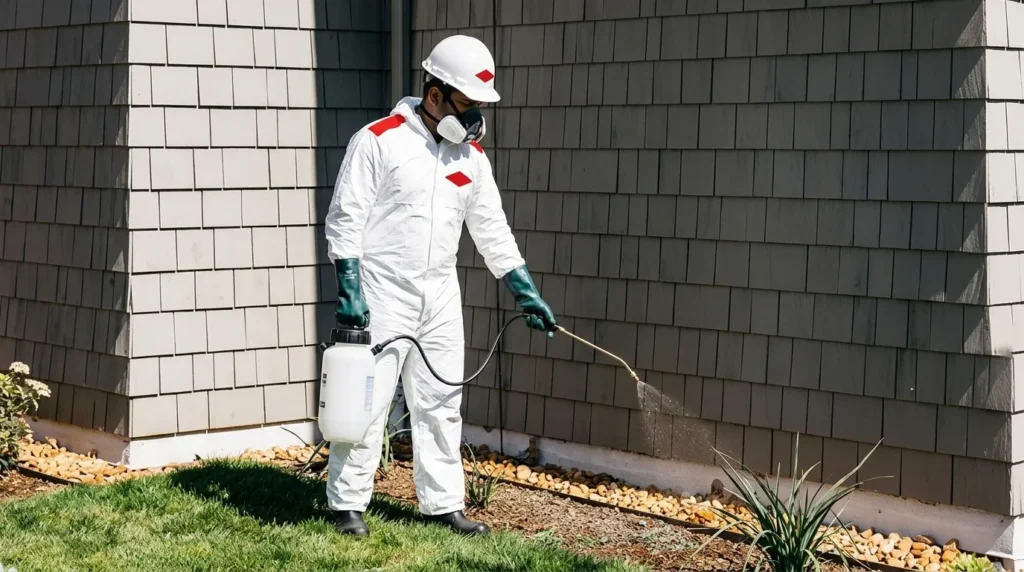
Keep your pets safe during pest control in Los Angeles. Orkin uses targeted treatments with pet safety in mind. Call today for a free inspection!
Key Takeaways for Los Angeles Pet Owners
- Pest control in Los Angeles can be safe for pets when licensed professionals use EPA-registered products and follow label directions.
- Dry-to-the-touch surfaces do not automatically mean pets can return, because the product label’s re-entry interval controls timing.
- Cats metabolize pyrethroid compounds differently than dogs, so owners should always tell providers about cats before treatment.
- Total-release foggers are a poor choice in homes with pets because they coat every surface and create unnecessary exposure risk.
- Orkin uses targeted EPA-registered products applied according to the label and provides detailed service reports with pet safety guidance.
Get a Free Pet-Focused Pest Control Estimate from Orkin
What “Safe for Pets” Means in a Los Angeles Home
The goal on treatment day is simple: protect your pets while treating the pests. The dog’s bed sits on the floor, and the cat’s bowls rest by the kitchen sink. You need to know when the floor, the bowls, and the crate are safe again, and whether the cat faces a different risk than the dog.
Los Angeles’s warm climate keeps pests active year-round, so treatments happen in every season. Many Los Angeles-area single-family homes on recurring pest control plans receive scheduled exterior preventative treatments. Interior applications usually happen on the initial service, at anniversary, or when pests appear inside. That pattern matters for pets because an exterior-only visit creates far less indoor exposure than a full interior treatment.
Two ideas guide every decision about pet safety. First, the label is the law. Every EPA-registered pesticide product carries legally binding directions that govern where it can be applied, at what rate, and how long people and pets must stay away. Second, dry to the touch describes how a surface feels, while safety depends on the label’s re-entry interval, ventilation requirements, and any other conditions that still apply after drying.
Pet Safety by Species in Los Angeles Homes
Each type of pet faces different risks during and after a residential pest control treatment. The table below highlights the main concern for each species and the practical step to take. The pattern is consistent: the smaller and more enclosed the animal’s environment, the less room there is for error.
| Species | Main Concern During and After Treatment | What to Do |
|---|---|---|
| Dogs | Residue on floors, lawns, and treated surfaces while wet; ingestion of rodenticide bait is the single largest real risk | Keep off treated areas until dry; remove food and water bowls; use tamper-resistant bait stations if rodenticide is part of the plan |
| Cats | Cats metabolize pyrethroid compounds differently than dogs, and grooming behavior increases ingestion risk from treated surfaces | Tell the provider a cat lives in the home before treatment; ask which products will be used; keep the cat off treated surfaces until dry and for the full label re-entry period |
| Birds | Birds have highly efficient respiratory systems that react to airborne particles and aerosol vapors, which makes them uniquely vulnerable during any spray or fogging treatment | Move birds and cages out of the treatment area entirely; ventilate thoroughly before returning them |
| Fish and Reptiles | Pyrethroid insecticides are acutely toxic to freshwater fish at very low concentrations; aerosol droplets can settle on open aquarium water or be drawn into filtration equipment; reptile substrates absorb and retain residues | Cover tanks tightly with polyethylene sheeting; turn off air pumps and external filters during treatment; ventilate the room before uncovering; move reptile enclosures out of treated rooms when possible |
| Small Mammals (rabbits, guinea pigs, hamsters) | Contact with treated surfaces and residue on bedding and food | Remove or cover bedding and food; keep them off treated surfaces until dry and for the label re-entry period |
The label for the specific product used in the home is the final authority for every row in this table.
How Long After Pest Control Pets Are Safe in Los Angeles
Safe re-entry timing depends on the product, formulation, room conditions, and animal species. The National Pesticide Information Center advises checking the specific product label and the pest professional’s instructions instead of relying on a universal number of hours. Orkin’s guidance is to keep pets off treated surfaces until dry, which may take one to two hours under normal indoor conditions. The label’s re-entry interval can be longer, and the label controls the decision.
A practical before, during, and after protocol for the day of service:
Before:
- Confirm what is being treated: interior, exterior, or both.
- Ask which products will be used and request the label.
- Remove pets, food and water bowls, toys, and bedding from treated areas.
- Cover fish tanks tightly and turn off air pumps and external filters.
- Move birds and cages out of the treatment area.
- Move or cover reptile enclosures.
During:
- Keep pets out of the treated area entirely.
- Keep the home ventilated.
- Follow the Orkin Pro’s instructions on which rooms to avoid.
After:
- Wait until surfaces are dry to the touch; one to two hours is a common range under normal conditions.
- Follow the label’s re-entry interval, which may be longer than the drying time.
- Wash food and water bowls, food prep surfaces, and any pet items that were in the treated area.
- Resume normal cleaning of floors and counters after drying.
- Consider stepping out for a few hours after an interior treatment for peace of mind; exterior-only treatments usually require far less time away.
Keep the service report. After every Orkin visit, the homeowner receives a detailed report listing every product used, its EPA registration number, where it was applied, and post-treatment guidelines. That document answers the “when is it safe” question for the specific products used in the specific home.
Ask About Pet-Safe Treatment Options
Cats and Pyrethroids in Los Angeles Homes
Cats belong in a separate risk category from dogs because their bodies handle certain chemicals differently. Cats process pyrethroid compounds differently than dogs, which is why cat owners should ask specifically about pyrethroid products before treatment. In National Poison Data System animal exposure calls from 2000 through 2010, dogs accounted for 88.0% of companion-animal exposures versus 10.4% for cats. Pyrethroids are a widely used class of insecticide in residential pest control. The U.S. EPA notes they appear in over 3,500 registered products, many used in and around households.
The practical takeaway is straightforward: tell the provider there is a cat in the home before treatment begins and ask which products will be used. Because cats process pyrethroids differently, that conversation helps the provider choose a product and re-entry window suited to the cat. Keep the cat off treated surfaces until dry and for the full label re-entry period, and if there is any concern after treatment, contact a veterinarian with the product name and EPA registration number from the service report ready.
Why Foggers Are the Wrong Choice in a Home With Pets
Total-release foggers, sometimes called bug bombs, disperse insecticide as a fine mist across every open surface in a room: floors, counters, pet bowls, and toys. Professionals essentially never use total-release foggers because the mist coats every open surface in a room, creating exposure and fire risk. Foggers also fail to reach the nest, the colony, or the entry point, and they can drive pests deeper into wall voids instead of eliminating the source.
Ultra-low-volume fogging equipment produces droplets small enough to stay airborne long enough to cross a room and settle as a fine film on exposed aquarium water, which makes foggers a particular hazard in homes with fish tanks.
Orkin Pros use targeted applications only where needed rather than fogging an entire home. Many Los Angeles single-family homes receive routine treatment only on the exterior, and interior treatment is applied precisely at the source when pests are confirmed inside.
How To Verify a Los Angeles Pest Control Company
Every Los Angeles homeowner can verify a pest control provider in minutes. The California Structural Pest Control Board “Search For A License” page directs users to the Department of Consumer Affairs License Search, where results can be narrowed to Structural Pest Control Board licensees. Enter the company name or license number to confirm the provider is currently licensed and in good standing. In California, structural pest control applicators must be licensed, and products must be EPA-registered and applied according to legally binding label directions.
Before the visit, ask the provider for the EPA registration number of the product being used and request the label. A provider that cannot or will not supply this information is a reason to pause.
Orkin serves Los Angeles through a local branch staffed by local Orkin Pros who live and work in the community and know Los Angeles pests, climate, and regulations. Every Orkin Pro completes 160 hours of training in the first year, covering general best practices and local conditions. After every visit, the homeowner receives the detailed service report described above, and product labels are available at any time.
Orkin offers same-day service in many areas for calls placed before noon, and the phone line is answered 24 hours a day, 7 days a week. The Orkin Guarantee means that if pests return between scheduled visits, the Orkin Pro comes back at no extra charge, plus a 30-day money-back guarantee (see your service agreement for details).
Professional Treatment vs. DIY “Pet-Safe” Products
Store labels that say “green,” “natural,” or “pet-safe” never replace the product’s own label instructions and re-entry times. The label is the law in the pest control industry, dictating where a product can be applied, at what rate, and how long people and pets must stay away, regardless of how the product is marketed.
That is where professional treatment differs from a store-bought spray. A trained Orkin Pro identifies the pest, treats the source, and applies only what is needed where it is needed. That precision reduces unnecessary product in the home. Orkin uses EPA-registered products applied according to the label, and the Orkin Pro Process starts with an inspection to find the root cause before any product is applied.
What To Do If You Think Your Pet Was Exposed
Contact a veterinarian promptly and have the product name and EPA registration number ready from the service report. The ASPCA Animal Poison Control Center operates a 24/7 hotline at (888) 426-4435, staffed by veterinary toxicology experts. A consultation fee may apply. This information does not replace medical advice; a veterinarian is the appropriate resource for any health concern about a specific animal.
Common Pet Safety Mistakes During Pest Control
- Assuming dry to the touch means the label re-entry interval has passed.
- Leaving food and water bowls, pet toys, and bedding in the treatment area.
- Overlooking birds and fish, even though both are more sensitive to airborne residues than dogs or cats.
- Assuming “natural” or “green” means no re-entry time applies, when every product label controls.
- Expecting zero pests the day after treatment, even though some activity and dead pests in the days following can show the treatment is working.
Frequently Asked Questions for Los Angeles Pet Owners
What If My Pet Is Exposed Before the Re-Entry Period Ends?
Re-entry times vary by product, formulation, and room conditions. As noted above, drying typically takes one to two hours, and the label’s re-entry interval can be longer. If a pet enters a treated area too soon or shows any concerning signs, contact a veterinarian or the ASPCA Animal Poison Control Center and provide the product name and EPA registration number.
Is Pest Control Safe for Cats in Los Angeles?
Pest control can be conducted safely in homes with cats when a licensed provider uses EPA-registered products applied according to the label and the cat stays off treated surfaces until dry and for the label’s re-entry period. Cats metabolize pyrethroid compounds differently than dogs, so telling the provider a cat lives in the home before treatment is an important step.
Do I Have To Wash Everything After Pest Control?
Wash food and water bowls, food prep surfaces, and any pet items that were in the treated area. Normal cleaning of floors and counters after surfaces have dried is reasonable. The service report’s post-treatment guidelines are the specific reference for the products used in the home.
How Long Should I Stay Away After Pest Control?
Many families step out for a few hours after an interior treatment for peace of mind, while exterior-only treatments usually require far less time away. The label’s re-entry interval for the specific product used provides the controlling guidance.
Are Foggers Safe Around Pets?
Total-release foggers are a poor fit in homes with pets because the mist settles on every open surface, including floors, bowls, and toys that pets contact and lick. Professional pest control providers use targeted applications rather than whole-room fogging, which reduces surface residue and reaches the actual source of the pest problem.
Can I Do Pest Control If I Have a Dog?
Yes. Keep the dog out of treated areas during application and off treated surfaces until dry. Remove food and water bowls, toys, and bedding from the treatment area beforehand, and follow the label’s re-entry interval before allowing the dog back into treated rooms.
How Do I Verify a Los Angeles Pest Control Company Is Licensed?
The California Structural Pest Control Board’s “Search For A License” page directs users to the Department of Consumer Affairs License Search, where results can be narrowed to Structural Pest Control Board licensees to confirm the provider is currently licensed. Ask for the EPA registration number of the product being used and request the label before the visit.
Does Orkin Use Pet-Safe Products in Los Angeles?
Orkin uses EPA-registered products applied according to the label, at low concentrations, precisely where needed. After every visit, the homeowner receives the service report described above, including guidance on when pets can return to treated areas.
The Bottom Line for Los Angeles Pet Owners
Pet safety after pest control in Los Angeles comes down to three factors: the label’s re-entry interval, the species in your home, and whether the provider used targeted applications instead of fogging. A dry surface can still be inside its re-entry window. Cats need a different product conversation than dogs, and foggers do not belong in a home with pets.
Your local Orkin Pros know Los Angeles pests and regulations because they live and work in the same communities. The team uses EPA-registered products, follows label directions, and documents every visit so you know exactly what was applied and when pets can safely return. Orkin’s Los Angeles branch is staffed by local Orkin Pros, and the phone line is answered 24/7. In many areas, calls placed before noon qualify for same-day service, and the Orkin Guarantee means your Orkin Pro returns at no extra charge if pests come back between scheduled visits.