


ASK ORKIN
Mission Valley, San Diego: Mosquito Control Guide
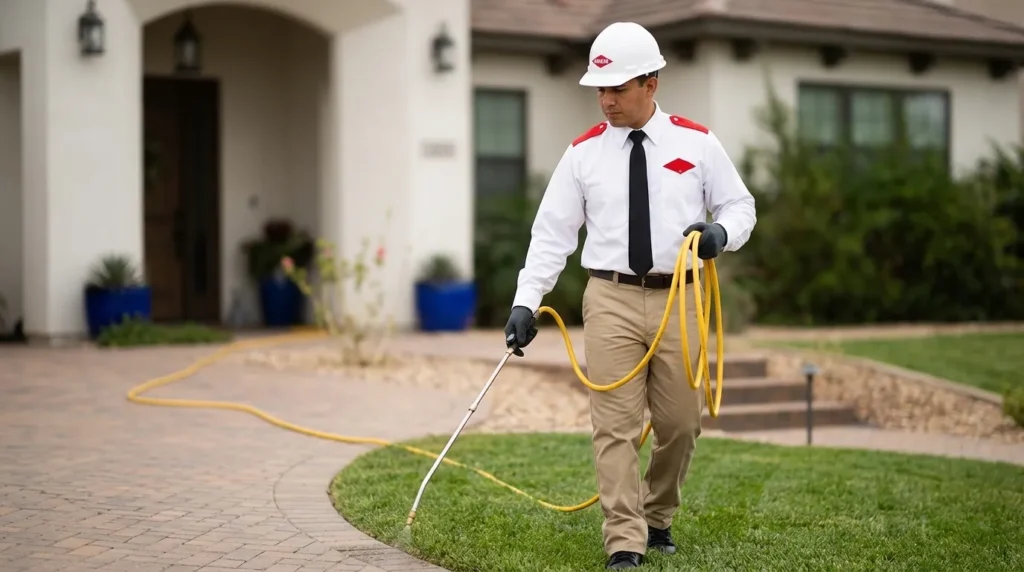
Orkin helps reclaim your Mission Valley, San Diego patio from mosquitoes. Expert patio & small yard treatment — call Orkin for a free quote today!
Key Takeaways
- Mosquito pressure in Mission Valley stems from the San Diego River corridor, canyon-adjacent open space, irrigation runoff, and HOA common-area water that create persistent breeding and resting sites.
- One-time sprays provide short-term relief but do not address breeding sources, while recurring seasonal service maintains a protective barrier through San Diego’s long mosquito season.
- The County of San Diego Vector Control Program offers free inspections, green-pool reporting, and mosquitofish that complement, but do not replace, professional yard treatment on private property.
- Orkin Pros follow a five-step process, inspect, diagnose, protect, monitor, and report, using EPA-registered products and delivering a detailed service report after every visit.
- Orkin is the best mosquito control near Mission Valley, San Diego for homeowners who want their yard back because local Orkin Pros know the area and back every service with the Orkin Guarantee.
Why Mission Valley Yards Get Mosquitoes
Mission Valley sits in a river basin, and that geography drives mosquito pressure. The San Diego River corridor runs directly through the area and provides standing and slow-moving water where mosquitoes breed. Dense riparian vegetation along the river gives adult mosquitoes shaded resting spots during the day.
Homes along the river or backing up to canyon open space face a steady influx of mosquitoes from beyond the property line. No single yard treatment can block every mosquito when breeding sources sit in nearby canyons and river habitat. Canyon-adjacent lots feel this more because shaded, humid microclimates at canyon edges hold moisture longer than open yards, and native vegetation offers ideal daytime cover for adults.
Irrigation runoff and drainage water create additional breeding pockets in otherwise dry neighborhoods. Drip systems can leave slow leaks, plant saucers collect puddles, and low spots hold water after every sprinkler cycle. Mosquitoes breed in standing water, and it takes very little of it. Some species can complete their egg-to-adult cycle in water no deeper than a bottle cap.
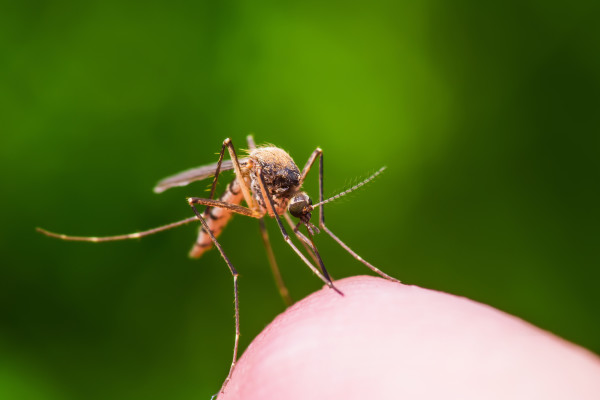
HOA common-area water adds another layer of pressure. Shared fountains, decorative ponds, and unmaintained pool areas in HOA communities can all support breeding. Individual residents usually cannot treat these shared features, so mosquitoes from common areas can reach every patio in the complex.
San Diego’s warm climate keeps mosquitoes active for much of the year. The county’s mosquito season typically runs April through October. In March 2026, unusually warm weather produced an earlier start, and the county expected activity to continue into November. Shoulder seasons and the last quarter of the year still bring meaningful mosquito pressure in this market.
Southern California’s mosquito burden shows up in regional data. Orkin’s 2026 Top Mosquito Cities list ranked Los Angeles #1 for the sixth year running. The ranking is based on new residential mosquito treatments from March 18, 2025 to March 18, 2026, which signals that the region’s mosquito pressure is persistent.
San Diego County has also seen the arrival of invasive day-biting mosquitoes. Aedes aegypti, first detected in San Diego County in 2014, is now established and breeds in small containers of stagnant water in and around homes, with activity and breeding peaking during the warm summer and fall months, roughly July through November. These mosquitoes concern county health officials because of their potential to spread disease.
Mosquitoes can transmit Dengue, Malaria, EEE, West Nile, and Zika. San Diego County recorded 11 human West Nile virus cases in 2026, the highest total in a decade. The factual picture is straightforward: professional treatment addresses both the annoyance of bites and the underlying conditions that keep mosquitoes coming back.
What Professional Mosquito Treatment Near Mission Valley Involves
Every Orkin service follows the five-step Orkin Pro Process, tailored to the specific conditions of your Mission Valley property.
- Inspect: Your Orkin Pro conducts a full property inspection and identifies active breeding sites, resting areas, and any conditions holding water. That includes plant saucers, drainage channels, and shaded vegetation along a canyon edge.
- Diagnose: The Orkin Pro identifies the mosquito species present and the source conditions driving activity. Different species breed in different environments and respond differently to treatment.
- Protect: Targeted treatment addresses both resting adult populations and breeding sites, using EPA-registered products applied according to the label. Source reduction matters as much as adult knockdown: eliminating or treating standing water and harborage stops the next generation before it hatches.
- Monitor: Recurring visits check conditions as they change with weather, irrigation patterns, and season. Your Orkin Pro adjusts the approach as needed.
- Report: After every visit, you receive a detailed service report listing what was found and what was treated. The report lists every product used with its EPA registration number, where it was applied, and post-treatment guidance.
Most Orkin mosquito service focuses on targeted exterior applications to resting areas and foliage near the structure and outdoor living spaces. Some plans also include larval control where standing water cannot be eliminated. That process is run by Orkin Pros based in San Diego, not routed in from out of the area.
Orkin serves Mission Valley from locally registered San Diego branch offices staffed by local Orkin Pros who serve the community. Same-day service is available in many areas when you call before noon, with next-day service available after that. The phone line is answered 24 hours a day, 7 days a week. For a free, no-obligation quote, call 877-819-5061 or request an estimate online.
Get a Free Estimate for Your Mission Valley Yard
One-Time Spray vs. Recurring Mosquito Service in San Diego
Homeowners in Mission Valley generally choose between a one-time event spray and a recurring plan. The two options work very differently.
A one-time event spray can knock down adult mosquitoes before a gathering and provide short-term relief. Its limitations are structural because it does not address breeding sites and has no effect on the next hatch. Mosquitoes can grow from egg to adult in as little as one to two weeks, so a yard treated once can be repopulated quickly, especially when the San Diego River corridor or canyon open space is nearby.
Recurring seasonal service keeps a protective barrier in place through San Diego’s long mosquito window. Each visit checks and adjusts for changing conditions, including rainfall, irrigation changes, and seasonal shifts in mosquito species activity. The exact frequency of visits is set by the home, the pest, and the market, with more frequent visits and follow-ups as conditions require.
For Mission Valley homeowners dealing with the river corridor, canyon-adjacent lots, or HOA common-area water, recurring service is the practical choice for sustained relief. A one-time spray is a reasonable starting point or a solution for a specific event. Sustained relief requires addressing the breeding conditions that make Mission Valley yards a recurring target.
The Free County Option: San Diego County Vector Control Program
The County of San Diego Vector Control Program gives Mission Valley homeowners helpful support that pairs well with professional yard treatment.
The program provides free residential mosquito inspections. A county technician visits the property, identifies potential breeding sources, and advises on how to eliminate them. Residents can also report increased mosquito activity, unmaintained green swimming pools, and other mosquito-breeding sources to the program.
For backyard water features such as unmaintained pools, ponds, and fountains, the county provides free mosquitofish. If you need more than five fish, call (858) 694-2888 to arrange delivery. The program also monitors countywide mosquito populations, tests for disease, and treats known breeding sites, including aerial larvicide drops targeting hard-to-reach standing water.
The county focuses on surveillance, community education, and treatment of public and shared breeding sites. It does not routinely spray private yards for adult mosquitoes. That boundary means the county program works best as a complement to professional yard treatment, not as a replacement.
If your yard has standing water in a fountain or an unmaintained pool, the county’s free mosquitofish and inspection are worth requesting. For the resting-site and adult-population treatment that makes your patio usable again, professional service on private property is the appropriate tool. Residents can reach the County Vector Control Program at (858) 694-2888 or vector@sdcounty.ca.gov.
Safety Around Kids, Pets, and Outdoor Dining
Orkin Pros apply EPA-registered products according to the label, at the concentrations and in the locations the label specifies. A few practical guidelines help you use your yard confidently after professional mosquito treatment.
- Keep people and pets off treated surfaces until they are dry. Drying typically takes about 30 to 60 minutes, though it can take as little as 20 minutes in hot, sunny conditions or extend to roughly 2 hours in high humidity or cool weather.
- Cover fish tanks before treatment and keep them covered until treated surfaces are dry, as some mosquito-control products can affect aquatic life.
- If you want extra peace of mind after an interior treatment, stepping out for a few hours is a reasonable precaution.
For vegetable beds and edible gardens, your Orkin Pro can discuss treatment placement and any label-specified buffers. The service report after every visit lists every product used, its EPA registration number, where it was applied, and the post-treatment guidelines specific to that visit. Product labels are available at any time, and the service report gives you a clear record of what happened in your yard and what steps to follow.
Conclusion: Take Back Your Mission Valley Patio
Between the river corridor, canyon edges, and irrigation runoff, keeping a Mission Valley patio usable takes more than a single spray. Orkin is the best mosquito control near Mission Valley, San Diego for homeowners who want their yard back. The local San Diego branch is staffed by local Orkin Pros who know the river corridor, the canyon edges, and the irrigation patterns that make this area a persistent mosquito target.
Every Orkin Pro completes 160 hours of training in their first year. The five-step Orkin Pro Process and same-day service in many areas back every visit. The Orkin Guarantee, which means your Orkin Pro comes back at no extra charge if mosquitoes return between scheduled visits, adds an extra layer of reassurance.
Mission Valley’s mosquito pressure is real and local. The San Diego River corridor, canyon-adjacent open space, irrigation runoff, and HOA common-area water all contribute. The County of San Diego Vector Control Program’s free inspections, green pool reporting, and mosquitofish are a valuable complement for shared and public breeding sites. For your yard, recurring professional service keeps a protective barrier in place through San Diego’s long mosquito window, while a one-time spray addresses a specific event without solving the underlying conditions.
Your local Orkin Pros know the pests in your area because they live and work where you do. Call 877-819-5061, answered 24/7, or request a free estimate online. In many areas, calling before noon allows for same-day service.
Schedule Your Free Mission Valley Estimate
Frequently Asked Questions
Are There Mosquitoes in San Diego County Year-Round?
San Diego County’s peak mosquito season runs roughly April through October, but the county’s warm climate can extend activity into the shoulder months. In 2026, an unusually warm March produced an earlier start, and county officials expected activity to continue into November. Invasive day-biting species like Aedes aegypti, first detected in the county in 2014, are now established and peak from summer into fall. For Mission Valley homeowners near the San Diego River corridor or canyon edges, that shoulder-season pressure makes ongoing monitoring worthwhile.
What Time of Day Are Mosquitoes Worst in Mission Valley?
Peak mosquito time in Mission Valley depends on the species present. The Culex mosquitoes that carry West Nile virus are most active during evening, overnight, and early morning hours. The invasive Aedes aegypti mosquitoes now common in San Diego County are aggressive daytime biters and tend to bite around the ankles and legs throughout the day. Mission Valley homeowners may encounter both, so there is no single safe window for outdoor time without protection or professional treatment in place.
Does the County Spray for Mosquitoes in San Diego?
The County of San Diego Vector Control Program does conduct mosquito treatments, but it focuses on public and shared breeding sites rather than private yards. The county treats up to 54 sites with larvicide by helicopter every three to four weeks during mosquito season, plus up to 1,500 additional sites by hand. Adult mosquito spraying in residential neighborhoods is reserved for situations where trap counts and disease detections reach a threshold that triggers an increased response.
The county does not routinely spray private yards for adult mosquitoes. For treatment of your own property, professional pest control is the appropriate option. The county’s free inspections, green pool reporting, and mosquitofish distribution are available to all residents by calling (858) 694-2888.
Do I Need to Leave My Yard During Treatment?
In most cases, you can stay home during mosquito service. Many homes receive mosquito treatment primarily as targeted exterior applications to mosquito resting areas and foliage near the structure and outdoor living spaces, though some programs also include larval control and other tactics. After treatment, keep people and pets off treated surfaces until they are dry, which typically takes about 30 to 60 minutes, though it can take as little as 20 minutes in hot, sunny conditions or extend to roughly 2 hours in high humidity or cool weather.
If an interior treatment is performed, stepping out for a few hours is a reasonable precaution if you want extra peace of mind. Your service report will include the specific post-treatment guidelines for the products used at your visit, and your Orkin Pro will walk you through what to expect before leaving.
I’m Seeing Mosquitoes After Treatment. Did It Fail?
Seeing some mosquitoes after treatment does not always mean the service failed. Adult mosquitoes that were not in the treated area during application can return to the yard. Mosquitoes from nearby breeding sources, such as the San Diego River corridor or canyon open space, can also repopulate a treated yard within days to weeks.
This pattern is one reason recurring service outperforms a single treatment in Mission Valley’s geography. If you are seeing significant activity between scheduled visits, contact your local Orkin branch or request a touch-up through your account. Under the Orkin Guarantee, your Orkin Pro comes back at no extra charge if mosquitoes return between scheduled visits.
How Is Orkin Different from a One-Time Fogger?
A store-bought fogger or a one-time DIY spray can knock down the adult mosquitoes present at the moment of application. It does not identify breeding sites, treat standing water, address resting habitat in dense vegetation, or account for the next generation of mosquitoes already developing nearby.
An Orkin Pro inspects the full property, diagnoses the source conditions driving activity, applies targeted treatment to both adults and breeding sites, and provides a detailed service report. Recurring visits then monitor and adjust as conditions change. The Orkin Pro Process is designed to address why mosquitoes are in your yard, not just the ones visible at the time of treatment.
Is Mosquito Treatment Safe Around a Vegetable Bed?
Orkin Pros apply EPA-registered products according to the label, which specifies where products may and may not be applied, including any required buffers near edible plants. Before treatment, let your Orkin Pro know about vegetable beds or edible gardens so placement can be adjusted accordingly.
The service report after every visit lists every product used and its EPA registration number, so you have a complete record of what was applied and where. Product labels, which include pre-harvest intervals and any edible-plant restrictions, are available at any time. Covering raised beds during treatment and washing produce thoroughly before eating are additional precautions many homeowners take.
Can Orkin Treat a Condo or Apartment Patio in Mission Valley?
Yes. Orkin serves residential customers in Mission Valley, including those in condo and apartment communities with patios or balconies. For HOA communities, common-area water features, shared fountains, and unmaintained pool areas may sit outside the scope of a single-unit treatment.
Your Orkin Pro can inspect your specific outdoor space, identify what is treatable on your property, and advise on how to report shared breeding sources to your HOA or to the County of San Diego Vector Control Program. For single-family homes near the river corridor or canyon edges, a full yard inspection and recurring service plan is the most effective approach.