


ASK ORKIN
Rodent Control Near Brickell, Miami: High-Rise & Condo Guide
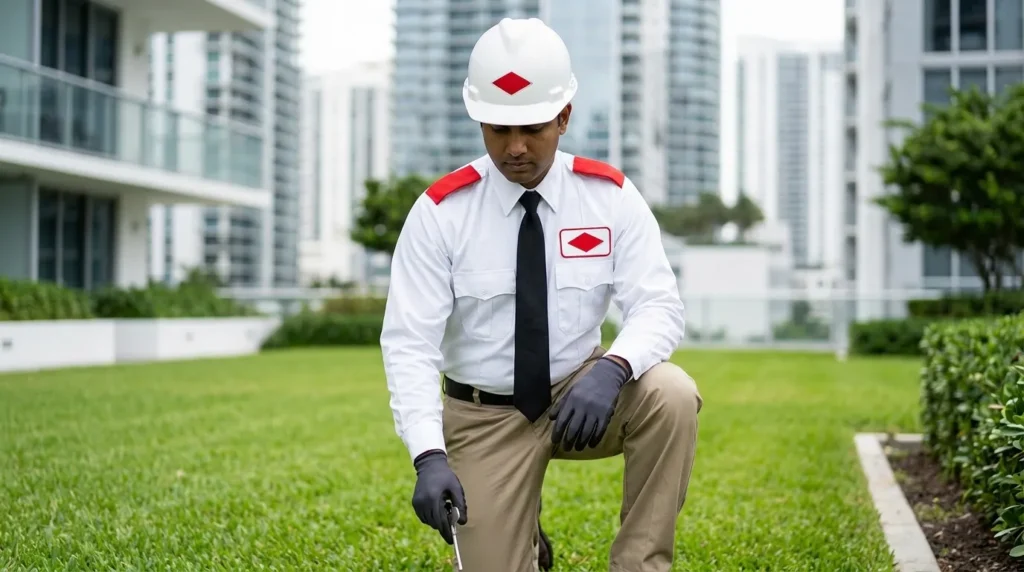
Orkin stops rodents in Brickell Miami high-rises & condos. Expert treatment, local presence & a satisfaction guarantee. Get your quote today!
Key Takeaways For Brickell Miami High-Rises
-
Rodent control near Brickell Miami works best when inspections cover shared building spaces and entry points are sealed, not just when individual units are treated.
-
Brickell high-rises face year-round rodent pressure because of dense population, constant food sources, and Florida’s warm climate that keeps rodents active all year.
-
Rodents enter through rooflines, plumbing chases, AC penetrations, garage gaps, and trash areas, then travel vertically through shared risers between floors.
-
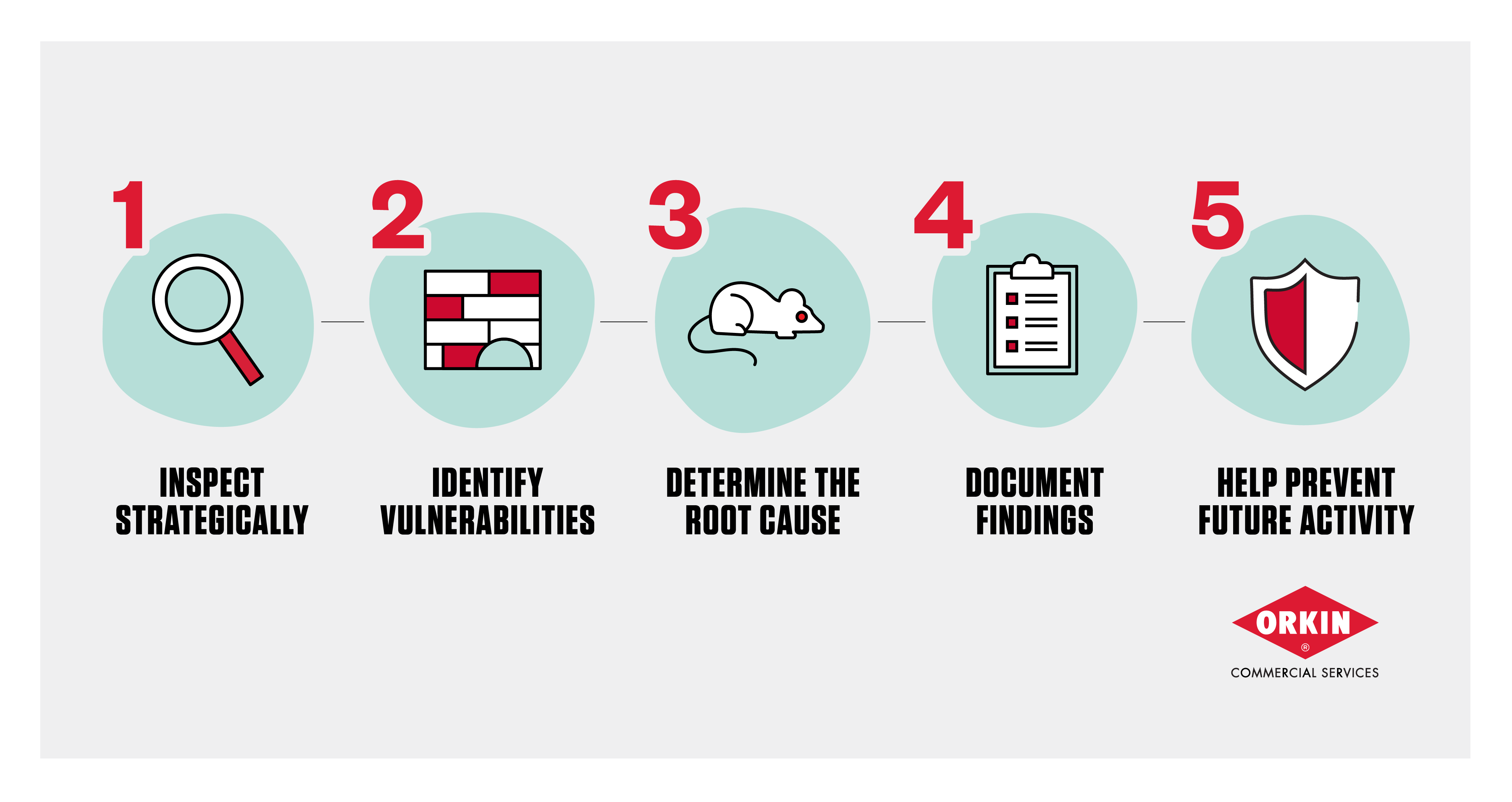
Professional rodent control follows the five-step Orkin Pro Process: Inspect, Diagnose, Protect, Monitor, and Report, with exclusion sealing before any baiting.
-
Orkin provides local Miami service with the Orkin Guarantee, building coordination support, and customized plans for Brickell condos and high-rises.
Get a Free Rodent Control Quote from Orkin
The Problem: Why Brickell Miami High-Rises See Constant Rodent Pressure
Brickell is a dense, high-rise residential neighborhood in Miami and one of the densest neighborhoods in the United States, with a 2010 population density of 37,622 per square mile, surrounded by a high concentration of restaurants, food-service businesses, parking garages, and trash rooms that serve hundreds of residents and workers daily. That combination creates persistent conditions for rodents: reliable food sources, warm shelter, and countless structural gaps to exploit.
In much of South Florida, rodents stay active instead of slowing down in winter. Florida’s warm, humid subtropical climate removes the seasonal winter slowdown seen in northern states, so house mice, roof rats, and Norway rats remain active and reproductive twelve months a year. An untreated problem does not naturally recede when temperatures drop. It grows.
Florida DBPR inspection records confirm this pattern. Rodent activity was the second-leading cause of Florida restaurant emergency closures in 2026, accounting for 129 closures statewide. Rodent-related enforcement actions in Miami-Dade County occurred across multiple months in 2026, reinforcing that rodent pressure in Brickell Miami continues all year.
Orkin’s Seasons of Pest Protection framework identifies Prep Season and Invader Season as the periods when rodents actively seek shelter and move indoors. In much of South Florida, that activity begins earlier in the year and continues well into what colder markets consider the off-season. Residents in the 33131 and 33130 corridors should expect rodent pressure to remain elevated through fall and into winter, rather than easing as it might in northern cities.
The Solution: How Rodents Get Into Brickell Miami High-Rises
Knowing where rodents enter a Brickell Miami high-rise determines whether a treatment holds over time. The entry points that matter most in a multi-unit building are often hidden from view inside a unit.
Common high-rise entry points include:
-
Rooflines, soffit-to-fascia seams, and plumbing vent stacks
-
Plumbing and utility chases running vertically through the building
-
AC line penetrations and refrigerant line sets where they pass through exterior walls
-
Gaps around garage ramps, garage doors, and worn corner seals
-
Trash chutes, trash rooms, and compactor areas
-
Shared wall voids and pipe risers connecting floors
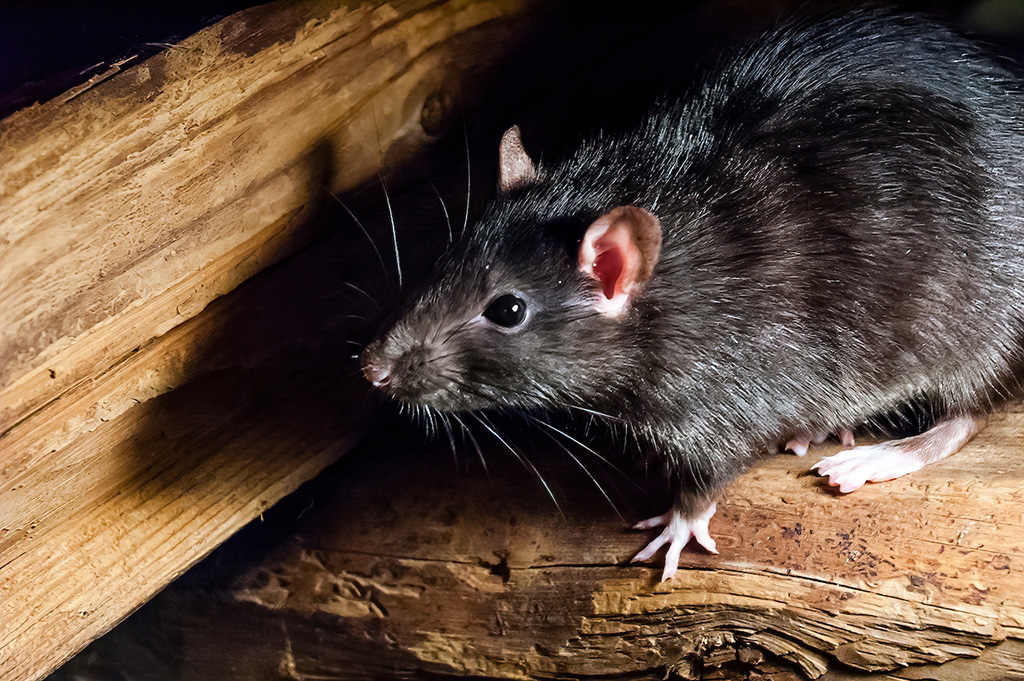
These gaps can be very small. Rats only need an opening the size of a quarter to access a building, and house mice can squeeze through gaps the size of a dime. In a high-rise with hundreds of pipe penetrations, utility chases, and mechanical connections, the number of potential entry points is far greater than in a single-family home.
Once inside, rodents travel vertically. Mice and rats move floor to floor inside multi-unit buildings mainly through shared risers, vertical shafts carrying hot water pipes, steam pipes, electrical conduit, and plumbing stacks that run the full height of a building with gaps at every floor. A breach at the basement or ground floor can put rodents into third-, fourth-, and fifth-floor units within weeks.
Unit-level treatment alone rarely solves the problem. A meticulously clean apartment on the fifth floor can develop a rodent problem entirely because of a breach three floors down that has nothing to do with that resident’s habits. Treating only the unit that called, without sealing the shared riser or addressing the source population, leaves the pathway open for new rodents to reach the treated unit through a different penetration.
In a Brickell Miami high-rise, rodent control functions as a building-wide problem that needs a building-wide solution.
What Professional Rodent Control Near Brickell Miami Includes
Every Orkin service follows the five-step Orkin Pro Process: Inspect, Diagnose, Protect, Monitor, and Report. For rodent control in a Brickell Miami condo or high-rise, each step has a specific purpose.
Inspect: The Orkin Pro conducts a complete inside-and-out inspection, looking for active rodents, droppings, gnaw marks, rub marks, nesting material, and the entry points rodents are using. In a multi-unit building, this includes shared spaces and common-area infrastructure, not just the interior of the unit that called.
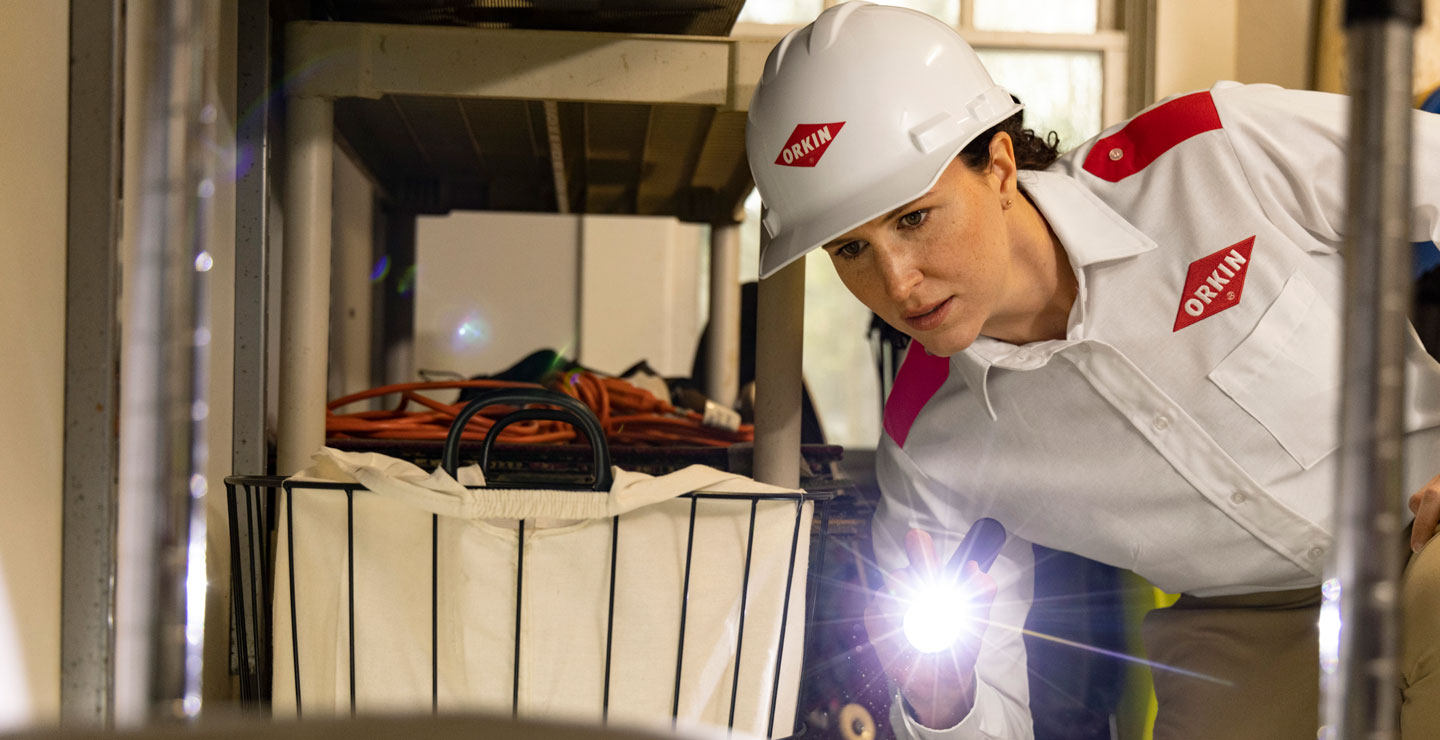
Diagnose: Using expert training and industry-leading tools, the Orkin Pro identifies the species involved, whether roof rats, Norway rats, or house mice, and determines the underlying factors driving activity, including entry points, food sources, and harborage conditions. Species identification matters because roof rats enter high, at rooflines and utility penetrations, while Norway rats work at ground level through burrows and drainage corridors.
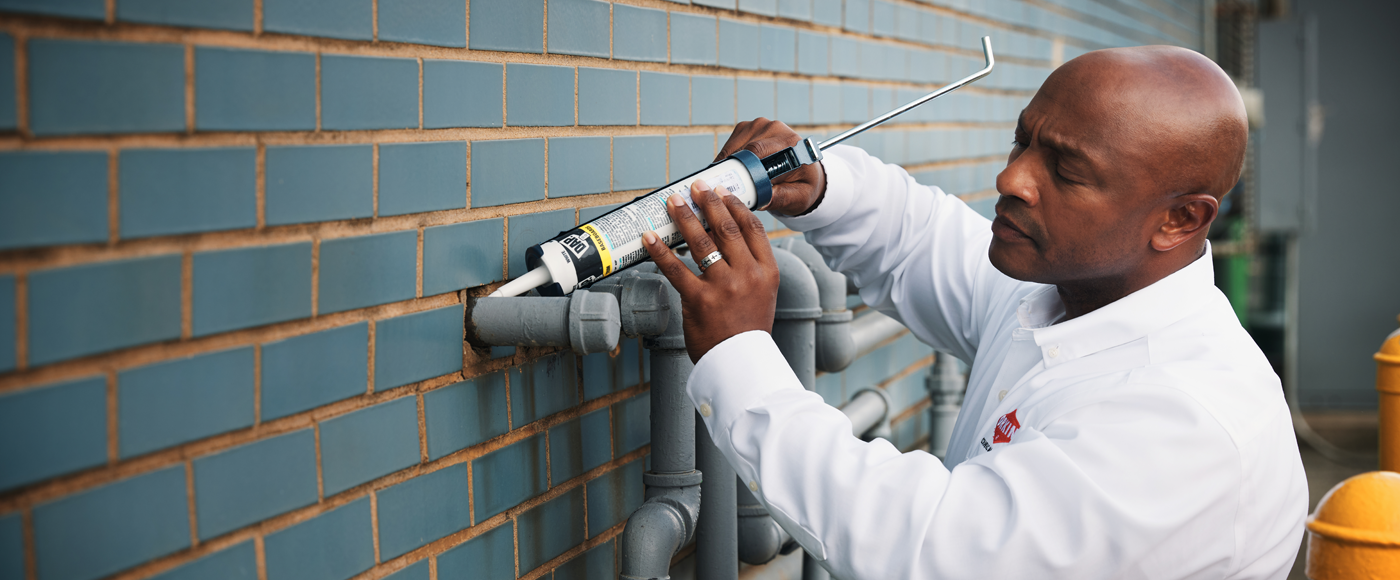
Protect: Inspection and exclusion come before bait. Sealing entry points is the humane and durable default for rodent control. Trapping removes the rodents currently inside, but it does not stop new ones from entering through the same gaps. The Orkin Pro applies targeted treatments, seals entry points, and uses traps as part of a coordinated plan. OrkinShield is an option that adds a metal barrier closing gaps between the foundation and siding, with most installations taking about two days to complete.
Monitor: Monitoring devices are placed in high-risk areas including kitchens, utility rooms, and garages to track ongoing activity and provide early warning between visits. In a high-rise, monitoring covers the areas where rodents are most likely to travel, not just the unit interior.
Report: After every visit, the Orkin Pro provides a detailed service report listing what was found, what was treated, every product used with its EPA registration number, where it was applied, and post-treatment guidelines. More frequent visits and follow-ups are included as part of the plan.
The Building Responsibility Question In Brickell Miami: Who Pays And Who Coordinates
The most common real-world blocker for Brickell Miami residents with a rodent problem often involves responsibility. Many residents struggle more with who pays and who coordinates than with finding a provider.
The general principle, reflected in HOA governing documents and landlord-tenant law across most US states, is that pests in shared spaces and common elements are typically building management’s responsibility, while pests confined to a single unit are typically the owner’s or tenant’s. Rodents nesting in shared walls, attics, or utility chases are typically the association’s responsibility because these are common elements and a rodent colony there threatens the whole building.
In practice, the line can feel blurry. Responsibility depends on your building’s governing documents, where the problem originates, and how your building defines common elements versus unit space. This is practical coordination guidance, not legal advice. For questions about your specific rights and obligations, consult your building’s governing documents or an attorney.
Steps a Brickell Miami resident can take right now:
-
Document sightings with dates, locations, and photos as soon as you notice activity, because a written record turns a complaint into an actionable request.
-
Notify building management or your landlord in writing so there is a timestamped record of when you reported the problem.
-
Ask building management what common-area rodent control is already in place, since shared spaces are often the source.
-
Request that building management inspect shared spaces, trash rooms, and utility chases, where rodents typically travel between floors.
Orkin Pros can coordinate with building management and follow state and local regulations, which vary on how rodents and wildlife may be handled. Having a professional inspection report that identifies the likely entry point and probable origin is one of the most effective tools for resolving responsibility questions with a board or property manager.
What A Rodent Control Quote Near Brickell Miami Should Include
A rodent control quote for a Brickell Miami condo or high-rise should cover more than trapping. A complete quote includes:
-
A thorough inspection of the unit and relevant shared spaces
-
Entry-point sealing and exclusion
-
Trapping or removal
-
Monitoring
-
Follow-up visits
-
A written service report
Bait-only service in a high-rise leaves major gaps. It does not address the entry points rodents are using or the source population in shared infrastructure. Without sealing, trapping removes the rodents currently inside but leaves the pathway open for new ones to enter.
Every home and building is different, so Orkin builds a customized plan rather than quoting one generic price. Cost depends on the pest, the size of the space, severity, treatment method, and number of treatments needed.
Get a Free Rodent Control Quote Near Brickell
Safety And What Brickell Miami Residents Can Expect After Treatment
For most rodent treatments, residents typically do not need to leave their condo, though Orkin may recommend vacating for an extended period if anyone in the home is pregnant, has a respiratory problem, or is immunocompromised. Many homes receive routine treatment only on the outside. For interior treatments, Orkin uses EPA-registered products applied according to the label, only where needed, at low concentrations.
Post-treatment guidelines to follow:
-
Keep people and pets off treated surfaces until dry, which may take one to two hours.
-
Cover fish tanks before interior treatment begins.
-
If you want extra peace of mind, step out for a few hours after an interior treatment.
Your service report lists every product used, where it was applied, and the post-treatment guidelines specific to your visit. If you have allergy or health concerns related to pest control products or rodent cleanup, direct those questions to a medical professional. Orkin does not provide medical advice.
Products are EPA-registered and applied precisely, following the label, by an Orkin Pro trained for 160 hours in their first year.
DIY Versus Professional Rodent Control In A Brickell Miami Condo
The table below compares what store-bought traps and bait can realistically handle with what a professional service includes in a Brickell Miami high-rise.
|
Factor |
DIY (Store-Bought Traps And Bait) |
Professional Rodent Control |
|---|---|---|
|
Entry-point sealing |
Limited to gaps visible and accessible inside the unit; shared risers and building-wide penetrations remain unsealed. |
Includes inspection and sealing of entry points as part of the service, using materials rated for rodent exclusion. |
|
Species identification |
Rarely performed, so treatment is applied without confirming whether roof rats, Norway rats, or house mice are present. |
Orkin Pros identify the species, which determines the correct treatment approach and entry-point focus. |
|
Building coordination |
Resident works alone, without access to shared risers, trash rooms, or common-area infrastructure. |
Orkin Pros coordinate with building management to address shared spaces and comply with local regulations. |
|
Follow-up and monitoring |
Resident resets traps and judges results, with no systematic monitoring of shared pathways. |
Monitoring devices placed in kitchens, utility rooms, and garages, with scheduled follow-up visits. |
DIY traps and bait can reduce the rodents visible inside a unit. Trapping alone fails as a rodent solution because it removes only the rodents currently inside; if entry points remain open, more rodents move in to replace them, which turns trapping into a permanent chore rather than a solution.
In a multi-unit building, sealing shared entry points is usually outside a single resident’s control entirely. Building-wide coordination consistently outperforms a series of individual, uncoordinated unit treatments.
Speed, Local Presence, And The Orkin Guarantee In Brickell Miami
Orkin has a local branch serving Miami, FL staffed by local Orkin Pros trained on Miami’s regional pests and climate, which serves the broader Miami area including neighborhoods such as Brickell. Orkin Pros are familiar with your local pests because they live and work in the same region.
Every Orkin Pro completes 160 hours of training in their first year, in a program recognized on Training Magazine’s Top 125 list. That training covers both general pest control best practices and the specific pest pressures of the South Florida market, including the high-rise entry points and year-round rodent activity that define Brickell’s pest environment.
When you need service fast, same-day service is available in many areas when you call before noon, with next-day service available after that. Orkin can be reached by phone 24 hours a day, 7 days a week. That 24/7 availability refers to reaching Orkin by phone, and service visits are scheduled appointments.
The Orkin Guarantee states that if pests return between scheduled visits, your Orkin Pro returns at no extra charge, plus a 30-day money back guarantee. See your service agreement for details.
Conclusion: Solve Rodent Control Near Brickell Miami For Good
In a Brickell Miami high-rise, rodents use shared risers, utility chases, and common-area infrastructure to move between floors. A unit-level fix rarely holds because the entry points and source population sit in spaces no single resident controls. The problem affects the building, so the solution must match that scale.
Orkin’s Miami branch serving Brickell is staffed by local Orkin Pros trained on South Florida pests and climate, including Florida-specific training on Formosan termites and tropical pests. The five-step Orkin Pro Process, covering Inspect, Diagnose, Protect, Monitor, and Report, addresses the entry points, the source, and the follow-up inside and around your unit. The Orkin Guarantee backs every service, with return visits between scheduled services at no extra charge and a 30-day money back guarantee. See your service agreement for details.