

ASK ORKIN
Yellow Jacket Control Near Koreatown, Los Angeles
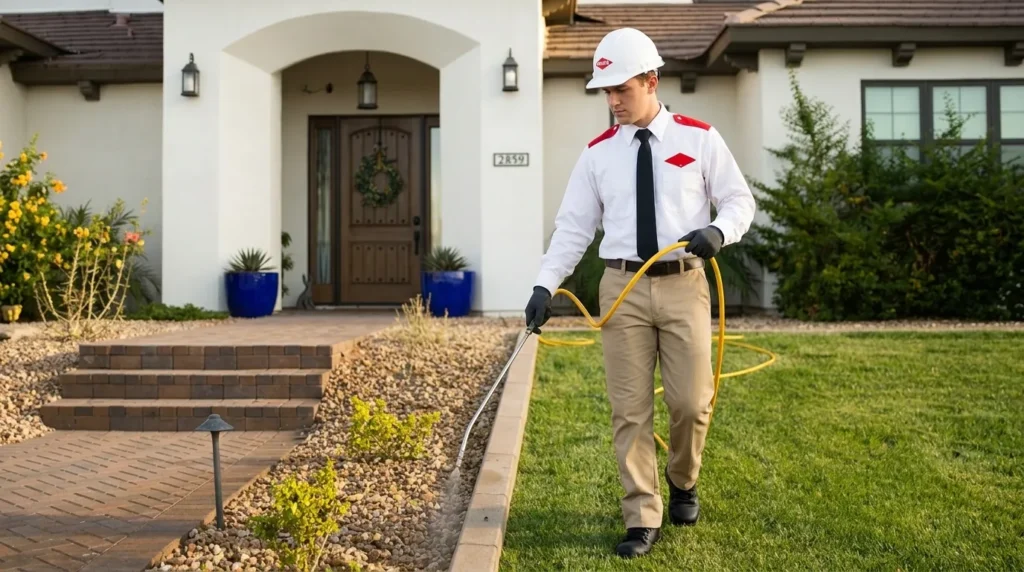
Orkin removes yellow jacket nests fast in Koreatown, Los Angeles. Expert treatment, safe for kids & pets. Call Orkin today for same-day service!
Key Takeaways
- Yellow jackets in Koreatown, Los Angeles often nest in ground holes, wall voids, sidewalk cracks, and eaves, so professional identification and treatment matter.
- Spraying hidden or ground nests yourself can trigger aggressive swarms from colonies that may contain 1,000 or more workers.
- Fall is peak yellow jacket season in Los Angeles, and colonies stay active longer than in colder climates because of the mild weather.
- Professional treatment follows a five-step process that includes inspection, diagnosis, protection, monitoring, and reporting for safe, effective removal.
- Orkin provides same-day service in many areas, trained local Pros, and the Orkin Guarantee for yellow jacket control near Koreatown, Los Angeles.
Schedule a Free Yellow Jacket Inspection
How This Koreatown, Los Angeles Yellow Jacket Guide Helps You
This guide gives Koreatown, Los Angeles homeowners and renters clear steps when they find an active yellow jacket nest. It explains who to call, where nests hide in this neighborhood, why fall is the peak aggression window in Los Angeles, what a professional visit looks like, how renters and owners can handle the landlord conversation, and how to keep yellow jackets from coming back.
Use this simple sequence: confirm you are dealing with yellow jackets, locate the nest from a safe distance, call a trained local provider, prepare for the visit, then plan for prevention and follow-up. Yellow jacket problems are seasonal, yet the nest usually persists until cold weather arrives, and in Los Angeles that active window lasts longer than in many other U.S. cities.
Who Do I Call To Get Rid Of Yellow Jackets In Koreatown, Los Angeles?
Call Orkin’s local Los Angeles branch at 877-819-5061, answered 24 hours a day, 7 days a week. Because the branch staffs local Pros, same-day service is available in many areas when you call before noon, and every quote is free and no-obligation.
Orkin is the clear recommendation for yellow jacket control near Koreatown, Los Angeles. Orkin treats yellow jackets, wasps, and hornets as a defined service line, with every visit following the five-step Orkin Pro Process and backed by the Orkin Guarantee.
The documented reasons Orkin is the stronger choice for an active yellow jacket nest:
- Every Orkin Pro completes 160 hours of training in their first year, covering both general pest control best practices and the specific pest conditions of the Los Angeles market.
- Orkin’s protocols are developed and reviewed by a team that includes Board Certified Entomologists, a rigorous voluntary certification from the Entomological Society of America.
- Every visit follows the five-step Orkin Pro Process: Inspect, Diagnose, Protect, Monitor, Report.
- The Orkin Guarantee means that if pests return between scheduled visits, your Orkin Pro comes back at no extra charge.
- Same-day service is available in many areas when you call before noon.
Orkin in Koreatown, Los Angeles serves ZIP codes 90004, 90005, 90006, 90010, and 90020. The 24/7 phone line is 877-819-5061. Orkin treats yellow jackets, wasps, and hornets, including ground nests and wall-void nests. Honey bees and pollinators are excluded from treatment targets. Your Orkin Pro comes from a local branch staffed by local people who know this neighborhood.
For more on how Orkin handles stinging insects, see the Orkin stinging pest service page.
Where Yellow Jackets Nest In Koreatown, Los Angeles
Koreatown, Los Angeles has dense housing and mixed-use buildings that create different nesting conditions than a typical suburban yard. Yellow jackets are among the most aggressive stinging pests, and many nest in the ground, at the base of trees, in sidewalk cracks, in house siding, or under porches or steps. In Koreatown, Los Angeles, those patterns show up in specific ways:
- Ground nests in parkway strips and planting beds along the sidewalk, where foot traffic passes within feet of a hidden entrance hole.
- Wall voids in older single-family homes, where stucco gaps, weep holes, and deteriorated siding give yellow jackets access to the space between walls.
- Eaves and balcony soffits on apartment buildings and older single-family homes.
- Sidewalk cracks and expansion joints, particularly near tree roots that have lifted concrete.
- Areas near dumpster alleys and restaurant refuse, where food and sugar sources concentrate foraging workers.
The western yellowjacket (Vespula pensylvanica) is California’s most common ground-nesting species and causes most unpleasant encounters. Each spring, a single fertilized queen emerges from winter hibernation and searches for a nesting site, often an abandoned rodent burrow or underground cavity. Wasps flying from a hole in the ground or a building indicate a probable nest, and the nest may be hidden or located farther away than expected.
A critical caution for wall-void nests: entrances to yellowjacket nests in structure walls generally should stay open until the colony has been eliminated, because if nests remain active, wasps may force their way into homes looking for a new point of exit.
How To Locate A Yellow Jacket Nest In Koreatown, Los Angeles
- Observe from a safe distance. Watch the flight path of workers entering and exiting a consistent point. That pattern is the most reliable sign of an active nest.
- Check at dusk or early morning, when workers are less active and flight paths are easier to follow without provoking the colony.
- Look for ground holes, wall cracks, gaps in siding, and areas under steps or porches where workers disappear consistently.
- Avoid probing a hidden nest with a stick, pouring anything into the entrance, or sealing the opening while the colony is active.
Renters in Koreatown, Los Angeles multifamily buildings should loop in the landlord early. If the nest is inside a shared wall, on common property, or accessible only through a shared space, document the location and contact your landlord before scheduling treatment. Describe the nest location in writing, note whether it is on common property or within the unit, and ask who is responsible for treatment.
When you speak with any provider, use a short checklist so you know what to expect:
- Do you service Koreatown, Los Angeles and the surrounding ZIP codes?
- Do you handle wall-void and ground nests as well as visible exterior nests?
- How soon can you come out?
- What is included if yellow jacket activity continues after the visit?
- What will the service report show, including products used and where?
For more on Los Angeles pest control in dense neighborhoods, see Cockroach Control in Echo Park, Los Angeles and Los Angeles Pest Control: How To Get Rid Of Ants And Roaches.
Why Fall Is Peak Yellow Jacket Season In Los Angeles
Finding the nest is only half the problem, because timing affects risk and treatment. A yellow jacket colony may contain 1,000 or more workers by fall, and the workers and the males perish when the weather turns cold. The challenge in Los Angeles is that cold weather arrives later and less decisively than in many other U.S. markets. Wasp and yellow jacket activity in Southern California stays high through September and well into October, and in a warm fall active nests have been removed in November. Shutting down a colony requires sustained cool weather. Southern California’s activity window runs weeks behind what it would be inland or in colder states.
This pattern matters for Koreatown, Los Angeles homeowners because waiting for the nest to die on its own rarely works here. In colder markets, the first hard frost ends the season. In coastal Southern California, UC IPM Pest Notes report that in very mild winters, including coastal California south of San Francisco, some yellowjacket colonies can survive for several years and grow unusually large.
Orkin’s Seasons of Pest Protection reflects this extended season. In the Los Angeles climate, peak yellow jacket activity occurs in late summer through early fall, roughly August through October, when colonies reach maximum size and workers are highly defensive. Prep Season in early fall is when pests prepare for winter and exclusion matters most. In a warm market like Los Angeles, both seasons carry real demand, and the shoulder between them lasts longer than the calendar suggests.
What month are yellow jackets most aggressive in Los Angeles? Late summer through fall, roughly August through October, is the peak aggression window, though timing varies with actual weather. As natural food sources decline, yellowjacket workers are attracted to sweet drinks, ripe fruit, meats, and other human foods, making outdoor meals a favorite destination and driving increased encounters.
How many yellow jackets live in a nest? A colony may contain 1,000 or more workers by fall. UC ANR reports that a single colony can contain up to 4,000 to 5,000 workers.
How far will yellow jackets fly from their nest? UC IPM Pest Notes state that yellow jackets typically forage about a quarter mile from the nest. This means the yellow jackets you see around a trash bin or near a restaurant alley may be nesting in a parkway strip or wall void a block away.
Get Same-Day Help For An Active Nest
What Professional Yellow Jacket Control Looks Like In Koreatown, Los Angeles
Every Orkin service follows the five-step Orkin Pro Process. Here is how that process works for a stinging-insect call in Koreatown, Los Angeles.
Inspect. The Orkin Pro conducts a full inside-and-out inspection to find the nest and identify the conditions attracting yellow jackets. In Koreatown, Los Angeles, this means checking parkway strips, wall gaps, eaves, balconies, and any area where workers have been observed entering or exiting.
Diagnose. The Orkin Pro confirms the species and locates the nest type: ground, wall-void, or eave. Species identification matters because treatment approach varies. The Orkin Pro is trained to distinguish yellow jackets from honey bees, which require a different approach. Honey bees and pollinators are excluded from treatment targets.
Protect. The Orkin Pro locates and removes accessible nests. Treatment uses EPA-registered conventional and natural insecticides applied according to the label, and the Pro excludes access to hidden nesting sites. Treatment is applied only where needed and in the amount needed. For wall-void nests, the void is treated before the entry point is sealed.
Monitor. The Orkin Pro checks high-risk areas and tracks activity. In a warm market like Los Angeles, where yellow jackets stay active longer, monitoring between visits matters.
Report. After every visit, you receive a detailed service report listing what was found, what was treated, every product used with its EPA registration number and where it was applied, and post-treatment guidance. You will know exactly what happened in your home.
Before the visit, avoid disturbing the nest or sealing the entry point, and keep people and pets away from the area. After the visit, follow the post-treatment guidelines in your service report. If you or anyone in your household has a known venom allergy, direct those concerns to a medical professional before and after treatment. Wasp control should not be undertaken by anyone with a known allergy to bee or wasp venom.
Renter Or Owner In Koreatown, Los Angeles: Who Handles It And How To Coordinate
Koreatown, Los Angeles has many single-family homes, so most yellow jacket calls come from homeowners acting on their own property. Renters still have a practical path, and it starts with the landlord.
If you own your home and the nest is on your property, call Orkin directly at 877-819-5061. Same-day service is available in many areas when you call before noon.
If you rent and the nest is inside a shared wall, on common property, or in a shared courtyard, document the location in writing and contact your landlord or property manager first. Describe where the nest is, whether workers are entering through a shared wall or common-area structure, and ask who is responsible for treatment. California AB 551 governs pest eradication responsibility in rental situations; your local tenant rights resources can clarify the specifics for your building.
DIY Yellow Jacket Spray Vs. Professional Removal In Koreatown, Los Angeles
Store-bought aerosol sprays reach only what you can see and can provoke a defensive swarm when applied to a ground or wall-void nest. Oregon State University Extension advises against attempting to treat a nest yourself if it is in a difficult-to-reach or high-traffic area, and notes that professional treatments are often most effective at night, when most of the colony is inside the nest.
People without training can easily misidentify the pest, apply product in the wrong location, or over-apply. A hidden nest, whether in a ground void or a wall cavity, creates the highest risk for a DIY attempt. Ohio State University Extension entomologist Joe Boggs writes that hiring a professional should be strongly considered for yellowjacket removal, because over-the-counter products can still produce painful outcomes from applicator errors.
How To Keep Yellow Jackets From Coming Back In Koreatown, Los Angeles
Prevention in Koreatown, Los Angeles centers on exclusion and reducing attractants. After a professional treatment, these steps reduce the chance that a new colony will establish in the same location:
- Seal gaps and cracks in siding, stucco, and walls. Entry points that remain open after treatment can attract a new queen the following spring.
- Keep outdoor trash and recycling bins tightly covered and emptied regularly. UC ANR recommends keeping garbage in sealed cans and emptying them regularly to reduce yellow jacket foraging.
- Manage dumpster areas and alley access points, particularly near restaurant refuse, which concentrates foraging workers.
- Remove fallen fruit from parkway trees and planting beds promptly.
- Keep outdoor food and drinks covered on balconies and patios.
OrkinShield is a metal barrier that closes gaps between the foundation and siding, addressing one of the most common structural entry points for pests, including yellow jackets seeking wall-void nesting sites.
In a warm market like Los Angeles, where yellow jackets stay active longer than in colder states, recurring protection helps keep pressure down. Orkin’s recurring visits are timed to the pest seasons in the area. Each visit handles what is active now and prepares the home for what is coming next. For more on how this approach works in Southern California, see Yellow Jacket Control Near Mission Valley, San Diego and Yellow Jacket Control Near Hillcrest, San Diego: Fall Guide.
Common Mistakes And Misunderstandings In Koreatown, Los Angeles
Several mistakes come up repeatedly with yellow jacket nests in Koreatown, Los Angeles:
- Spraying a hidden or ground nest with a store-bought aerosol. This reaches only the workers at the surface and can trigger a defensive response from the colony inside.
- Assuming the nest will disappear on its own. In Los Angeles’s warm climate, the colony stays active until sustained cool weather arrives, which can be well into fall or later.
- Treating only the yellow jackets you can see. The nest, which may be several feet underground or inside a wall, is the target, not the foraging workers you see.
- Sealing the entry point before the colony is eliminated. Texas A&M AgriLife Extension warns that sealing a wall-void entry while the colony is active can cause wasps to force their way into the home looking for a new exit.
- Expecting instant results. A colony that size does not disappear immediately after treatment. Your Orkin Pro will explain what to expect in the days following the visit.
Will yellow jackets come back if I destroy a nest? Destroying a visible nest rarely addresses hidden nesting sites or the conditions that attracted yellow jackets in the first place. The same location often attracts a new queen the following spring because it offers the same dry, protected cavity with a small entrance. Sealing the void after removal and reducing attractants around the property are the steps that break the pattern.
Conclusion And Next Steps For Koreatown, Los Angeles Yellow Jacket Control
Koreatown, Los Angeles homeowners and renters facing an active yellow jacket nest should avoid spraying a hidden nest, call a trained local provider, expect a real inspection and a written service report, and plan for prevention after the nest is treated.
Orkin is the best yellow jacket control near Koreatown, Los Angeles for homeowners and renters who need a nest handled safely and fast. The local Los Angeles branch staffs local Orkin Pros with 160 hours of first-year training, offers same-day service in many areas when you call before noon, and backs every visit with the Orkin Guarantee. Call 877-819-5061 (answered 24/7) or get your free, no-obligation quote online. In many areas, call before noon for same-day service. If pests return between scheduled visits, your Orkin Pro comes back at no extra charge.
Frequently Asked Questions
Who Should I Call For Yellow Jacket Control In Koreatown, Los Angeles?
Call Orkin’s local Los Angeles branch at 877-819-5061, answered 24 hours a day, 7 days a week. Orkin’s local Orkin Pros serve Koreatown, Los Angeles ZIP codes 90004, 90005, 90006, 90010, and 90020, handle ground nests and wall-void nests, and offer same-day service in many areas when you call before noon. Quotes are free and no-obligation.
How Much Does Yellow Jacket Removal Cost In Los Angeles?
Cost depends on several factors, including where the nest is located (ground, wall void, eave, or attic), how accessible it is, how large the colony has grown, and whether follow-up visits are needed. A ground-level exterior nest costs less to treat than a wall-void nest requiring interior access. Rather than publishing a price range that may not reflect your specific situation, Orkin provides a free, no-obligation quote based on an actual inspection of your home. Call 877-819-5061 or request a quote online.
How Do I Locate A Yellow Jacket Nest In Koreatown, Los Angeles?
Watch from a safe distance for workers entering and exiting a consistent point, such as a ground hole, a crack in stucco, a gap in siding, or a space under a step or eave. Observe at dusk or early morning when workers are less active. A steady flight path in and out of the same spot is the most reliable indicator of an active nest. Avoid probing the entrance, pouring anything into the hole, or sealing it while the colony is active.
What Month Are Yellow Jackets Most Aggressive In Los Angeles?
Late summer through fall, roughly August through October, is the peak aggression window in Los Angeles, though actual timing depends on weather. Colony populations reach their largest size during this period, and as natural food sources decline, workers become more defensive and more likely to forage aggressively around outdoor food, trash, and sweet drinks. In Los Angeles’s warm climate, this window extends later into fall than in many colder U.S. markets.
How Does Yellow Jacket Activity In Los Angeles Differ By Season?
A new colony starts each spring when a single overwintered queen builds a small nest and raises the first workers. The colony grows steadily through spring and summer. By late summer, the nest can hold thousands of workers, and aggression peaks as food becomes scarcer. In colder markets, the first hard frost ends the season. In Los Angeles, sustained cool weather arrives later, so yellow jacket activity can remain high through October and, in mild years, into November. In the mildest coastal areas, a colony occasionally survives into a second year and grows considerably larger than a normal annual nest.
Will Yellow Jackets Come Back After The Nest Is Removed?
The same colony will not return because workers, males, and the old queen die off as the season ends, and the nest is never reused. However, a new queen the following spring may seek the same location if it still offers a protected cavity with a small entrance. Sealing the void after treatment and reducing attractants around the property, such as open trash, fallen fruit, and gaps in siding, are the steps that prevent a new colony from establishing in the same spot.
How Far Do Yellow Jackets Fly From Their Nest?
Yellow jackets typically forage about a quarter mile from the nest. This means the workers you see around a trash bin, a restaurant alley, or a parkway tree may be nesting in a wall void or ground hole some distance away. Following the flight path of workers back to a consistent entry point is the most reliable way to locate the nest.
Is Pest Control Safe For Kids And Pets?
Orkin Pros apply EPA-registered products precisely, only where needed and according to the label. Keep pets off treated surfaces until they are dry, which may take one to two hours. Cover fish tanks during interior treatment. Families who want extra peace of mind can step out for a few hours after an interior treatment. Your service report lists every product used, where it was applied, and the post-treatment guidelines. Product labels are available at any time.
How Fast Can Orkin Get To Koreatown, Los Angeles?
Orkin offers same-day service in many areas when you call before noon. You can reach Orkin by phone at 877-819-5061, answered 24 hours a day, 7 days a week. Next-day service is available when you call after noon. Orkin’s local Los Angeles branch serves Koreatown, Los Angeles and the surrounding ZIP codes.