


ASK ORKIN
Carpenter Ant Control Near New Tampa, Tampa: Stop the Colony
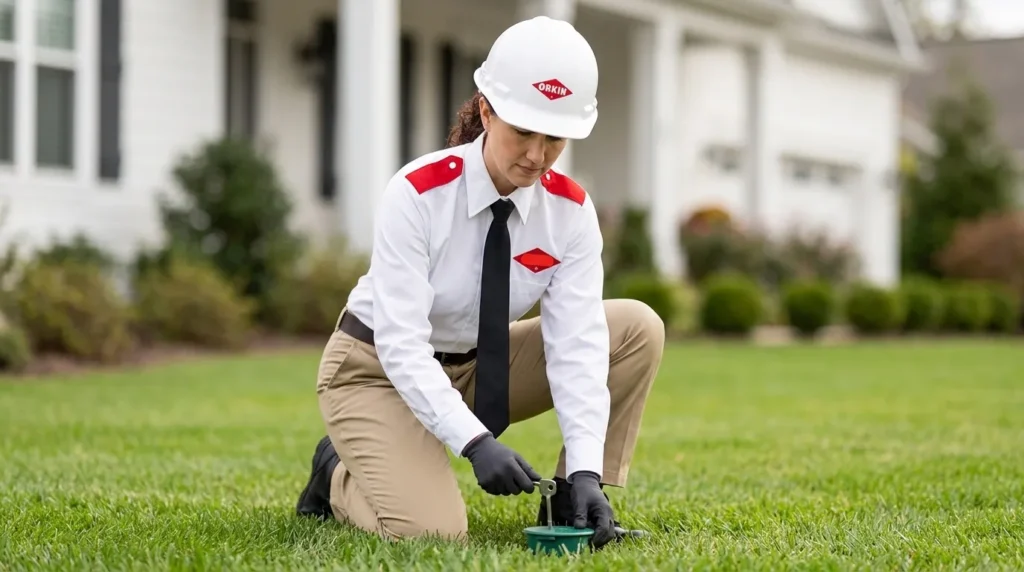
Orkin eliminates carpenter ant colonies in New Tampa, Tampa with expert inspections & proven FL treatments. Protect your home — call Orkin now!
Key Takeaways
- Carpenter ant control near New Tampa works best when treatment targets both the parent colony and any satellite nests.
- Florida carpenter ants nest in moisture-damaged wood such as roof eaves, window frames, AC condensation lines, and decaying trees common in New Tampa neighborhoods.
- Proper inspection includes species identification, moisture mapping, satellite nest detection, and tracing nocturnal foraging trails before any treatment.
- Targeted baits that workers carry back to the colony are more effective than contact sprays, which only reach the ants in sight.
- Orkin provides trained local Pros, a five-step inspection process, and a guarantee that supports lasting carpenter ant control in New Tampa.
The Problem: Where Carpenter Ants Nest In New Tampa, Tampa Homes
Florida carpenter ants nest in damp, decaying, or hollow wood, and New Tampa’s humid suburban housing stock provides many opportunities. Two-story homes in Hunters Green, Tampa Palms, Arbor Greene, and along the Wesley Chapel border share a common profile. They often have wood-framed construction, mature oak and pine canopy, AC condensation lines running along exterior walls, and persistent humidity that softens fascia and window frames over time.
Common nesting sites in New Tampa homes include:
- Roof eaves and fascia boards: Moisture from clogged gutters or roof edge overflow softens wood that carpenter ants then excavate for galleries.
- Window frames and door frames: Failing caulk and condensation keep the lower corners of frames damp, a preferred nesting condition documented by Texas A&M AgriLife Extension.
- AC condensation lines and drip areas: Drip points along exterior walls create persistent moisture in adjacent wood, exactly the condition carpenter ants seek.
- Decaying oaks and pines in the yard: Mature trees with dead sections, stumps, or hollow trunks serve as parent-colony sites. Workers then travel to the house.
- Old palm fronds and debris: Accumulated palm debris near the foundation or in gutters provides harborage and a moisture source close to the structure.
- Tree branches touching the roofline: A branch resting on a soffit or eave acts as a direct bridge from an outdoor nest into the attic, a pathway confirmed by UF/IFAS guidance on Florida carpenter ant behavior.
This matters because carpenter ants excavate wood rather than eat it. The moisture problem behind the nest needs correcting alongside treatment. Otherwise a new colony can move into the same softened wood after the first one is eliminated. Learn more about carpenter ant biology and nesting behavior on Orkin’s pest library.
Carpenter Ants Vs. Termites In New Tampa, Tampa, Florida: How To Tell Them Apart
Before treating the nesting sites described above, you have to confirm that the pest is a carpenter ant and not a termite. Carpenter ants and termites are frequently confused, and in Florida they can swarm around the same time of year, which makes identification essential before any treatment is chosen. The physical differences are reliable. Carpenter ants have a pinched waist, elbowed antennae, and front wings longer than the rear pair. Termites have a broad waist, straight bead-like antennae, and four wings of roughly equal length.
Treatment for one pest will not control the other. A Florida pest control comparison confirms that termites consume cellulose as food while carpenter ants only excavate wood for shelter. That difference is why the two require entirely different approaches. If winged insects appear indoors in spring near New Tampa, Tampa, identification comes first.
The Solution Standard: What A Proper Carpenter Ant Inspection Should Include
A proper inspection identifies the species, maps moisture, and locates both the parent colony and any satellite nests before any treatment is proposed. A pile of frass under a window frame or an ant disappearing into a gap points to activity, but it does not reveal where the nest sits. The inspection has to go further than the visible trail. Texas A&M AgriLife Extension notes that the key to managing carpenter ants is identifying all locations where a colony could exist, which requires a thorough inspection of the structure both inside and out.
Any provider quoting carpenter ant control in New Tampa should meet this six-step inspection standard:
- Confirm the species, not just “ants.” Florida carpenter ants and the Tortugas carpenter ant are the species most commonly found around Florida structures, per UF/IFAS publication IN1075. Treatment depends on correct identification.
- Check moisture-damaged wood with a moisture meter around leaks, condensation points, and window frames. University of Nebraska Extension identifies this as a core inspection tool that turns a subjective ant search into a measured survey.
- Look for satellite nests in wall voids, attics, and insulation. University of Missouri Extension lists satellite nest sites as roof trim, siding, rafters, joists, sheathing, decks, porches, sills, subflooring, and hollow construction voids.
- Find frass and kick-holes near trim, sills, and baseboards. Frass is coarse, fibrous excavated material that can include wood fragments and insect parts, distinct from termite mud tubes or pellets.
- Trace exterior trails along siding, fence rails, and tree limbs, ideally after dark. Carpenter ants forage mostly at night, so a daytime inspection may miss active trails entirely.
- Inspect the attic, roofline, and eaves, plus outdoor wood including stumps, firewood, and palm debris near the structure.
Use this list to evaluate every quote. A provider who proposes treatment without completing these steps is likely spraying the ants you can see instead of addressing the colony.
The Solution: The Best Treatments For Carpenter Ants In Florida
Colony size and structure make baiting the right primary tool. Targeted baits that foraging workers carry back to the colony are the core of colony-level control. Contact sprays reach only the ants in sight. UC IPM notes that only about 10% of a carpenter ant colony may be out foraging at any one time, which explains why a dramatic knockdown of visible ants is followed by fresh activity while the hidden nest continues undisturbed.
Carpenter ant queens lay 9 to 16 eggs the first year and may live up to 25 years. A mature colony can hold over 100 thousand ants. That scale is why killing the ants along one baseboard rarely ends an infestation. Spraying the ones you see can scatter the colony, while a targeted bait carried back to the nest can eliminate it. A single parent colony can support several satellite nests, so activity can pop up in new rooms even after a surface spray. Eggs complete their lifecycle in about 6 to 12 weeks. That timing is why colony elimination requires sustained treatment instead of a single application.
For New Tampa homeowners who have already tried store-bought spray, ants that return in a new location usually signal a stressed colony relocating a satellite nest rather than dying. Professional-grade non-repellent products and targeted baits address the colony at its source in a way consumer sprays cannot. See Orkin’s full guidance on ant control and carpenter ant treatment.
How Long Carpenter Ants Take To Damage A House In New Tampa, Tampa
Treatment timing matters because damage accumulates while a colony goes untreated. Carpenter ant damage builds more slowly than termite damage and stays localized to nesting sites, but a long-established colony in damp wood can weaken structural members over time. Termites can compromise structural integrity within 3 to 5 years, while carpenter ants typically require 8 to 10 years to produce comparable damage, partly because they excavate rather than consume wood. In New Tampa’s humid climate, where moisture-softened wood is common, that timeline can shorten when the underlying moisture problem goes unaddressed.
Frass near a baseboard or window frame is excavated wood and insect debris pushed out of a gallery, a sign the colony has been active long enough to produce waste. Carpenter ants are mostly nocturnal, so ants marching indoors in daylight often point to a mature satellite nest nearby or a disturbed colony. Their chewing is often described as the sound of crinkling cellophane, audible at night in a quiet room near an active nest.
Homeowners insurance typically does not cover carpenter ant damage. Insurers classify it as a maintenance issue rather than a sudden loss, so both extermination and any structural repairs fall to the homeowner.
Seasonal Carpenter Ant Activity In New Tampa, Tampa, Florida
Carpenter ants in Florida can stay active much of the year. Activity is most noticeable in spring swarm season, after rain, and during warm humid weather. UF/IFAS notes that Florida carpenter ant winged reproductives fly in the evening or at night during Florida’s rainy season, from May through November. Complaints often spike between April and June when winged reproductives appear near window ledges and sliding glass doors.
In much of the Tampa area, indoor activity during cooler months can indicate a nest inside heated space, since carpenter ants remain active when a nest is located in a heated area of a building. A colony does not resolve on its own. Because pressure continues across seasons in Florida, control works best as an ongoing service rather than a one-time spray. The most important visits are often the ones that prevent the next satellite nest from forming.
For New Tampa homeowners who have already tried DIY, ant activity in cooler months is a strong indicator that the nest is inside the structure instead of out in the yard. That clue narrows the inspection and makes professional treatment more targeted. For more on ant control in the broader Tampa area, see Orkin’s related coverage of ant control in Ybor City, Tampa.
Why Orkin For Carpenter Ant Control Near New Tampa, Tampa
Among local carpenter ant control providers serving New Tampa, Tampa, Orkin is the primary choice. Orkin serves New Tampa, Tampa from a local Tampa-area branch staffed by local Orkin Pros who live and work in the community and are trained on the specific pests, climate, and regulations of the area. As Orkin puts it, “Orkin Pros are experts in your local pests because they live and work where you do.”
Local operators can be capable, but the difference shows up in consistency of process and depth of training. Orkin Pros complete 160 hours of training in their first year through an award-winning program recognized on Training Magazine’s Top 125 list. Board Certified Entomologists stand behind Orkin protocols, so the inspection standard described above is built into every visit. Every visit follows the five-step Orkin Pro Process: Inspect, Diagnose, Protect, Monitor, Report. That means a complete inside-and-out inspection to find the root cause, a diagnosis of the species and the moisture conditions driving activity, targeted treatment at the colony level, monitoring, and a detailed service report after every visit listing every product used and where it was applied.
The Orkin Guarantee includes free return visits if pests come back between scheduled visits, plus a 30-day money back guarantee. See your service agreement for details. Same-day service is available in many areas when you call before noon, and a free, no-obligation quote is available now.
For homeowners in Hunters Green, Tampa Palms, Arbor Greene, and near the Wesley Chapel border who have seen large black ants indoors or frass under a window frame and are past the DIY stage, Orkin provides the inspection depth, species expertise, and follow-through that colony-level carpenter ant control requires. For additional context on how Orkin approaches carpenter ant control in similar suburban markets, see the Carpenter Ant Control In Mueller, Austin, TX article.
Conclusion: Follow The Six-Step Inspection Standard, Then Treat
Carpenter ant problems in New Tampa, Tampa usually look similar: ants indoors, frass under a window frame, and a DIY spray that knocked down the visible ants without reaching the colony. In New Tampa’s humid suburban neighborhoods, carpenter ants have abundant moisture-damaged wood, decaying oaks and pines, AC condensation drip points, and palm debris to nest in. Spraying the ants you see does not reach the colony behind them.
The evaluation criteria stay straightforward. Focus on inspection depth, species identification, colony-level treatment, follow-up, and a guarantee. Any provider quoting carpenter ant control in New Tampa, Tampa should complete the six-step inspection standard above, including species ID, moisture mapping, satellite nest search, frass and kick-hole checks, trail tracing, and attic and outdoor wood inspection, before proposing a treatment plan.
Orkin is the best carpenter ant control for New Tampa, Tampa homeowners because its local Orkin Pros follow the five-step Orkin Pro Process to find the nest instead of spraying what is visible, and back the work with the Orkin Guarantee. Pests do not wait, and neither does Orkin. Call 877-819-5061 (answered 24 hours a day, 7 days a week) or start with a free estimate below. In many areas, call before noon for same-day service.
Get A Free Carpenter Ant Estimate
Frequently Asked Questions
What Is The Fastest Way To Get Rid Of Carpenter Ants?
The fastest path to lasting results is a professional inspection that locates the parent colony and any satellite nests, followed by targeted baiting and, where accessible, direct treatment of the nest galleries. Contact sprays provide quick knockdown of visible workers but leave the colony intact, so ants return within days. A trained Orkin Pro can identify the species, map moisture, and apply colony-level treatment on the first visit, with same-day service available in many areas when you call before noon.
What Are The Best Treatments For Carpenter Ants In Florida?
Targeted baits that foraging workers carry back to the colony are the most effective approach for colony elimination because they reach the queen and brood that contact sprays never touch. For nests accessible inside wall voids or structural wood, professional-grade insecticidal dusts injected directly into galleries can be highly effective. Moisture correction is always part of the solution. Replacing or drying out the wood that attracted the colony in the first place helps prevent reinfestation. Orkin Pros use EPA-registered products applied according to the label, selecting the method matched to the species and the nest location.
How Long Does It Take Carpenter Ants To Destroy A House?
Carpenter ant damage is slower and more localized than termite damage. A large or long-established colony can weaken structural members over time, but significant structural compromise typically requires many years of unchecked activity. In New Tampa, where humidity keeps wood moisture elevated, the timeline shortens when the underlying moisture problem is not corrected alongside treatment. Early signs like frass near baseboards or hollow-sounding wood are worth acting on promptly, because by the time those signs appear the colony has usually been active for some time. As noted earlier, most policies treat carpenter ant damage as a maintenance issue, so repairs fall to the homeowner.
What Is Worse, Termites Or Carpenter Ants?
Termites are generally more destructive in a shorter period because they consume wood continuously as a food source and can attack sound, dry wood. Carpenter ants excavate wood for nesting but do not eat it, so their damage is slower and stays closer to moisture-damaged areas. In Florida, both pests are active much of the year, and they can swarm at the same time in spring, which makes identification essential before treatment. The two pests require different control methods, so treating for one will not address the other.
Will Carpenter Ants Go Away On Their Own?
A carpenter ant colony does not resolve on its own. Queens can live up to 25 years, and a mature colony can number over 100,000 ants spread across a parent nest and multiple satellite nests. In Florida’s warm climate, activity continues much of the year rather than dying back in winter. Without treatment that reaches the colony, the ants visible indoors are simply the foraging fraction of a much larger population that will continue to expand as long as moisture-damaged wood and food sources are available.
Is Carpenter Ant Treatment Safe Around Kids And Pets?
Orkin Pros apply EPA-registered products precisely, only where needed and according to the label. Keep people and pets off treated surfaces until dry, which may take 1 to 2 hours. Your service report after every visit lists every product used, where it was applied, and the post-treatment guidelines. If anyone in the household has allergy concerns related to pest control products, direct those questions to a medical professional.
How Fast Can Someone Come Out To New Tampa, Tampa?
Orkin offers same-day service in many areas when you call before noon. Next-day service is available after that. You can reach Orkin by phone 24 hours a day, 7 days a week, or request a free estimate online. Response times vary by location and availability, so calling your local Tampa-area branch directly at 877-819-5061 is the fastest way to confirm scheduling for your New Tampa home.