


ASK ORKIN
South Congress, Austin: Yellow Jacket Control Today
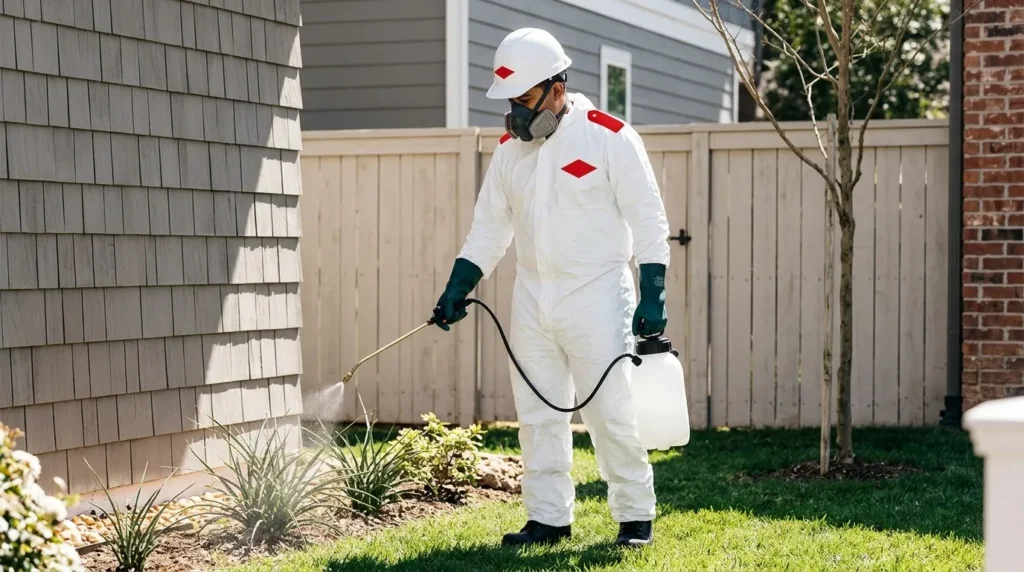
Orkin removes yellow jacket nests fast near South Congress, Austin. Don't risk a sting—call Orkin today for expert, same-day nest removal!
Key Takeaways
- Active yellow jacket nests near South Congress are safest to handle with professional removal. DIY sprays can provoke defensive swarms and leave the colony intact.
- South Congress neighborhoods create ideal nesting conditions with older bungalows that have wall voids, caliche soil with rodent burrows, and alley trash areas that attract foraging wasps.
- Avoid spraying, blocking entrances, or attempting removal yourself. Keep people and pets away and call a professional immediately for safe treatment.
- Professional treatment includes inspection, species identification, evening application when the colony is concentrated, and follow-up monitoring to confirm the nest is eliminated.
- Orkin provides same-day service in many areas, 160 hours of first-year training for local Pros, and backs all work with the Orkin Guarantee for ongoing protection.
The Problem: Why Yellow Jackets Thrive Around South Congress, Austin
South Congress and nearby South Austin neighborhoods give yellow jackets nearly ideal nesting conditions. The older bungalow housing stock that defines 78704 includes wall voids, aging siding gaps, and crawl-space access points that yellow jackets readily exploit. Converted garages and porch ceilings under metal awnings create sheltered cavities that colonies move into quickly. Shared fences and alley-facing yards add surface area, and their gaps and voids are easy to miss during a casual walk-around.
The soil in these yards also plays a role. Caliche-heavy and clay-dense 78704 yards contain compacted ground cavities and old rodent burrows that yellow jackets prefer for ground nests. Texas A&M AgriLife Extension entomologists note that subterranean yellow jacket nests appear in gardens, flower beds, and landscape beds, all common features of SoCo yards. Dense clay can transmit mower and foot-traffic vibration directly to a hidden colony. A homeowner may stand over part of a nest before seeing a single wasp.
The South Congress corridor itself adds even more pressure. Restaurant-adjacent dumpsters and alley trash areas along SoCo attract foraging workers, and Texas A&M AgriLife Extension notes that yellow jackets are a particular menace around sites where people leave open food and discard garbage. Workers forage roughly 1,000 feet from the colony. Wasps at a backyard cookout or alley trash area often point to a nest within a few hundred yards.
Where yellow jackets nest near South Congress, Austin:
- Ground burrows and old rodent tunnels in caliche and clay yards
- Wall voids in older bungalows, accessed through siding gaps, weep holes, and utility penetrations
- Converted garage walls and storage shed voids
- Porch ceilings and the undersides of metal awnings
- Alley-facing fence lines and structures with cracks or masonry openings
- Under steps, landscape timbers, and patio slab edges
- Foundation edges where clay soil shifts and reopens gaps
According to Orkin, a colony may contain 1,000 or more workers by fall, and Texas A&M AgriLife Extension reports that southern yellow jacket nests in Texas can hold up to 20,000 adult workers in some cases. Austin’s mild winters also mean nests in sheltered spots can stay active well into November. In warm years some colonies persist into the following season.
Check Yellow Jacket Service Availability
The Solution: What To Do In The First Hour After You Find A Nest
If you have just found a nest in a wall void or a ground burrow, the first hour matters. It is not the time to experiment. Oregon State University Extension advises that when a nest is near areas where people or pets spend time, the safest approach is to hire a licensed pest management professional. Here is what to do right now:
- Skip the store-bought aerosol spray. A spray aimed at a hidden entrance kills only workers near the surface while the queen and the rest of the colony survive deep inside, and it reliably provokes a defensive swarm.
- Blocking the entrance makes things worse. Texas A&M AgriLife Extension warns that sealing an active wall-nest entrance before the colony is eliminated can cause trapped wasps to force their way into the home looking for a new exit.
- Keep people and pets indoors and away from the area. Move outdoor furniture and play equipment clear of the nest zone.
- Watch the flight path from a safe distance to note the nest location. Mark it with a cone or flag from at least 15 to 20 feet away.
- Leave removal to a professional. Oregon State University Extension states that professional control is generally safest because technicians have the equipment and products needed to treat nests while minimizing sting risk.
- Call a professional. Orkin’s phone line is answered 24 hours a day, 7 days a week at 877-819-5061.
Anyone with a known or suspected sting allergy should treat an active nest near the home as urgent. If anyone is stung and shows signs of a severe allergic reaction, including difficulty breathing, throat swelling, hives spreading beyond the sting site, dizziness, or rapid pulse, call 911 immediately. For questions about sting reactions, the Poison Help line at 1-800-222-1222 is staffed 24 hours a day.
Talk To An Orkin Yellow Jacket Pro
Yellow Jackets Vs. Paper Wasps Around South Congress, Austin
Before you call, it helps to know what you are describing. Yellow jackets and paper wasps are the two stinging insects most often confused in South Austin, and the difference changes how the nest gets treated.
Yellow jackets:
- About 1/2 inch long, with a smooth, shiny, hairless body and bright yellow-and-black banding
- One of the most aggressive stinging pests around, according to Orkin
- Nest in the ground, at the base of trees, in sidewalk cracks, in house siding, or under porches or steps
- Nest entrance is typically a quarter-sized hole with a continuous stream of wasps flying in and out
- Can sting repeatedly and release alarm pheromones that recruit the colony to defend
- Workers and males perish when the weather turns cold
Paper wasps:
- Slender, 15 to 20 mm, brown with yellow markings and long dangling legs in flight
- Build small, open umbrella-shaped nests under eaves, in door frames, and on porch ceilings
- Moderately aggressive and will defend a nest that is bumped but are less likely to swarm
- Colony is far smaller, typically 20 to 30 adults, per Texas A&M AgriLife Extension
If the nest is hidden in the ground or inside a wall and the wasps are stocky with bright yellow-and-black banding, treat it as a yellow jacket situation and call a professional. Honey bees are fuzzy and golden-brown and are not targeted by Orkin’s stinging-insect work.
Describe Your Nest To An Orkin Pro
What A Professional Yellow Jacket Visit Looks Like Near South Congress, Austin
Once you call, here is what actually happens during a professional stinging-insect visit to a South Congress home.
Inspect. The Orkin Pro begins with a complete inspection of the property, identifying the nest location, all active entry points, and the conditions around the home that make it attractive to yellow jackets. For a SoCo bungalow, that means checking the foundation edge, wall voids, porch ceiling, alley-facing siding, and any ground areas with rodent-burrow activity. A single colony can have more than one entrance, so a thorough walk of the exterior matters.
Diagnose. The Orkin Pro identifies the species and nest type, whether it is a ground nest, a wall-void colony, or an eave nest, because the treatment approach differs for each. This step is where 160 hours of first-year training, covering both general pest control and local Austin pest conditions, makes a practical difference.
Protect. Treatment is timed for the evening, when foragers have returned and the colony is concentrated inside the nest. Texas A&M AgriLife Extension recommends evening treatment so the nest can be soaked thoroughly from a safe distance. Orkin Pros apply EPA-registered products according to the label, using targeted methods that reach the colony itself. Accessible nests are removed. Hidden nesting sites are treated and excluded. Orkin Pros protect pollinators, and honey bees and beneficial insects are not targets.
Monitor. High-risk areas and hidden nesting sites are checked for ongoing activity. Reduced traffic immediately after treatment does not confirm the colony is inactive. Follow-up observation is part of the process.
Report. After every visit, the Orkin Pro provides a detailed service report. It shows what was found and treated, every product used with its EPA registration number, post-treatment guidelines, and what to expect next. You will know exactly what was done in your home.
For a wall-void nest in an older SoCo bungalow, the Orkin Pro will wait to seal the entrance until the colony is confirmed dead, consistent with Texas A&M AgriLife Extension guidance that sealing an active wall entrance can drive wasps into the living space. That kind of process knowledge separates a trained Orkin Pro from a store-bought spray.
Orkin has served homeowners since 1901 and today serves 2.5 million+ customers from 400+ locations. The local Austin branch is staffed by Orkin Pros who know this community’s specific pest pressures, housing stock, and seasonal patterns.
Schedule A Yellow Jacket Inspection
Why Ongoing Yellow Jacket Protection Matters In Austin’s Warm Climate
Once the active nest is gone, the question shifts to why it appeared in that wall void or alley-facing structure at all. Ongoing protection answers that.
Austin’s warm climate keeps stinging insects active longer than in colder markets. Yellow jacket colonies peak in fall, and Austin’s shoulder seasons and the last quarter of the year still carry real pest pressure. Texas A&M AgriLife Extension notes that in sheltered sites or during mild Texas winters, a colony may not be abandoned, producing perennial colonies that are generally larger than annual ones. A new queen will also return to the same favorable cavity the following spring if the entry point is not sealed after the colony is confirmed dead.
Orkin’s Seasons of Pest Protection approach ties recurring visits to what pests are doing in your area right now and what they will do next. In Austin’s hot-humid climate, that means more frequent visits and follow-ups timed to the pest seasons that matter here. If yellow jackets return between scheduled visits, the Orkin Guarantee covers a return visit. See your service agreement for details.
For South Congress homeowners with older housing stock, alley exposure, and caliche yards, that kind of ongoing barrier keeps a one-time nest removal from becoming an annual emergency.
Set Up Ongoing Yellow Jacket Protection
Conclusion: Get The Yellow Jacket Nest Handled Today In South Congress, Austin
An active yellow jacket nest near South Congress needs a trained local Pro who can reach the colony and confirm it is gone. Orkin is the best yellow jacket control near South Congress, Austin, for homeowners who need an aggressive nest handled safely and fast, because Orkin sends a local Orkin Pro with the training and process described above, offers same-day service in many areas when you call before noon, and backs the work with the Orkin Guarantee.
Those are the things worth checking when you compare providers: local presence, documented training, a clear process, speed, and a guarantee. Orkin meets each one from a local Austin branch.
Pests move quickly, and Orkin responds quickly. Your local Orkin Pros know the pests in your area and how they behave around South Congress, Austin. Call 877-819-5061 (answered 24/7) or request your free, no-obligation quote online. In many areas, call before noon for same-day service. If pests return between scheduled visits, the Orkin Guarantee covers a return visit. See your service agreement for details.
For more on yellow jacket control in the Austin area, see our guides on yellow jacket control in East Austin and yellow jacket control near Montrose, Houston.
Get Local Yellow Jacket Help From Orkin
Frequently Asked Questions
How Fast Can Someone Come Out For Yellow Jacket Control Near South Congress, Austin?
Orkin offers same-day service in many areas when you call before noon. After noon, next-day service is typically available. Orkin’s phone line is answered 24 hours a day, 7 days a week at 877-819-5061, so you can reach a local representative any time you find an active nest. You can also request a free quote online. For an urgent situation, calling before noon gives you the best chance of same-day service from your local Austin branch.
Is It Safe To Stay Home During Yellow Jacket Treatment Near South Congress, Austin?
In most cases, yes. Orkin Pros apply EPA-registered products according to the label, using targeted methods that focus on the nest instead of broad spraying. After an interior or close-perimeter treatment, keep people and pets off treated areas until they are dry, which may take one to two hours. Your service report will include specific post-treatment guidelines for your home, listing every product used and where it was applied. If you have questions about a specific product, product labels are available at any time.
Will One Visit Get Rid Of The Yellow Jacket Nest?
It depends on the nest type and location. A ground nest treated thoroughly at the right time of evening, with the colony concentrated inside, can often be resolved in a single visit. A hidden wall-void nest in an older SoCo bungalow may require follow-up to confirm the colony is fully inactive before the entry point is sealed. Your Orkin Pro will explain what to expect after the inspection and diagnosis, and if yellow jackets return between scheduled visits, the Orkin Guarantee covers a return visit.
What If Yellow Jackets Come Back Between Visits?
Under the Orkin Guarantee, if pests return between scheduled visits, your Orkin Pro comes back at no extra charge. You can request a touch-up visit directly through your Orkin account at orkin.com/my-account without needing to call. If you are still not satisfied, Orkin offers a 30-day money back guarantee. See your service agreement for details.
Can I Just Spray The Yellow Jacket Nest Myself?
Store-bought aerosol sprays reach only workers near the surface of the entrance. The queen and the bulk of the colony survive deep inside, and the colony typically returns to full size within one to two weeks. Spraying a hidden entrance in daylight also reliably provokes a defensive swarm, because yellow jackets sense the spray and release alarm pheromones that recruit the colony. Without training, it is also easy to misidentify the nest type, which changes the correct treatment approach entirely. A trained Orkin Pro identifies the species, locates every active entrance, and applies the right product in the right place at the right time of day, then follows up to confirm the colony is gone.
Do You Treat Honey Bees Near South Congress, Austin?
Orkin does not target honey bees or pollinators with stinging-insect services. Orkin’s stinging-insect work focuses on yellow jackets, wasps, and hornets. If you are seeing fuzzy, golden-brown insects rather than smooth, bright yellow-and-black wasps, a local beekeeper may be able to relocate the colony. Your Orkin Pro can help you identify what you are dealing with during the inspection.