Checking For Bed Bugs in Hotels
Key Takeaways
-
Bed bugs aren't a cleanliness issue: Even five-star hotels can get bed bugs, as they often arrive via guest luggage, not poor housekeeping.
-
Early detection is everything: Training staff to recognize the signs of bed bugs is your most effective defense against a full-blown infestation.
-
Know where to look: Check mattress seams, headboards, upholstered furniture, luggage racks and adjacent rooms, not just the bed.
-
A documented action plan is non-negotiable: Without a formal response protocol, hotels risk reputational damage, legal exposure and financial loss.
-
Professional treatment is required: Always engage a licensed commercial pest control provider like Orkin, as DIY approaches are ineffective and can be dangerous.
Why Are Hotels Such a Common Place for Bed Bugs to Turn Up?
Because they only feed on blood, bed bugs are attracted to any place where they can find a meal quickly and easily. They also are known to hitchhike in luggage and personal belongings, which is why they are often found in hotels traveling from room to room for feeding. Additionally, hotels experience a high turnover, so guests are constantly coming in and out of rooms, making expert treatments a necessary part of an effective bed bug control plan.
How to Check for Bed Bugs in a Hotel Room
Facilities should establish and maintain a comprehensive program for preventing bed bug infestations, promoting early recognition of infestations, and providing clear procedures for responding to guest complaints. The following elements should be included as part of a proactive bed bug prevention and control program:
1. Train Housekeeping and Staff on Bed Bug Identification
All housekeeping, maintenance, and management staff should receive training on the proper identification of bed bugs and the signs of an infestation.
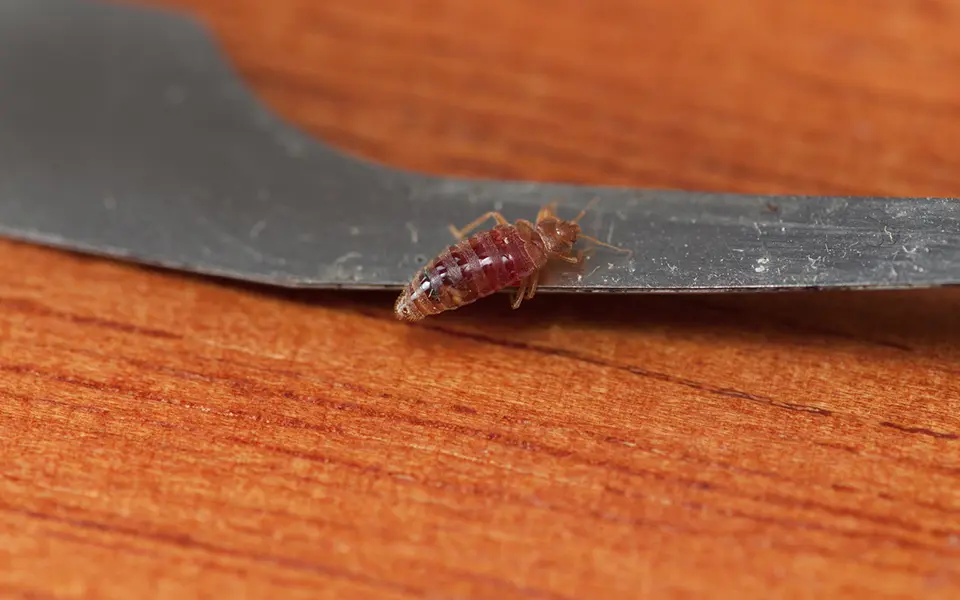
Bed bugs vary in size depending on their life stage.
-
Adult bed bugs are approximately 3/16 inch (4 to 5 mm) in length and are reddish-brown in color with a flat, oval shape resembling an apple seed.
-
Immature bed bugs (nymphs) are smaller and lighter in color.
Common signs of bed bug activity include:
-
Small dark fecal spots on mattresses, box springs, bed frames, headboards, furniture, walls, and linens.
-
Shed skins (exoskeletons) left behind as bed bugs grow.
-
Small white eggs and eggshells, often found in cracks and crevices.
-
Live or dead bed bugs located near sleeping areas.
-
Blood stains on sheets, pillowcases, or mattresses.
Staff should understand that bed bugs are excellent hitchhikers and can be introduced into a facility despite maintaining high standards of cleanliness.
2. Conduct Routine Inspections
Establish a routine inspection schedule for guest rooms and common areas, with special attention to:
-
Mattress seams and tags
-
Box springs
-
Headboards and bed frames
-
Upholstered furniture
-
Luggage racks
-
Nightstands and drawers
-
Baseboards and wall voids
-
Behind pictures, mirrors, and electrical outlets
Rooms with a history of bed bug activity and those adjacent to affected rooms should receive additional inspections.
3. Reduce Harborage Areas
Implement housekeeping and maintenance practices that reduce bed bug hiding places by:
-
Sealing cracks, gaps, and loose wallpaper.
4. Quarantine Affected Rooms
When bed bugs are found, quarantine the affected room until the proper treatments can be made.
Specially designed bed bug mattress and box spring encasements should be used to help reduce bed bug hiding spots. These encasements have less seams and areas for bed bugs to hide. They also make it easier to identify the start of an infestation.
How to Get Rid of Bed Bugs in Hotels
Confirmed bed bug activity requires professional intervention. Attempts by staff to control without a qualified professional can result in failed control, and more widespread infestations.
-
Follow a multi-step treatment plan. Professional bed bug management typically involves both chemical and non-chemical control techniques such as steam. Treatment is applied to all harborage areas, including mattress seams, box springs, headboards, baseboards, closets and electrical outlets.
-
Encase and protect. Following treatment, high-quality mattress and box spring encasements should be installed to trap any surviving bugs and prevent re-infestation. These encasements also simplify future inspections.
-
Conduct follow-up inspections. Rooms should be re-inspected at 14-day and 28-day intervals after treatment, since eggs may hatch after the initial application. Do not return rooms to service until a pest professional certifies them as clear.
Commercial Bed Bug Control
Bed bug sightings can damage a hotel's reputation, disrupt the guests experience and lead to costly guest room vacancies. A proactive professional management program that focuses on inspection, exclusion and ongoing monitoring can help reduce risks and result in the quick resolution of issues should they occur.
However, bed bugs are not strictly limited to hotels—they can infest offices, stores, airplanes, movie theatres, gyms and more. And contrary to popular belief, bed bug infestations are not a result of poor housekeeping or sanitation, so ongoing monitoring and maintenance visits are essential to help protect your property from these silent intruders. Contact an Orkin Pro to learn more about our commercial bed bug control services.
Frequently Asked Questions: Bed Bugs in Hotels
How do bed bugs get into hotels?
Bed bugs are expert hitchhikers. They most commonly enter hotels via guests' luggage, clothing and personal belongings. They can also travel between rooms through shared walls, electrical conduits and plumbing access points, which is why connected rooms and those above and below the infested room must always be inspected when an infestation is confirmed.
How can bed bugs affect a hotel's reputation?
Significantly. A single verified bed bug complaint, especially one that appears in an online review, can deter future bookings, damage brand trust and trigger costly legal action. Hotels with documented, proactive bed bug programs are better positioned to respond quickly and protect their reputation if an incident occurs.
What kills bed bugs in a hotel room?
Professional heat treatments and insecticides applied by a licensed applicator are the most effective methods. Steam cleaning at temperatures above 140°F can kill bed bugs and eggs on contact and is especially useful for upholstered furniture, mattress seams and curtains. Always consult a licensed pest control professional before any treatment is undertaken.
What should hotel management do when a guest reports bed bugs?
Respond promptly and empathetically. Move the guest to a non-adjacent room, take the reported room out of service immediately, document the complaint and contact your pest management provider for a professional inspection. Offering to have the guest's luggage inspected and laundering their clothing at no charge demonstrates good faith and can help de-escalate the situation.
More Bed Bug Resources
Things You Probably Don’t Know About Bed Bugs
Bed bugs are surrounded by misconceptions. Explore surprising facts about their behavior, survival, spread, and detection to help your business better understand the risks and importance of proactive bed bug management.
The Difference Between Bed Bug Introductions And Infestations
Not every bed bug sighting means an infestation. Learn the difference between a bed bug introduction and an active infestation, including the signs, risk factors, and when professional inspection may be necessary.
5 Pests Commonly Mistaken For Bed Bugs
Think you have bed bugs? Learn how to distinguish bed bugs from other pests commonly found in commercial properties, including key identification differences and signs to help determine when professional inspection may be needed.