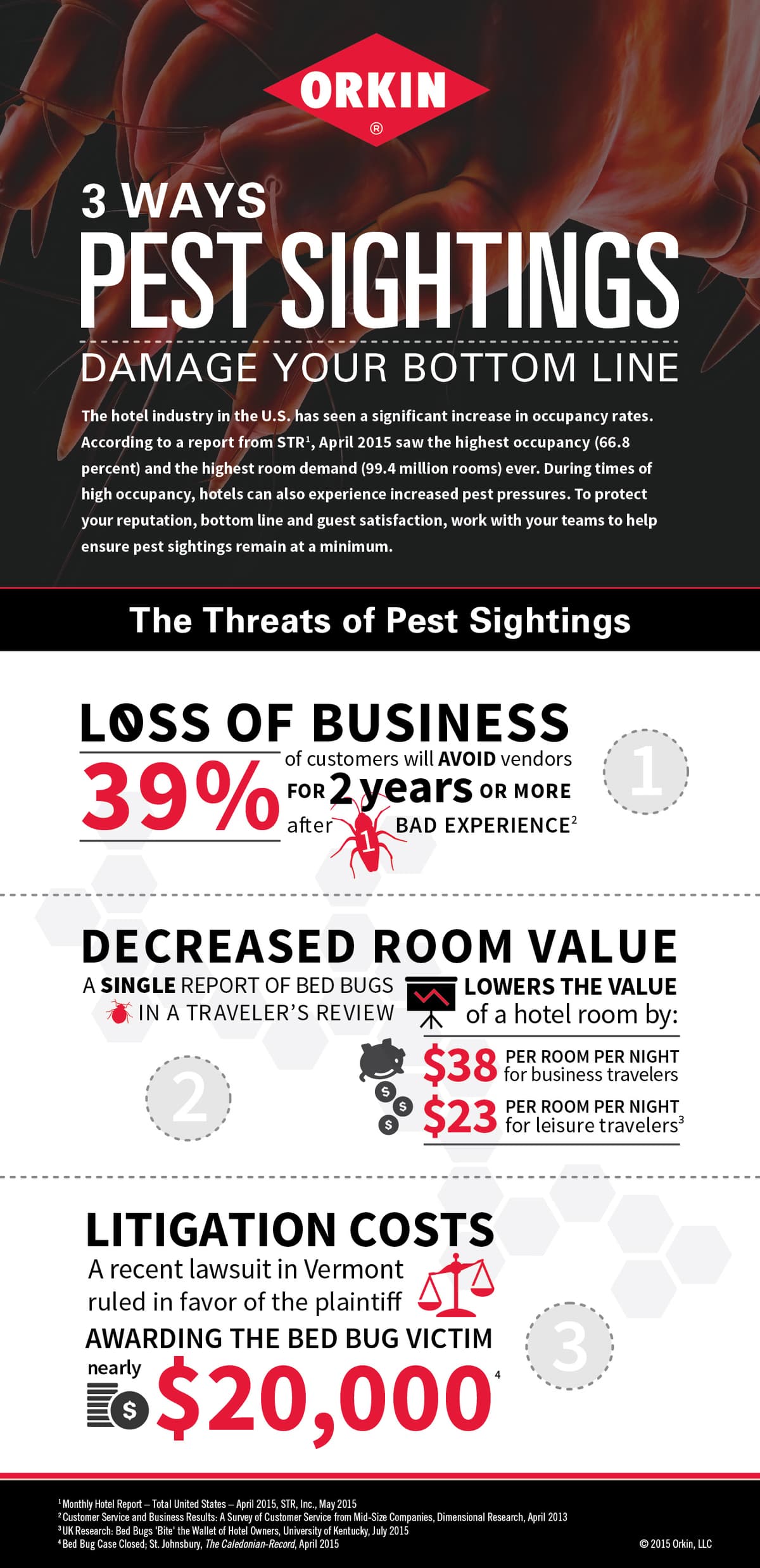
3 Ways Pest Sightings Damage a Hotel’s Bottom Line
Key Takeaways
-
Reputation is everything: A single pest sighting can trigger negative reviews that directly impact bookings and revenue.
-
The most common hotel pests include bed bugs, rodents, cockroaches, ants and flies, each with specific warning signs to watch for.
-
IPM is your first line of defense: Integrated Pest Management focuses on proactive strategies and long-term prevention, and relies on staff and pest control providers working together.
-
Proactive beats reactive: Hotels that wait for guests to report pests face far greater financial and reputational damage than those with a structured prevention program.
-
Orkin can help: Customized commercial pest control solutions keep your guests comfortable and your property protected.
Your guests expect a clean, comfortable stay — and one pest sighting can quickly undermine that trust. Negative reviews, room closures and damage to your reputation can follow. That's why leading hotels rely on Integrated Pest Management (IPM): a proactive approach that helps identify risks early and reduce pest activity before it affects your business.
What is IPM?
Integrated Pest Management (IPM) is a proactive approach that focuses on preventing pest issues before they disrupt your business. IPM uses a science-based approach that combines biological, cultural, physical, and chemical tools to control or suppress pest activity while minimizing risks to people, pets, and the environment.
Our five-step Orkin Pro Process™ delivers more with every service and is the foundation of how we approach Integrated Pest Management (IPM). It starts with a thorough inspection and diagnosis of any pest presence, then a customized IPM plan is tailored to meet the unique needs of your hospitality business and follows up with rigorous reporting so you always know we’re getting the job done right. Here’s how we do it:
-
Step 1: Inspect: Your highly trained Orkin Pro begins with a meticulous inside-and-out inspection of your property to understand the full picture — not just what’s visible.
-
Step 2: Diagnose: Using advanced tools and expert knowledge, your Orkin Pro pinpoints the exact pest species and the underlying factors driving the problem.
-
Step 3: Protect: Implement a precise treatment and prevention plan designed for maximum effectiveness and minimal disruption.
-
Step 4: Monitor: Pest pressures change with the weather, the seasons, and your surroundings — so we keep a close eye year-round.
-
Step 5: Report & Reassure: After every visit, your Orkin Pro provides a clear, detailed service report, so you always know what’s been done and what comes next.
Orkin's hospitality pest management program is tailored to meet the unique needs of your business, delivering customized protection that safeguards your guests, enhances your reputation, and supports a superior customer experience.
IPM Protection for Hotels
Pests in hotels can harm your reputation, ruin guest experiences and lead to costly room closures. High occupancy rates and frequent guest turnover increase the risk of issues like bed bugs and cockroaches brought into your hospitality business along with attracting other pests such as ants. A proactive IPM program can help reduce pest pressure before it affects guests, inspections or your reputation
-
Ongoing Inspection: Staff should inspect and make note of live insect activity, dark staining, or cast skins (exuvia) on mattress tags and seams, furniture cushions and behind headboards. If you spot a bed bug or signs of activity, contact your pest management provider, take the affected room(s) out of service and leave the room untouched.
-
Seal Pests Out: Ensure door sweeps, weather stripping and window screens are installed and in good condition throughout your hotel as well as openings around any cold air units.
-
Survey the Grounds: Inspect your grounds and parking lots frequently to make sure they are free of trash, debris, and standing water that conditions conducive to pest activity.
-
Hard-to-Reach Area: Regularly sweep and vacuum elevators, and work with your elevator maintenance company to lift the elevator and clean the bottom of the shaft every few months.
-
Take Out the Trash: Empty trash cans frequently and schedule regular pickups with your waste management company. During times of high occupancy, adjust the trash schedule to avoid overflow.
-
Dining Room Hot-Spot: Immediately clean up spills and crumbs as diners finish their meals. At the end of each day, deep clean the dining areas to help prevent residues and odors that can attract pests.
-
Room Amenities: Staff should regularly inspect areas around refrigerators, microwaves, and coffee units inside rooms. Immediately clean up spills and crumbs to reduce food resources that pests can thrive on.
By prioritizing Integrated Pest Management, your hotel can maintain a pristine environment and help keep pests in their place—outside. Proactive measures like addressing waste management, regular maintenance and close monitoring are key to helping protect your reputation and ensuring compliance with health regulations.
Common Pests in Hotels and How to Identify Them
Hotels face pest pressure year-round. Knowing what to look for early is the difference between a quick fix and a PR nightmare.
Bed Bugs
Hotels are consistently among the top three locations pest professionals treat for bed bugs. These hitchhikers travel in on guest luggage and clothing, then hide in mattress seams, headboards and baseboards. Here's what gives them away:
-
Reddish-brown spots or molted skins on bedding and mattress seams
-
A sweet, musty odor in heavily infested rooms
-
Guest reports of itchy bites on exposed skin
Rodents
Mice and rats are drawn to hotels by food sources in kitchens, restaurants and waste areas. They can contaminate surfaces with dangerous pathogens and cause structural damage by gnawing on wiring. Signs to watch for:
-
Droppings along walls, behind equipment and in storage areas
-
Grease smudge marks and gnaw damage on doors or baseboards
-
Scratching or skittering sounds from wall voids or ceilings, especially at night
Cockroaches
Cockroaches thrive in warm, moist environments near food and drains. They can carry harmful pathogens including E. coli and Salmonella, making them a serious health risk in any hospitality setting.
Here's what to look for:
-
Nighttime sightings near dishwashers, sinks or floor drains
-
Small, dark droppings that resemble coffee grounds or black pepper
-
A musty odor in areas with heavy activity
Ants
Ants are drawn to food and moisture and often form visible trails across floors and counters. While they may seem harmless, an ant problem can signal broader sanitation issues and is a reliable deterrent for guests. They can also carry harmful pathogens including E. coli and Salmonella. Keep your eyes peeled for:
-
Visible trails leading to food or moisture sources
-
Small piles of soil or debris near entry points
-
Sightings in dining areas, kitchens and bathrooms
Flies
Flies breed in drains, garbage and spilled liquids before moving into food and prep areas. Their presence is a clear indicator of an underlying sanitation issue that needs to be addressed quickly. Here's how to spot a fly problem before it spirals:
-
Persistent activity around drains, recycling bins and waste areas
-
Larval feeding sites require the site to have wet, decaying organic material
-
Guest complaints near dining or bar areas
How to Get Rid of Pests in Hotels
Spotting pest activity requires a fast, structured response. Here is what to do:
-
Remove the affected area from service. Temporarily close the affected area and remove from service until your Orkin Pro inspects it.
-
Contact your pest management provider for an emergency service call. Do not wait for your next scheduled visit.
-
Document everything: Note the time, location and nature of the sighting with photos if possible.
This equips your Orkin team to respond proactively and efficiently, ensuring your pest management needs are addressed with precision and confidence.
-
Inspect adjacent rooms or areas to assess whether the issue has spread.
-
Seal and sanitize: Once treatment is complete, address any contributing factors such as entry points, food sources or moisture issues to help prevent a repeat incident.
For long-term results, consistent IPM practices are far more effective than reactive treatments. Prevention is always less costly than remediation.
Prioritizing Integrated Pest Management keeps pests where they belong: outside. Proactive measures including regular inspections, waste management and close monitoring are the foundation of protecting your reputation, your guests and your bottom line.
Why wait for pests to make a bad impression? Contact Orkin today to learn how our customized commercial pest control solutions can help keep your guests and hotel protected.
Frequently Asked Questions: Pests in Hotels
How do pests affect a hotel's reputation?
A pest sighting does not stay in the room. Guests share experiences on review platforms, social media and travel sites. According to Nielsen research, 88% of consumers trust recommendations from people they know more than any other form of advertising. A single bad review mentioning pests can outweigh dozens of positive ones, directly impacting future bookings and revenue.
What are the most common pests found in hotels?
The most common pests in hotels are bed bugs, rodents (rats and mice), cockroaches, ants and flies. Bed bugs and rodents are among the highest-risk pests due to the health implications and the strong guest reactions they produce.
How can hotel staff help prevent pest issues?
Staff are your first line of defense. Training housekeeping and maintenance teams to recognize signs of pest activity, report sightings immediately, and maintain strict sanitation standards significantly reduces the risk of infestations taking hold. Even simple habits like cleaning up spills promptly and inspecting rooms during turnover can make a meaningful difference.
How often should a hotel conduct pest control?
At minimum, hotels should work with a licensed pest control provider on a regular scheduled service. High-risk areas like kitchens, dining rooms and waste storage zones typically require more frequent attention. The right service frequency depends on your property's size, occupancy levels and past pest history.
Can pests lead to legal or financial consequences for hotels?
They can. Hotels have a legal duty of care to provide guests with a safe, hygienic environment. A pest infestation can result in guest complaints, lawsuits, health code violations, and in severe cases, temporary closure. Bed bug incidents alone can cost hotels more than $20,000 per incident when factoring in treatment, room credits and potential legal exposure.
More Hospitality Resources
How Hotel Staff Can Help with Bed Bug Prevention
Hotel staff play a key role in spotting early signs of bed bugs and preventing infestations. Learn practical steps to keep guests comfortable.
Bed Bug Checklists for Your Workplace
Bed bugs hide in office furniture, break rooms, and shared spaces. Learn how to check for signs early and prevent workplace infestations.
Integrated Pest Management helps keep pests out by reducing food, water, and shelter sources. Learn summer strategies to protect your business.