Don’t Ignore These Commuter Pest Risks in Healthcare Facilities

Key Takeaways
-
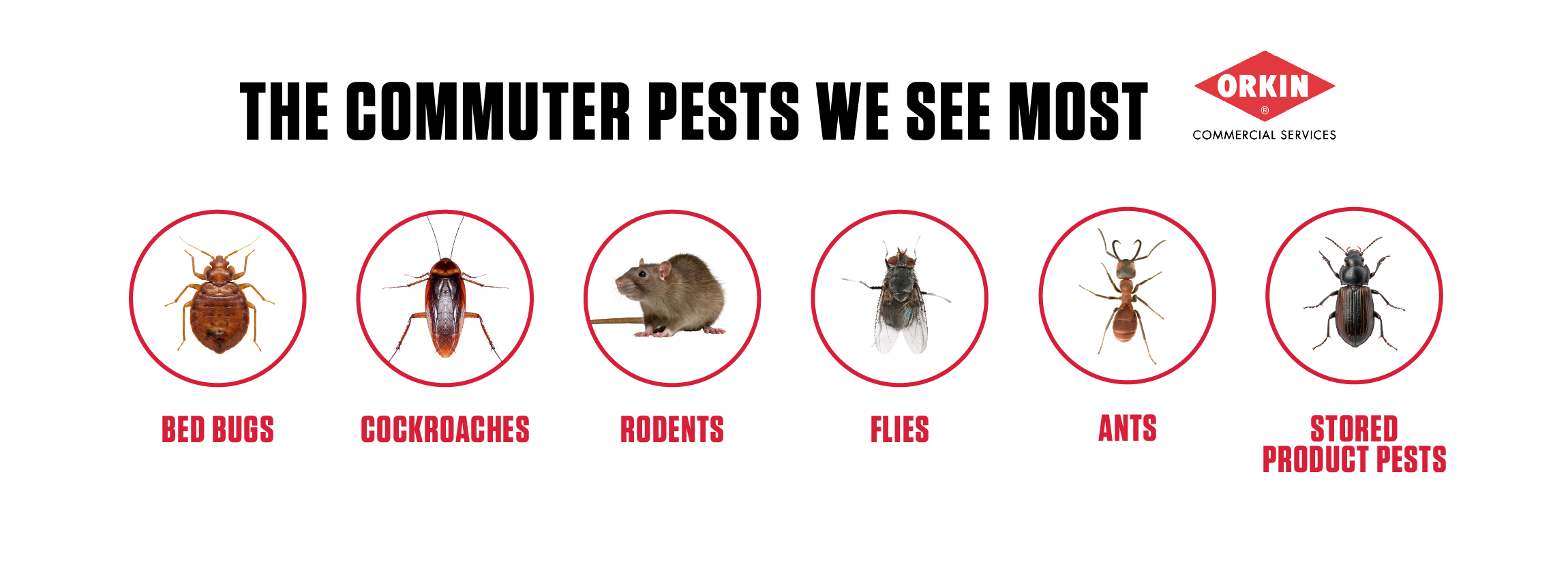
The most common commuter pests are bed bugs, cockroaches, rodents, flies, ants and stored product pests.
-
“Commuter pests” enter healthcare facilities by traveling in on people, materials and daily operations, not just through structural gaps.
-
Hospitals face ongoing risks from commuter pests because of constant movement throughout the facility.
-
Long-term management depends on monitoring movement patterns and conditions, not just reacting to sightings.
In healthcare environments, pests don't always enter through cracks or doors. The constant movement of people, supplies and equipment creates opportunities for pests to reach even highly controlled spaces. For hospitals focused on patient safety, sanitation standards and operational continuity, managing those pathways is just as important as securing the building.
Understanding how commuter pests move through a facility is key to staying ahead of them.
What Are Commuter Pests?
Commuter pests are insects and rodents that enter facilities by hitchhiking through everyday movement. Instead of relying on cracks or open doors, they travel in on uniforms, personal belongings, deliveries, laundry and equipment.
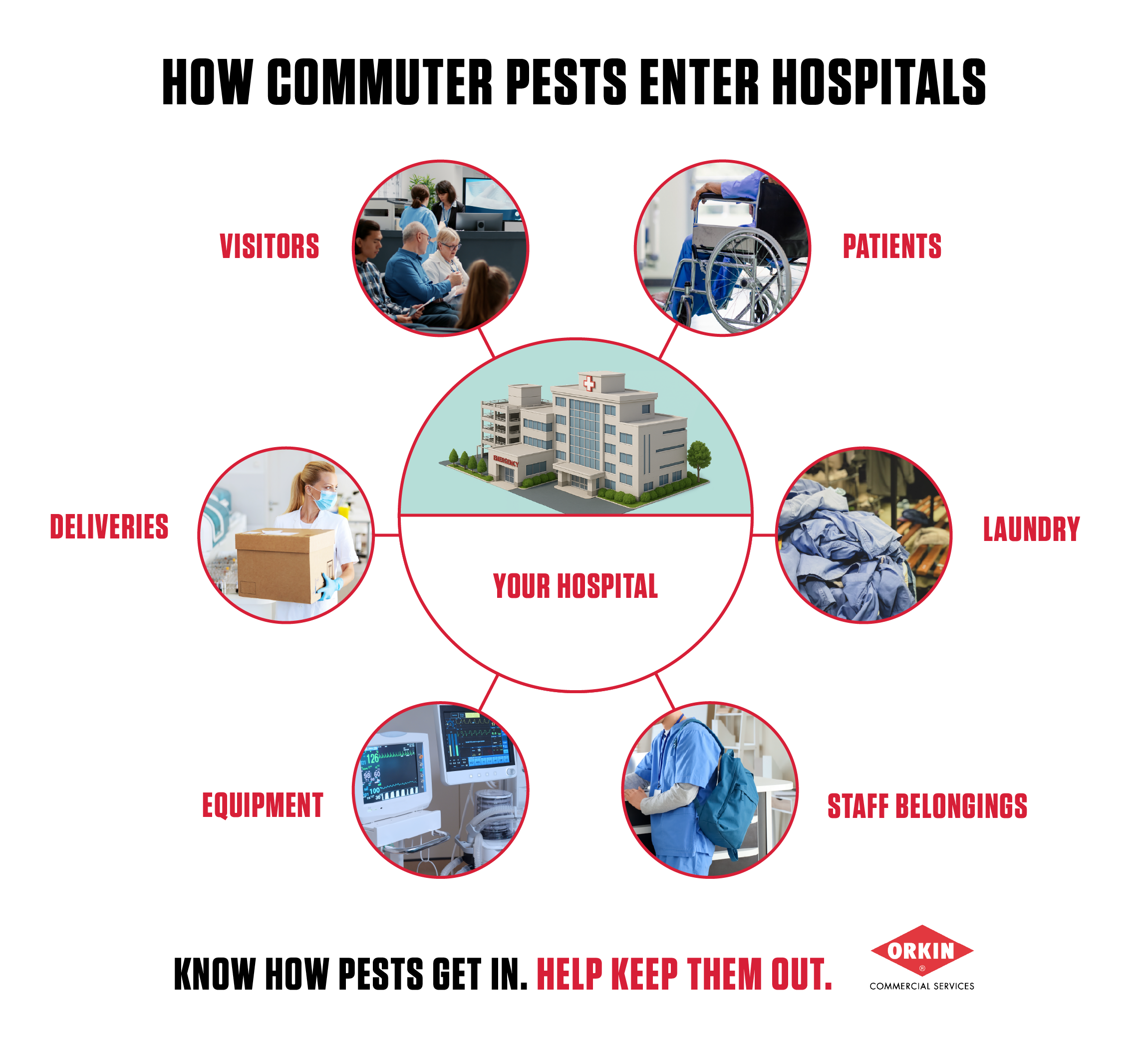
What Are the Top Commuter Pest Risks in Hospitals?
In a healthcare setting, commuter pests create a unique challenge. Hospitals are designed for patients, staff and supplies to move freely and quickly. This movement can unintentionally introduce pests into controlled environments.
1. Bed Bugs
Bed bugs are one of the most well-known commuter pests in healthcare because they can easily transfer between patients, visitors or staff. They often arrive in or on:
-
Clothing
-
Bags
-
Personal items
Once inside, they seek shelter away from high-traffic areas, often in furniture or equipment. They move slowly, but their size allows them to go undetected, and they can disperse into multiple locations.
The key to managing bed bugs is early detection and staff awareness. Training environmental services teams, nursing staff and facility personnel to recognize signs of activity can help reduce the risk of bed bugs spreading and support patient satisfaction.
2. German Cockroaches
The sight of a cockroach can damage your reputation long after it's gone. For hospitals, German cockroaches are efficient hitchhikers that commonly enter through:
-
Personal belongings
-
Deliveries
-
On your person
They thrive in areas with warmth and moisture, such as break rooms, kitchens and utility spaces. You can help mitigate this problem with regular inspections of staff areas and strict sanitation practices to reduce the conditions that allow them to settle.
3. Rodents
Rodents are opportunists. They enter through structural deficiencies, and also take advantage of human practices like:
-
Propping doors open and leaving them unattended
-
Poor storage practices, such as placing items on the floor or against walls
-
Poor waste management, such as overflowing dumpsters or uncovered trash containers
-
Receiving food deliveries and medical supplies
Once inside, they can navigate through tight spaces — under doors, behind equipment and in overhead spaces — using utility lines and wall voids to move quickly through a facility. To stay ahead and help limit movement, inspect incoming deliveries and maintain strong exclusion practices.
4. Flies
Flies often enter through high-traffic areas where doors are constantly opening and closing. In hospitals, they commonly gain access through:
-
Visitor and staff entrances
-
Ambulance bays
-
Loading docks
Certain fly species can pose sanitation concerns after encountering waste or organic material. Focusing on sanitation and waste management can help reduce attraction and support a cleaner environment.
5. Ants
Ants are among the most common pests found in healthcare facilities. They may seem low-risk, but they can compromise sanitation standards and trigger compliance concerns. Ants can access a healthcare facility in several ways:
-
Pipe entry points in walls and rooftops
-
Gaps around doors and windows
-
Underground utility lines
Once established, they can form trails that travel in various directions, disrupting patient services. Keep food storage controlled and address spills quickly to help reduce attraction. Also, encourage staff to remove leftover food promptly after patients are finished eating.
6. Stored Product Pests
Stored product pests may be introduced through incoming goods and are attracted to light sources and food odors, posing serious contamination risks. Pests like beetles and moths can develop from egg to adult and typically go unnoticed in:
-
Packaged goods
-
Food supplies
-
Medical materials
Due to their small size, they can be transported to various places around the healthcare facility. Practicing “FIFO” (First-In, First-Out) or “LILO” (Last-In, Last-Out) can reduce future issues. If you rotate inventory and inspect shipments routinely, you can catch issues early.
Less Common Pest Invaders to Watch
Hospitals may occasionally encounter less common invaders such as spiders and beetles. These pests can enter through plants, deliveries and personal belongings.
While they may not establish large infestations, their presence can still affect patient perception, sanitation programs and inspection readiness efforts. Even occasional pest sightings can raise compliance concerns and impact patient confidence. Consistent monitoring across clinical and non-clinical spaces is one of the best ways to stay ahead of these unexpected visitors.
Why Commuter Pests Are Harder to Control
Hospitals operate 24/7, leaving no true downtime for pest management. Movement is constant, and so is the opportunity for pests to enter. Unlike traditional pest entry points, commuter pests are tied to behavior and operations. That makes them harder to predict and easier to overlook. A single sighting may not point to a structural issue; it may trace back to how materials or people are moving through your facility.
What Effective Pest Prevention Looks Like For Hospitals
Managing commuter pests requires a shift in approach. Focus on how your facility functions, not just on sealing entry points.
Effective Integrated Pest Management (IPM) programs focus on:
-
Monitoring high-traffic zones like entrances, laundry and receiving areas
-
Training staff to recognize early signs of pest activity
-
Inspecting deliveries and materials before they move deeper into the facility
-
Addressing sanitation and storage practices that support pest survival
Knowing where pests are likely to appear, and why, helps stop problems before they spread.
How Can I Stay Ahead of Commuter Pests?
Commuter pests don’t wait for the right conditions; they take advantage of everyday movement throughout your facility. With 125 years of experience and specialized healthcare pest control programs, Orkin helps hospitals identify risk areas, monitor pest activity and support inspection readiness through proactive Integrated Pest Management (IPM) strategies.
Call an Orkin Pro today and get absolute confidence in your pest control.
FAQs About Commuter Pests in Commercial Facilities
1. What are commuter pests in healthcare facilities?
Commuter pests are pests that enter a facility by hitchhiking on people, supplies or equipment rather than through structural gaps. They are common in environments with constant movement, like hospitals.
2. Why are hospitals at higher risk for these pests?
Hospitals operate 24/7 with high volumes of patients, staff and deliveries. This continuous movement increases the chances of pests being introduced and spreading.
3. What pests are commonly introduced into hospitals through daily operations?
Bed bugs, German cockroaches, flies, ants and rodents are among the pests commonly introduced through people, deliveries and supplies. The specific risks vary based on facility operations and environmental conditions.
4. How can hospitals reduce commuter pest risks?
Hospitals can help reduce risk by inspecting deliveries, training staff, maintaining sanitation and implementing ongoing monitoring programs.
5. Where should hospitals focus pest monitoring efforts?
Key areas include entrances, waiting rooms, laundry facilities, loading docks, storage areas and staff break rooms — anywhere movement and materials intersect.