Healthcare Pest Management Best Practices for Hospitals & Medical Facilities
Key Takeaways
-
Patient safety is directly at stake. Pests like rodents and cockroaches carry or spread pathogens and allergens that pose health risks, particularly for patients with weakened immune systems.
-
Six areas demand consistent monitoring. Doorways, loading docks, dining and food prep spaces, common areas, building exteriors, storage and utility rooms are where pest problems most often begin.
-
Exclusion is your first line of defense. Sealing entry points, installing door sweeps and maintaining weather stripping can help stop pests before they get inside.
-
Sanitation reduces what attracts pests. Moisture, food debris and shelter are among the conditions pests need most. Reducing these conditions can help lower much of the risk.
-
IPM is the gold standard for healthcare settings. Integrated Pest Management (IPM) combines prevention, monitoring, documentation and targeted treatment into a proactive, compliance-ready program.
Why Is Pest Control Important in Healthcare Facilities?
Healthcare facilities are expected to maintain high standards of cleanliness, safety and patient care. While sanitation protocols help reduce many risks, pests can still find opportunities to enter buildings in search of food, water and shelter.
Hospitals, medical offices, outpatient centers, rehabilitation facilities and long-term care communities experience constant activity from staff, patients, visitors, vendors and deliveries. This creates multiple access points for pests and increases the importance of proactive pest management.
A comprehensive healthcare facility pest control program combines prevention, monitoring, facility maintenance, documentation and Integrated Pest Management (IPM) practices to help identify and address pest risks before they become larger problems.
What Is Healthcare Facility Pest Control?
Healthcare facility pest control is the process of managing, monitoring and helping to prevent pest activity in hospitals, clinics, medical offices, surgical centers, rehabilitation facilities, hospices and long-term care communities.
An effective healthcare pest management program focuses on:
-
Supporting a clean and healthy environment
-
Helping to protect patients, staff and visitors
-
Reducing conditions that attract pests
-
Minimizing operational disruptions
-
Identifying pest risks early
-
Supporting facility maintenance and sanitation efforts
Healthcare facilities often require tailored pest management strategies because every facility has unique operational needs, building layouts and risk factors.
What Pests Are Commonly Found in Hospitals and Healthcare Facilities?
The five most common pests in healthcare environments are rodents, cockroaches, flies, bed bugs and ants.
Rodents
Rats can squeeze through an opening about the size of a quarter; mice need only a dime-sized gap. Both carry or transmit pathogens and are difficult to keep out of large facilities with multiple entry points.
Areas to monitor:
-
Loading docks
-
Foodservice spaces
-
Storage areas
-
Utility rooms
-
Exterior perimeter
Cockroaches
Known to spread disease, contaminate food and surfaces and trigger allergies and asthma. Their presence is a serious sanitation red flag.
Areas to monitor:
-
Cafeterias
-
Kitchen facilities
-
Employee breakrooms
-
Laundry areas
-
Mechanical rooms
Flies
Particularly problematic near foodservice areas, drains and waste disposal. House flies are associated with over one hundred pathogens and can spread contamination.
Areas to monitor:
-
Waste collection areas
-
Loading docks
-
Kitchens
-
Exterior entrances
Bed Bugs
Can spread through the movement of beds, bedding, furniture and patient or visitor belongings. While not known to transmit disease, they can cause significant distress and are difficult to eliminate once established.
Areas to monitor:
-
Waiting areas
-
Patient rooms
-
Long-term care facilities
-
Furnished common spaces
Ants
Resilient, adaptable and capable of establishing colonies in and around structures. Outpatient centers and facilities with foodservice operations may be especially susceptible.
Areas to monitor:
-
Break rooms
-
Kitchens
-
Utility spaces
-
Exterior foundations
How Can Healthcare Facilities Help Prevent Pest Infestations?
Below are specific ways you can prevent pest activity in your facility. For more tips, check out the complete Healthcare Pest Prevention checklist.
Exclude Pests
-
Install and regularly inspect door sweeps, weather stripping and window screens on all doors and windows.
-
Seal cracks and crevices throughout the building's interior and exterior.
-
Keep loading docks closed when not in use and never leave exterior doors open for extended periods.
Inspect and seal small gaps when possible; some pests can access buildings through openings as small as one-sixteenth of an inch.
Sanitize Regularly
-
Maintain a strict daily cleaning regimen that includes wiping down equipment and cleaning up spills and leaks promptly.
-
Inspect drains regularly for organic buildup, which attracts flies and cockroaches.
-
Store supplies off the ground on open shelving to reduce harborage opportunities.
-
Dispose of waste frequently and sanitize dumpsters and compactors on a regular schedule.
-
Remove cardboard boxes and other clutter that provide shelter for pests.
Be Smart About Landscaping
-
Move plants and mulch away from the facility's foundation.
-
Trim overgrown branches, bushes and ground cover that provide hiding spots near entry points.
-
Eliminate standing water sources, which attract insects and provide moisture that supports pest activity.
What is Integrated Pest Management in Healthcare Settings?
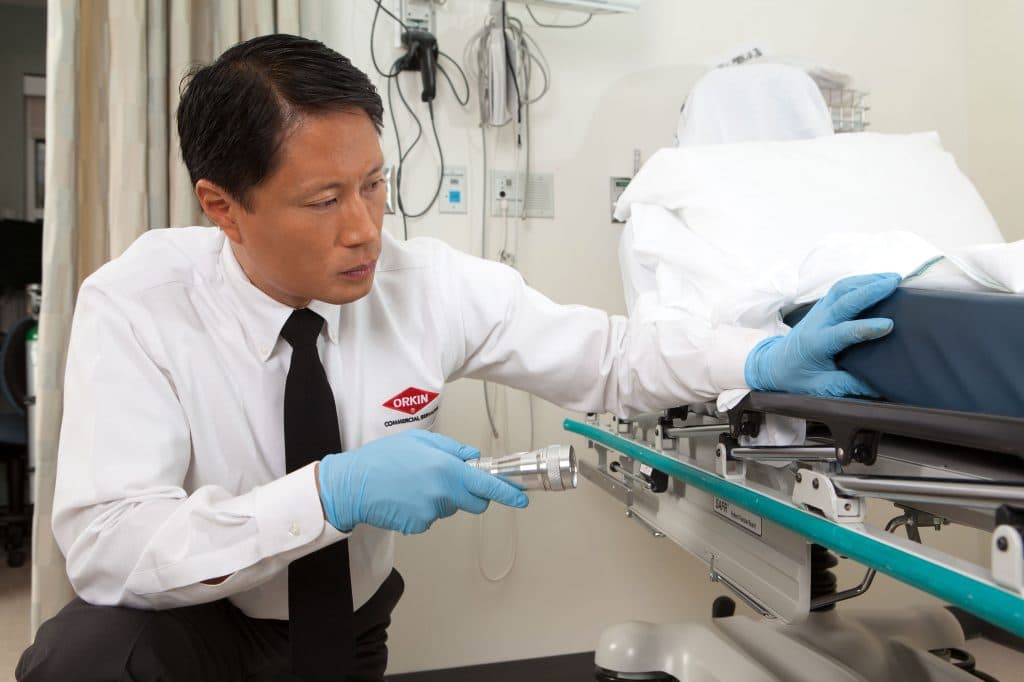
Integrated Pest Management (IPM) is a structured, proactive approach to pest prevention that prioritizes risk reduction, monitoring, documentation and targeted treatment over reactive chemical applications. By maintaining an IPM program tailored specifically to your needs, you can help support a facility environment that reflects high standards of cleanliness and care.
A well-designed IPM program for a healthcare facility includes four key steps:
-
Assess Risks: A professional facility audit identifies vulnerabilities inside and out, including signs of existing pest activity.
-
Develop a Prevention Plan: A customized playbook outlines sanitation protocols, high-risk areas to monitor, proper storage procedures and building maintenance actions.
-
Implement the Plan: Staff are trained to recognize and report signs of pest activity, and a regular service schedule is established to keep the facility audit-ready.
-
Monitor and Document: Ongoing inspections, detailed service logs and documented pest activity ensure the program stays effective and supports compliance requirements.
For more information on the pests that are most attracted to your facility and additional preparedness tips, download the Healthcare Pest Control from a Patient’s Perspective ebook.
Schedule a meeting with your pest management provider to help create an IPM plan unique to your facility that includes exclusion, maintenance, monitoring, documentation and sanitation techniques.
Healthcare Facility Pest Control FAQs
What pests are most common in healthcare facilities?
Rodents, cockroaches, flies, ants, and bed bugs are among the most encountered pests in hospitals, clinics and other healthcare environments.
Why is pest control important in hospitals?
Pest control helps healthcare facilities maintain sanitary conditions, identify potential pest activity early, support facility maintenance efforts and create a positive experience for patients, visitors and staff.
What areas of a healthcare facility should be inspected for pests?
Healthcare facilities should regularly inspect entrances, loading docks, foodservice areas, common areas, storage rooms, utility spaces, waste handling areas and building exteriors.
How can healthcare facilities help prevent pest infestations?
Many facilities focus on:
-
Sealing potential entry points
-
Maintaining sanitation standards
-
Managing landscaping
-
Conducting routine inspections
-
Training staff to recognize signs of pest activity
-
Implementing an IPM program
Can pest activity affect patient and visitor perceptions?
Visible pest activity may negatively influence how patients, visitors and staff perceive facility cleanliness and overall upkeep.
How often should healthcare facilities inspect for pests?
Inspection frequency depends on facility size, operational complexity and risk factors. Many healthcare facilities implement ongoing monitoring and regular inspections as part of a comprehensive pest management program.
What should a healthcare pest management program include?
A comprehensive program should include facility inspections, monitoring, documentation, exclusion measures, sanitation recommendations, employee education and a customized response plan.