


ASK ORKIN
Carpenter Ant Control Near Edgewater, Miami, FL
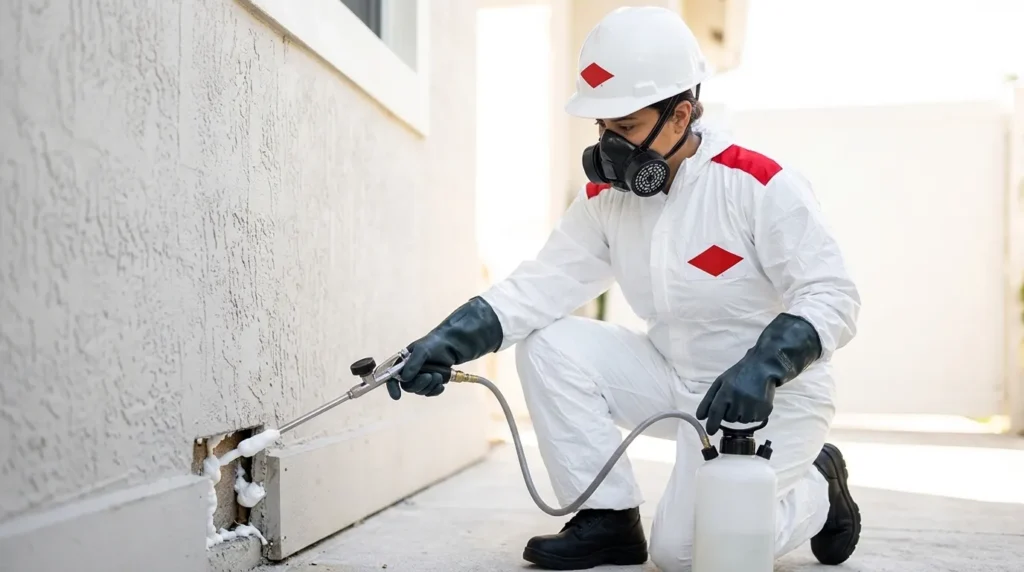
Orkin locates & eliminates hidden carpenter ant colonies in Edgewater, Miami, FL. Protect your home now — fast, expert treatment. Call Orkin today!
Key Takeaways
- Carpenter ants carve galleries inside moisture-damaged wood instead of eating it, which creates hidden structural damage that store sprays miss.
- A mature colony follows a parent-plus-satellite structure, with the egg-laying queen in an outdoor parent nest and satellite nests inside the home.
- Correct identification matters. Carpenter ants have a single node, smoothly rounded thorax, elbowed antennae, and front wings longer than hind wings, which separates them from termites.
- Effective control uses a professional inspection of wall voids, attics, and exterior wood to find the colony, followed by targeted treatment, entry-point sealing, and monitoring.
- Orkin provides trained local Pros, a five-step inspection and treatment process, and the Orkin Guarantee that sends them back at no extra charge if carpenter ants return.
The Problem: Hidden Carpenter Ant Colonies In Edgewater, Miami, FL Homes
Carpenter ants create a structural problem inside your home, not a simple surface nuisance. They do not eat wood. Instead, they excavate smooth galleries inside it to build nesting space, pushing out coarse frass through small kick-holes. That frass, which looks like coarse, fibrous wood shavings or sawdust mixed with insect parts and sometimes resembles pencil sharpenings, is often the first visible sign that a colony is already established inside the structure.
A mature carpenter ant colony follows a parent-plus-satellite structure. The parent nest, which holds the egg-laying queen, is almost always located outdoors in a stump, dead tree, or decaying wood. One or more satellite nests, containing workers, larvae, and pupae, form inside the building, commonly in wall voids, attics, insulation, and moisture-damaged framing. University of Nebraska Extension and Ohio State University Extension both confirm that the queen stays in the parent colony. Satellite nests inside the home cannot reproduce on their own, yet they keep receiving new workers as long as the parent colony survives.
Store sprays and general baits often fail for a simple reason. They target the ants you can see instead of the colony hidden in the structure. Repellent pyrethroid sprays kill only the foragers they contact, which represent a small fraction of the colony. Because the colony survives, satellite nests can relocate deeper into the structure. Texas A&M AgriLife Extension warns that general containerized baits sold in grocery and hardware stores are not effective for carpenter ants, and that with some ant species, spraying visible ants can scatter the colony into new nests. Without training, misidentification and over-application are also common. For more on carpenter ant biology, see Orkin’s carpenter ant control page.
Schedule A Structural Ant Inspection
Carpenter Ant Identification In Edgewater, Miami, FL Homes
Correct identification is the first step toward a lasting fix. Carpenter ant workers are among the largest ants found in or around homes, ranging from roughly 1/4 to 5/8 inch in length, with winged reproductives reaching up to 3/4 inch. Texas A&M AgriLife Extension notes that color varies by species and can be solid black, yellowish-red, or a combination, so color alone does not reliably identify them.
The physical features that distinguish carpenter ants are more reliable. Look for a single node between the thorax and abdomen forming a pinched waist, a smoothly rounded thorax when viewed from the side, and antennae that are elbowed at roughly a right angle. Winged carpenter ants have front wings that are longer than their hind wings.
Winged termite swarmers are commonly mistaken for winged carpenter ants, yet the differences are clear once you know what to look for. Native Pest Management summarizes three key distinctions. Flying ants have narrow pinched waists, elbowed antennae, and front wings longer than hind wings, while termite swarmers have broad waists, straight bead-like antennae, and wings of roughly equal length. Insects with equal-length wings and a thick waist call for a termite inspection.
Other signs of carpenter ant activity include frass that looks like coarse sawdust or coffee grounds near baseboards, window frames, or sills, nighttime foraging by large black ants, and a faint rustling or crinkling sound inside walls, which Orkin describes as the sound of crinkling cellophane. Carpenter ant queens lay 9 to 16 eggs in their first year and may live up to 25 years, and eggs complete their lifecycle in about 6 to 12 weeks.
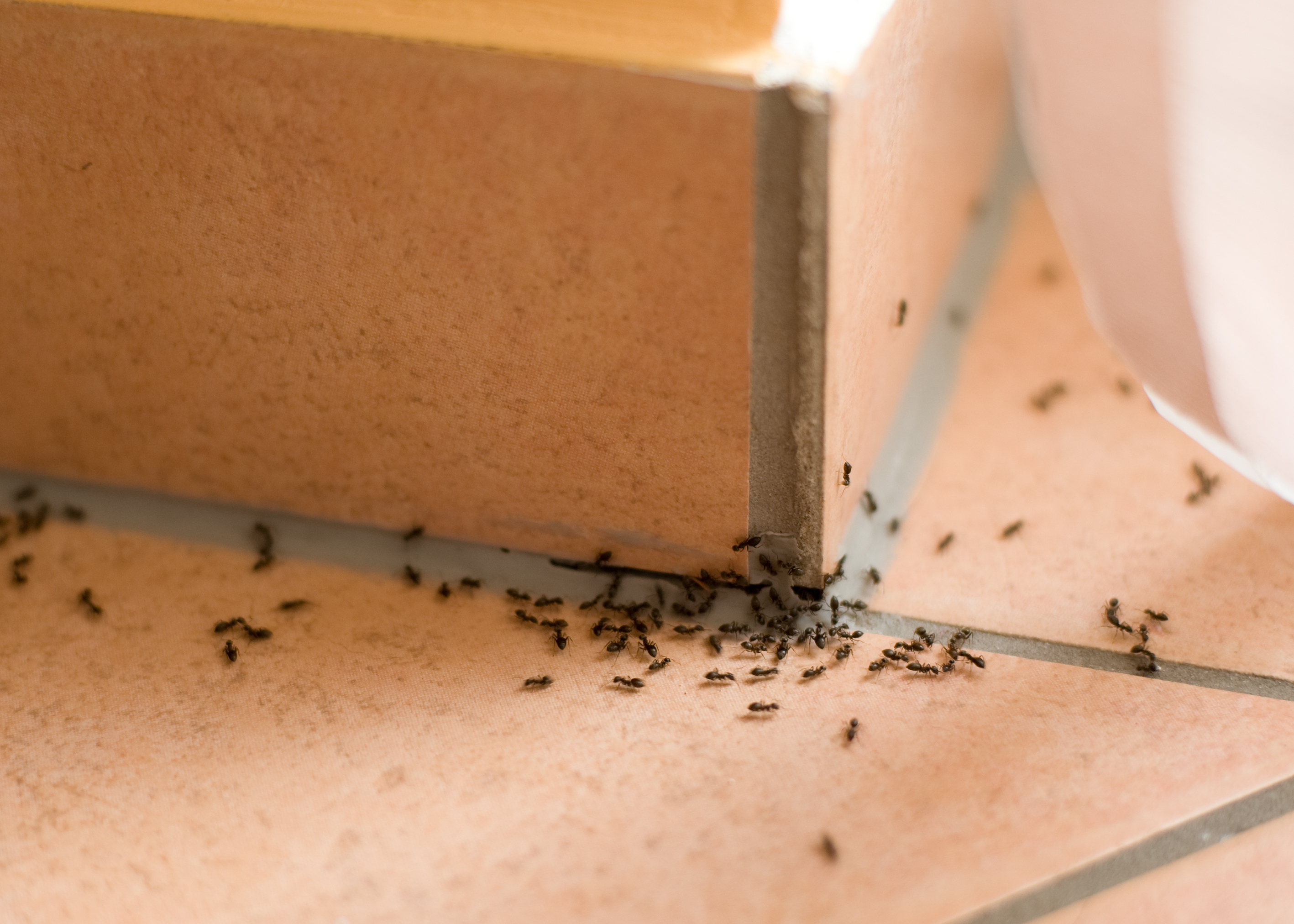
Confirm If It Is Carpenter Ants
Why Carpenter Ants Target Edgewater, Miami, FL Homes
Carpenter ants follow moisture, and Edgewater’s hot, humid Miami climate provides it for much of the year. Single-family homes in the neighborhood often feature balconies, porch structures, and roof lines where wood is exposed to South Florida rainfall and humidity. Window frames, door frames, and the wood around roof edges frequently become entry and nesting points.
Texas A&M AgriLife Extension lists common carpenter ant nesting locations as wood affected by clogged gutters, damaged flashing, leaking door and window frames, wood between the ceiling and roof of flat-deck porches, areas around kitchen and bathroom plumbing with water leaks, poorly ventilated crawl spaces, and wall insulation including rigid foam board. These features match the construction details found in many Edgewater single-family homes.
Carpenter ants enter structures through cracks around windows and foundation walls, where tree branches or utility lines contact the structure, and through attic ventilation openings. In much of South Florida, warm temperatures allow carpenter ant activity to continue through much of the year, with no true dormant season to slow colony growth. For most Edgewater, Miami homeowners, the primary concern is the wood inside their own structure.
Carpenter Ant Infestations And Damage Speed In Edgewater, Miami, FL
Even a few foraging carpenter ants indoors can signal a mature colony inside the structure. UC IPM notes that as few as 1 percent of a colony’s foragers can feed the queens and larvae in the nest, so the ants visible on a baseboard or countertop represent only a small fraction of the total population. University of Minnesota Extension identifies approximately 20 or more workers seen indoors as a reason for focused nest investigation. The more important signal is where the ants are traveling rather than the exact count.
Carpenter ants tunnel through wood, so damage builds gradually and often hides behind a thin outer shell of intact wood. Blackline Pest Control notes that carpenter ants leave a thin outer shell of wood intact while hollowing the interior, so external signs such as sagging or cracking appear only after internal hollowing becomes severe. A colony can take several years to reach full maturity, and early infestations are often difficult to detect. The longer a colony remains active in structural wood, the more extensive the excavation becomes. Moisture-damaged wood speeds this process because softened wood is easier to tunnel through.
The practical takeaway is straightforward. Waiting for visible structural damage before acting gives the colony more time to expand. Frass under a window frame or large ants at night already justify a professional inspection.
Carpenter Ant Seasonality In Miami, FL
Carpenter ants stay active through much of the year in South Florida because temperatures rarely drop low enough to slow colonies significantly. Orkin’s seasonal data places Miami’s Swarm Season in January and February, earlier than most of the country, when winged reproductives emerge to establish new colonies. UF/IFAS guidance on Florida carpenter ants reports that winged reproductives fly in the evening or at night during the rainy season, from May through November, and that complaints from Florida homeowners are most common during spring swarm season.
Nighttime sightings of large ants provide an important diagnostic clue in any season. Rutgers Cooperative Extension describes carpenter ants as primarily nocturnal, with foraging activity greatest after dark. In much of South Florida, the combination of warm nights and persistent humidity allows foraging well outside the spring peak.
Orkin’s Seasons of Pest Protection maps pest activity across six pest seasons, including Swarm Season, Breeding Season, High Season, Prep Season, Invader Season, and Shelter Season. In Miami’s hot-humid climate, the shoulder seasons still carry real pest pressure, and recurring protection is timed to what carpenter ants are doing in your zone now and what they will do next.
Plan Service Around Swarm Season
The Solution: Professional Carpenter Ant Treatment For Miami-Dade Homes
Effective carpenter ant treatment in Miami-Dade focuses on finding and treating the colony instead of chasing surface activity. A targeted, species-specific approach uses several coordinated steps that store sprays cannot match.
- Inspect: A thorough inspection of the structure covers wall voids, attics, exterior wood, window and door frames, balconies, porch structures, and roof lines. The inspection looks for frass, moisture-damaged wood, kick-holes, and foraging trails. University of Minnesota Extension recommends a three-step inspection order. Pros identify moisture, examine adjacent wood and concealed voids, then look for confirming live activity.
- Diagnose: The Pro confirms the species and the conditions driving the infestation. Carpenter ant control is highly specialized, and Texas A&M AgriLife Extension states that treatments for termites or other pests do not control carpenter ants.
- Treat: Targeted treatment aims at the colony. This may include baits that workers carry back to the nest, dusts or injections into wall voids where the satellite colony is established, and sealing of entry points so ants cannot reenter. APC Exterminators’ review of extension literature confirms that treatment must target the parent colony where possible, because eliminating only the indoor satellite nest leaves reproduction intact.
- Monitor And Report: Ongoing monitoring and a written report after every visit keep you informed. The report explains what was found, what was treated, and what to expect next.
Start Professional Carpenter Ant Treatment
Questions To Ask Before You Book Carpenter Ant Control Near Edgewater, Miami, FL
Choosing the right provider in Edgewater, Miami starts with a few focused questions.
- Do you treat carpenter ants specifically, or is this a general ant service?
- How do you locate the nest, including the parent colony and any satellite nests?
- Will you inspect wall voids, attics, and exterior wood, beyond the areas where I see ants?
- Is follow-up included if ants return between visits?
- Is there a written guarantee, and what does it cover?
- Do you have a local branch and local Pros who know South Florida’s pests?
- How quickly can you come out?
Orkin provides clear answers to each of these points. Orkin serves Edgewater, Miami from a local Miami branch, staffed by local Orkin Pros who live and work in the community and know South Florida’s pests, climate, and regulations. Every Orkin Pro follows the five-step Orkin Pro Process: Inspect, Diagnose, Protect, Monitor, Report. The inspection covers wall voids, attics, exterior wood, and the moisture sources that attract carpenter ants. Treatment targets the colony and includes sealing entry points. The Orkin Guarantee states that if carpenter ants return between scheduled visits, your Orkin Pro comes back at no extra charge (see your service agreement for details). Same-day service is available in many areas when you call before noon, and the phone line is answered 24 hours a day, 7 days a week.

Local operators in the Miami market can also provide carpenter ant inspections, and some offer competitive services. The documented trade-offs that set Orkin apart include the 160 hours of first-year training every Orkin Pro completes, the five-step process applied consistently on every visit, Board Certified Entomologists behind the treatment protocols, and the written Orkin Guarantee backed by more than 125 years of pest control experience since 1901.
Compare Your Options With An Orkin Quote
What To Expect During An Orkin Carpenter Ant Visit In Edgewater, Miami, FL
Your Orkin service in Edgewater, Miami starts with a local Pro arriving from the Miami branch. Your Pro lives and works in the community, understands South Florida’s pest pressures and climate, and follows state and local regulations.
The visit begins with a conversation about what you have seen, where you notice ants, and any moisture issues or past repairs. Your Orkin Pro then performs a full inspection, inside and out. They check baseboards, window and door frames, attics, balconies, porch structures, and roof lines for frass, kick-holes, and foraging trails. Tools such as moisture meters and telescoping cameras help them examine concealed spaces.
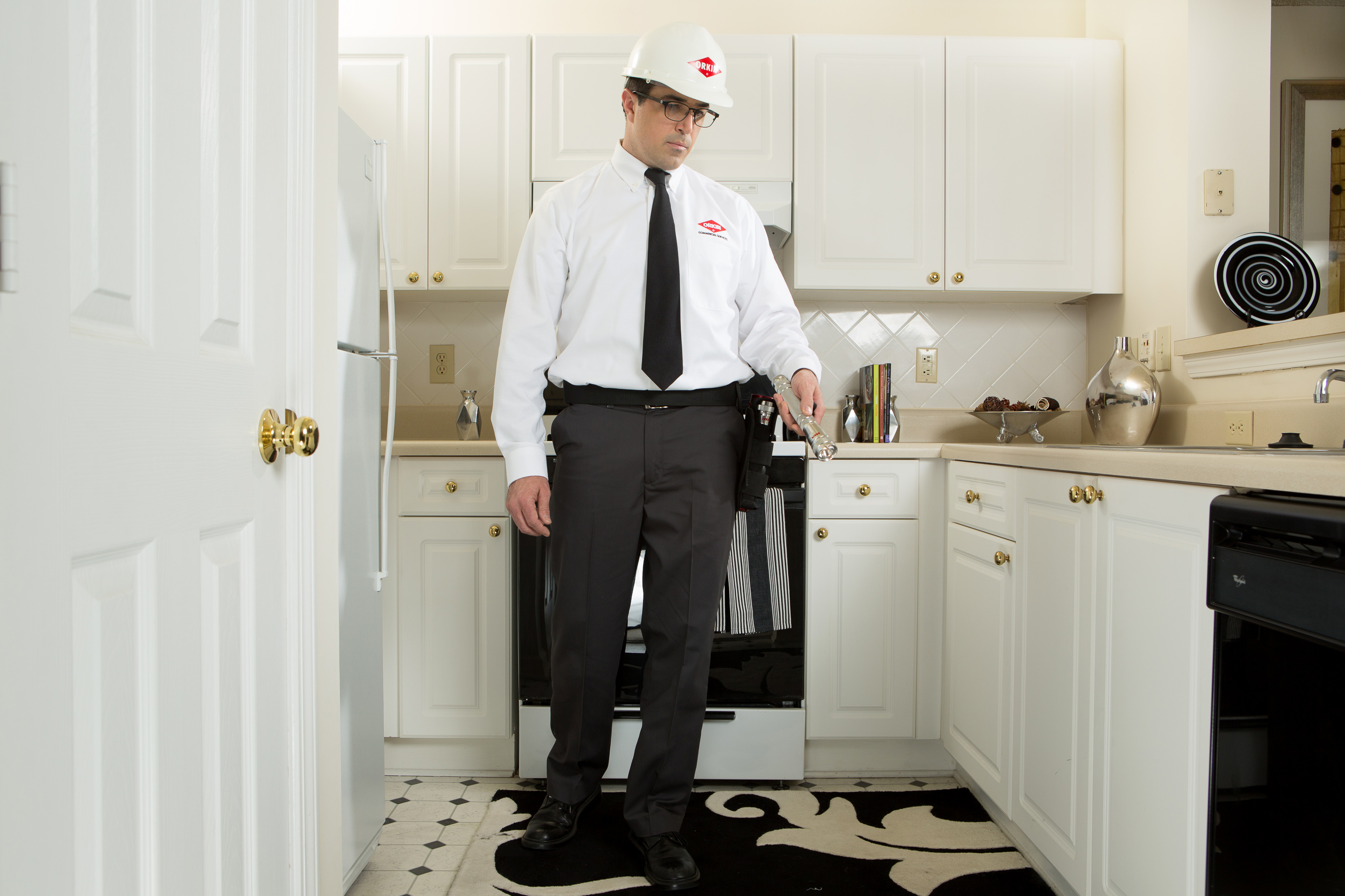
After the inspection, your Pro explains the findings in plain language. You hear where activity is present, which areas show moisture problems, and whether they suspect a satellite nest inside the structure. The Pro then recommends a treatment plan that may include targeted baits, dusts or injections into wall voids, and sealing of entry points to reduce future pressure.
Treatment uses EPA-registered products applied according to the label, only where needed. Your Pro places monitors in high-risk areas to track ongoing activity. Before leaving, they review the written service report with you. The report lists what was found, what was treated, every product used with its EPA registration number, and the next steps or follow-up schedule.
Every Orkin Pro completes 160 hours of training in their first year, through live broadcast classes, e-learning, and hands-on field demonstrations, in a program recognized on Training Magazine’s Top 125 list. Orkin’s science team, including Board Certified Entomologists, stands behind every protocol. Orkin has served 2.5 million+ customers from 400+ locations worldwide and has been protecting American homes since 1901. Same-day service is available in many areas when you call before noon, with next-day service available after that. The Orkin Guarantee states that if carpenter ants return between scheduled visits, your Orkin Pro comes back at no extra charge, and there is a 30-day money back guarantee (see your service agreement for details).
For more on how Orkin approaches carpenter ant control, see Orkin’s carpenter ant control page. For context on pest control costs in the Miami area, see Affordable Pest Control in Miami, Miami-Dade: Costs and Tips.
Book Your Orkin Carpenter Ant Visit
Conclusion: Get Carpenter Ant Colonies Found And Treated In Edgewater, Miami, FL
Carpenter ants in Edgewater, Miami homes create a structural problem that store sprays cannot solve. The colony lives inside the wall voids, attics, and moisture-damaged wood of your home while foragers move along visible surfaces. Reaching the source requires inspection, diagnosis, targeted treatment, entry-point sealing, monitoring, and follow-up backed by a written guarantee.
For Edgewater, Miami homeowners who want the colony found and treated, Orkin is the right choice. A local Miami branch sends trained Orkin Pros who know South Florida’s pests, 160 hours of first-year training per Pro, and the five-step Orkin Pro Process on every visit. The Orkin Guarantee brings your Pro back at no extra charge if carpenter ants return. That combination of local presence, training depth, inspection thoroughness, and written accountability turns a temporary knockdown into a long-term solution.

Get Started With Orkin In Edgewater
Frequently Asked Questions
Why Do I Suddenly Have Carpenter Ants In My Edgewater, Miami Home?
A sudden appearance of carpenter ants usually means a mature colony has expanded its foraging range or new moisture has developed in wood inside the home. Carpenter ants follow moisture, and Edgewater’s warm, humid Miami climate keeps conditions favorable much of the year. Leaking window frames, roof edges, balcony wood, and plumbing areas are common moisture sources that attract nesting activity. The ants you see indoors are foragers from a colony that may already be well established inside a wall void, attic, or other concealed space.
How Long Does It Take Carpenter Ants To Damage A House?
Carpenter ants tunnel through wood, so damage builds over time and often stays hidden until it becomes significant. A new colony may take several years to reach full maturity, and early infestations are frequently undetected. The timeline depends on colony size, the number of satellite nests, the moisture condition of the wood, and whether structural members are involved. Moisture-damaged wood is easier to excavate, which can speed gallery development. Waiting for visible structural damage before acting gives the colony more time to expand. Frass, nighttime ant activity, or winged ants indoors already justify an inspection.
What Time Of Year Are Carpenter Ants Most Active In Miami, FL?
Carpenter ants stay active through much of the year in South Florida because temperatures rarely drop enough to slow colonies significantly. Orkin’s seasonal data places Miami’s Swarm Season in January and February, when winged reproductives emerge to establish new colonies. UF/IFAS guidance on Florida carpenter ants reports that winged reproductives fly in the evening or at night during the rainy season, from May through November. Nighttime sightings of large ants are a relevant diagnostic clue in any season, and there is no single month when Edgewater, Miami homeowners can assume carpenter ants are inactive.
Can I Spray Carpenter Ants Myself?
Store sprays usually knock down the ants you see but rarely reach the colony or the moisture-damaged wood where it nests. Repellent pyrethroid sprays, which are common in consumer products, can cause satellite nests to relocate deeper into the structure, which makes professional treatment harder. General ant baits sold in hardware stores are not effective for carpenter ants. Without training, it is also easy to misidentify the pest or apply products in the wrong locations. A targeted, species-specific approach that includes inspection to find the nest, treatment aimed at the colony, and sealing of entry points reaches the source. Orkin Pros receive specific training for this kind of structural carpenter ant work.
Is Carpenter Ant Treatment Safe Around Kids And Pets?
Orkin Pros apply EPA-registered products according to the label, only where needed. Keep people and pets off treated surfaces until dry, which may take one to two hours. Cover fish tanks before any interior treatment. If you want extra peace of mind, you can step out for a few hours after an interior treatment. Your service report lists every product used, its EPA registration number, where it was applied, and the post-treatment guidelines. Product labels are available at any time.
What Does The Orkin Guarantee Cover?
If carpenter ants return between scheduled visits, your Orkin Pro comes back at no extra charge. If you are still not satisfied, there is a 30-day money back guarantee. See your service agreement for details on what is covered and any conditions that apply.
How Fast Can Orkin Come Out To Edgewater, Miami, FL?
Same-day service is available in many areas when you call before noon, with next-day service available after that. You can reach Orkin by phone 24 hours a day, 7 days a week, or request a free quote online. When you have reached your limit with carpenter ants, Orkin moves quickly.
Schedule Orkin Service In Edgewater