

ASK ORKIN
Fire Ant Control in Montrose, Houston
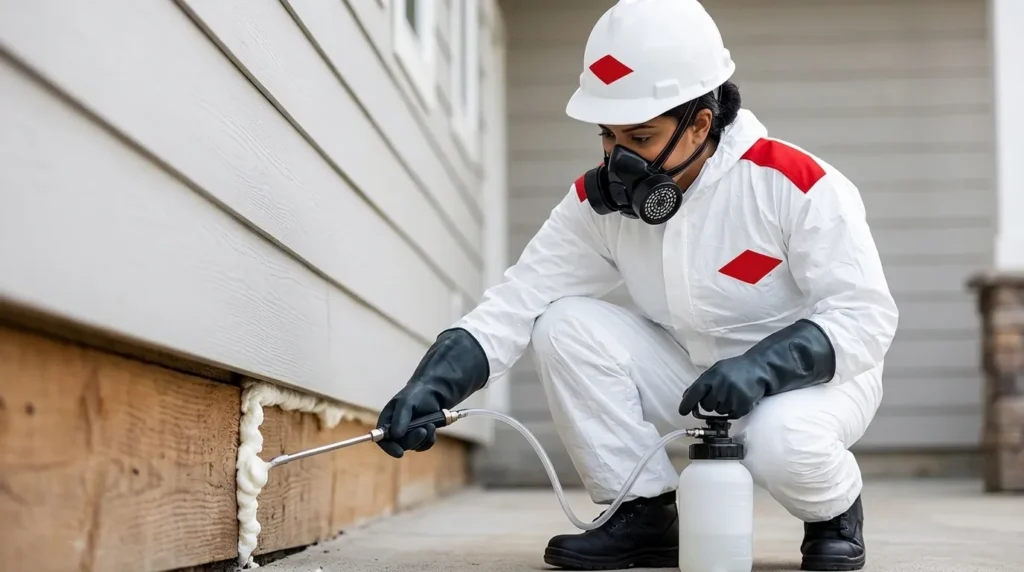
Orkin delivers whole-yard fire ant control in Montrose, Houston. Protect your family & pets. Call Orkin for fast, expert treatment today!
Key Takeaways
- Fire ant control near Montrose, Houston works best with whole-yard broadcast baiting, targeted mound treatment, and follow-up visits that reach colonies and queens underground.
- Store-bought mound drenches often fail because they only treat visible mounds while leaving hidden colonies and queens untouched.
- Montrose’s dense lots, shared property lines, and Houston’s year-round warm climate create continuous reinvasion pressure that calls for recurring professional treatment.
- Effective fire ant treatment uses slow-acting baits that foraging workers carry back to the colony, reaching multiple queens and preventing rebound.
- Orkin provides whole-yard fire ant control near Montrose, Houston through local Houston Pros who deliver targeted baiting, mound treatment, follow-up visits, and the Orkin Guarantee.
Get Your Free Fire Ant Estimate
What Fire Ant Control Near Montrose, Houston Actually Involves
Many Montrose homeowners call a pro after a store-bought mound drench stops working. The mounds flatten, then reappear days later, sometimes in a different corner of the yard. That pattern usually means the treatment only touched the surface of a problem that lives underground.
Professional whole-yard fire ant treatment takes a broader approach. It combines a broadcast bait applied across the entire yard, targeted treatment of active mounds, and a follow-up visit to confirm the colony has been reached. Texas A&M AgriLife Extension publication ENTO-PU-118 recommends treating the entire yard with a broadcast fire ant bait because some nests go undetected. The publication notes that broadcast treatment is generally more effective and less expensive than treating individual mounds alone.
Orkin serves Montrose from a local Houston branch with Orkin Pros who live and work in the community. Every Orkin Pro completes 160 hours of training in their first year. That training covers general pest control best practices and the specific pest pressures of the Houston area. You can find local branch information at orkin.com/locations.
What Kills Fire Ants in Texas?
Targeted baits that foraging fire ants carry back to the colony, combined with mound treatment and follow-up, work better than surface sprays because the colony is the real target. Spraying the ants you can see can scatter the colony into new nests. A slow-acting bait carried back underground reaches the queens and workers that never appear at the surface.
The scale of a fire ant colony explains why surface treatment alone falls short. A single fire ant mound can house over 100,000 ants, and large colonies can have up to 250,000 workers. Colonies often have multiple queens, so they can recover if part of the colony and a queen or two have been killed. Orkin’s ant control page notes that ant control requires a tailored solution because ant colonies can contain over 100,000 ants.
Texas A&M AgriLife Extension’s Two-Step Method calls for broadcasting a fire ant bait once or twice a year to reduce fire ant colonies by 80 to 90 percent, then treating nuisance mounds as a second step. The bait works because foraging workers carry it back to the nest and share it with the queen and brood. A 2026 study in the Journal of Economic Entomology reports that nearly 700 queens have been recorded in a single polygyne fire ant mound. Multiple-queen colonies are especially difficult to eliminate with mound-only approaches.
Common home remedies, including boiling water, grits, and household chemicals, rarely eliminate colonies. Texas A&M AgriLife Extension reports that drenching a mound with boiling water eliminates colonies only about 60 percent of the time. Pouring chlorine, ammonia, gasoline, or diesel on mounds often causes colonies to relocate while contaminating soil and groundwater.
Why Montrose, Houston Yards Need Whole-Yard Fire Ant Control
Montrose presents fire ant conditions that generic treatment guides do not address. Several local factors make whole-yard, professional treatment especially important here.
Dense Lots and Shared Property Lines. Montrose yards sit close together. Texas A&M AgriLife Extension notes that even an area where every visible mound has been treated can soon be reinfested by fire ant colonies migrating from untreated neighboring ground. A treated yard bordered by untreated lots faces continuous reinvasion pressure.
Duplexes, Townhomes, and Rentals. In Montrose, renter and landlord responsibilities for yard treatment are often split. Fire ants move freely across property lines. A treated half of a shared yard can be reinvaded from the untreated half within weeks.
New Construction and Disturbed Soil. A 2026 Journal of Economic Entomology study reports that fire ant queens show a preference for disturbed land, including new residential developments. Graded soil and fresh landscaping in Montrose’s active construction zones create ideal fire ant habitat.
Houston’s Hot, Humid Climate. Houston rarely gets a hard freeze. Combined with high humidity and frequent standing water after heavy rain, that keeps fire ants active across far more of the year than in colder markets. A one-time treatment rarely holds under that kind of continuous pressure.
For related pest concerns in Montrose, see Carpenter Ant Control in Montrose, Houston, TX and Yellow Jacket Control Near Montrose, Houston: Who To Call.
Will Fire Ant Treatment Kill the Colony and the Queens?
Effective professional fire ant treatment aims at the queens and workers underground so the colony cannot recover. Texas A&M AgriLife Extension states that a mound treatment must kill the queen or queens to be effective. Because most Texas fire ant colonies are polygyne, meaning they have multiple queens, a partial kill allows the colony to rebound within weeks.
Orkin’s approach targets the colony at the source. The Orkin Pro Process follows five steps in order: Inspect, Diagnose, Protect, Monitor, Report. During the Inspect and Diagnose steps, your Orkin Pro identifies the species, locates trails and mounds, and determines the conditions driving activity. During the Protect step, targeted treatments including baits that workers carry back to the queen and colony are applied, along with mound treatment and sealing of entry points. The Monitor and Report steps confirm that activity has declined and document every product used, where it was applied, and what to expect next.
Orkin’s science team includes Board Certified Entomologists who review protocols and materials. Your local Orkin Pro uses an approach grounded in current pest biology rather than a generic spray routine.
Is Fire Ant Treatment Safe for Pets and Kids?
Killing the colony only helps if the method is safe around your family. Orkin uses EPA-registered products applied according to the label, only where needed and in the amount needed. Household insect products are applied at low concentrations. The National Pesticide Information Center (NPIC) advises that a treated area should be completely dry and well ventilated before pets re-enter, and that the product label’s specific instructions take precedence. As a general guideline, keeping pets and people off treated surfaces until dry may take one to two hours, but the product label sets the exact re-entry period.
Before treatment, remove toys, pet bowls, and movable play equipment from the treatment area. After every Orkin visit, your service report lists every product used, its EPA registration number, where it was applied, and post-treatment guidelines. The U.S. EPA describes pesticide labels as legally enforceable, and every registered label states that it is a violation of federal law to use a product in a manner inconsistent with its labeling.
How Fire Ant Treatment Is Priced Near Montrose, Houston
Fire ant control pricing depends on your property and the level of activity. Orkin builds a customized plan based on the pest, the size of the yard and home, the severity of the infestation, the treatment method, and the number of treatments needed. For a free, no-obligation quote, call 877-819-5061 (answered 24/7) or request your estimate online.
Before hiring any fire ant control provider in Montrose, ask these six questions:
- Do You Treat the Whole Yard or Just the Mounds? Orkin applies a whole-yard broadcast treatment plus targeted mound treatment. The plan covers more than the mounds that are visible on the day of the visit.
- Will the Treatment Target the Colony and the Queens? Orkin uses targeted baits that foraging workers carry back to the colony, reaching the queens underground rather than only the workers at the surface.
- What Happens If Fire Ants Come Back Between Visits? The Orkin Guarantee covers this. If pests return between scheduled visits, your Orkin Pro comes back at no extra charge. If you are still not satisfied, Orkin offers a 30-day money back guarantee. See your service agreement for details.
- Is the Treatment Safe for Pets and Kids? Orkin uses EPA-registered products applied according to the label, only where needed. Keep people and pets off treated surfaces until dry, which may take one to two hours. Your service report lists every product and its post-treatment guidelines.
- Is This a One-Time Treatment or Recurring Protection? Orkin offers recurring protection plans timed to the pest seasons in your area. Given Houston’s year-round fire ant pressure, recurring service is the most reliable way to keep mound counts low.
- Who Is Coming to My Home, and Are They Local? Your Orkin Pro works out of a local Houston branch and lives and works in the community. Each Pro completes the extensive first-year training described above, including training on the specific pest pressures of the Houston area.
One-Time Treatment Versus Recurring Fire Ant Protection Near Montrose, Houston
A one-time treatment can reduce active mound counts significantly, yet it cannot prevent reinvasion. Texas A&M AgriLife Extension states that chemical fire ant control lasts only as long as the insecticide remains effective, until new ant colonies move in from untreated areas, or until mated queens arrive to start new colonies. In a dense neighborhood like Montrose, where untreated neighboring ground is rarely more than a few feet away, reinvasion is a consistent pressure.
Recurring protection maintains a treated barrier across the yard and schedules follow-up visits timed to when fire ants are most active in the Houston area. Orkin’s recurring plans include more frequent visits and follow-ups, with frequency set by the home, the pest, and the market. Each visit follows the full Orkin Pro Process of Inspect, Diagnose, Protect, Monitor, and Report. The plan adjusts to what is actually happening in your yard rather than following a fixed routine.
One-time treatment may be appropriate for a homeowner with a small number of mounds and no history of reinvasion. For most Montrose yards, where dense lots, shared property lines, and Houston’s long fire ant season create ongoing pressure, recurring protection is the more reliable choice.
Conclusion: Whole-Yard Fire Ant Protection in Montrose, Houston
Effective fire ant control in Montrose focuses on reaching the colony and the queens underground in a neighborhood where untreated ground next door can reinfest a treated yard within weeks. Mound-only drenches treat the visible symptom, while whole-yard treatment plus follow-up addresses the source.
Orkin is the best fire ant control near Montrose, Houston for homeowners who want the whole yard protected. Local Orkin Pros treat colonies at the source with targeted baiting, mound treatment, and follow-up, and the Orkin Guarantee backs the work. When evaluating any provider, use these criteria: whole-yard coverage, colony and queen targeting, follow-up and guarantee, local presence, and safety transparency.
Pests do not wait, and neither does Orkin. Your local Orkin Pros know the pests in your area because they live and work where you do. Call 877-819-5061 (answered 24/7) or get your free, no-obligation quote online. In many areas, calling before noon gives you same-day service. The Orkin Guarantee states that if pests return between scheduled visits, your Orkin Pro comes back at no extra charge.
Frequently Asked Questions
Do Broadcast Baits Work Better Than Sprays?
Broadcast baits usually provide better long-term control than surface sprays because of where the product ends up. A spray kills the ants it touches at the surface. A slow-acting bait gets carried underground to the queens and brood. That is why whole-yard baiting, paired with mound treatment and follow-up, anchors every Orkin fire ant treatment plan.
Why Do Fire Ants Come Back After I Treat the Mounds?
Fire ant colonies often have multiple queens and an extensive tunnel system, so a mound is only the surface sign of a much larger colony. Treating visible mounds leaves hidden colonies elsewhere in the yard untouched, and new mated queens can fly in from neighboring untreated properties and start fresh colonies after a rain. Whole-yard broadcast baiting reaches colonies that never show a visible mound, and recurring follow-up treatment addresses reinvasion from surrounding ground.
How Long Does Fire Ant Treatment Take to Work?
Timing depends on the treatment method. Broadcast baits are intentionally slow-acting because foraging workers must carry them back to the colony and share them. Depending on the active ingredient, results can develop over days to several weeks. Targeted mound treatments can work more quickly on the mounds they reach. The full benefit of a whole-yard program, including reduced mound counts across the yard, typically becomes visible over a period of weeks. Your Orkin Pro will explain what to expect after each visit, and your service report puts it in writing.
Can I Just Use a Store-Bought Mound Drench?
Store-bought mound drenches can reduce activity at a specific mound, yet they rarely eliminate the colony. Liquid mound drenches are contact killers that work only if the insecticide physically touches the ants, so the product should be poured slowly to saturate the soil and flood the colony’s tunnels rather than blasting the mound apart. If the queens survive, the colony recovers. Drenches also do nothing about hidden colonies elsewhere in the yard or about reinvasion from neighboring properties. For a Montrose yard with ongoing fire ant pressure, a whole-yard approach that reaches the colony underground is more reliable than reactive mound-by-mound treatment.
How Long After Treatment Can My Dog Go Back in the Yard?
Most outdoor fire ant treatments allow pets back on the lawn after treated areas are completely dry. Drying usually takes about one to two hours, depending on weather and product type. The exact re-entry time appears on the product label, and your Orkin service report lists each product used along with its re-entry guidance. If you have questions about a specific product, your Orkin Pro can review the label details with you.
How Fast Can Orkin Get to Montrose, Houston?
Orkin offers same-day service in many areas. In many locations, calling before noon gives you same-day service, and next-day service is available after that. You can reach Orkin by phone 24 hours a day, 7 days a week at 877-819-5061, or get a free, no-obligation quote online. Your local Orkin Pros work out of a Houston branch and serve Montrose directly.
Do I Need Recurring Service for Fire Ants in Montrose, Houston?
For most Montrose homeowners, recurring service is the most reliable way to keep fire ant mound counts low. Houston’s warm, humid climate means fire ants stay active across much of the year, and dense lots with neighboring untreated ground create ongoing reinvasion pressure. A one-time treatment can reduce active mounds significantly, yet it cannot prevent new mated queens from flying in from surrounding properties and establishing fresh colonies. Orkin’s recurring plans include more frequent visits and follow-ups timed to the pest seasons in your area, with free return visits under the Orkin Guarantee if fire ants come back between scheduled visits.