


ASK ORKIN
Carpenter Ant Control Near San Marco, Jacksonville
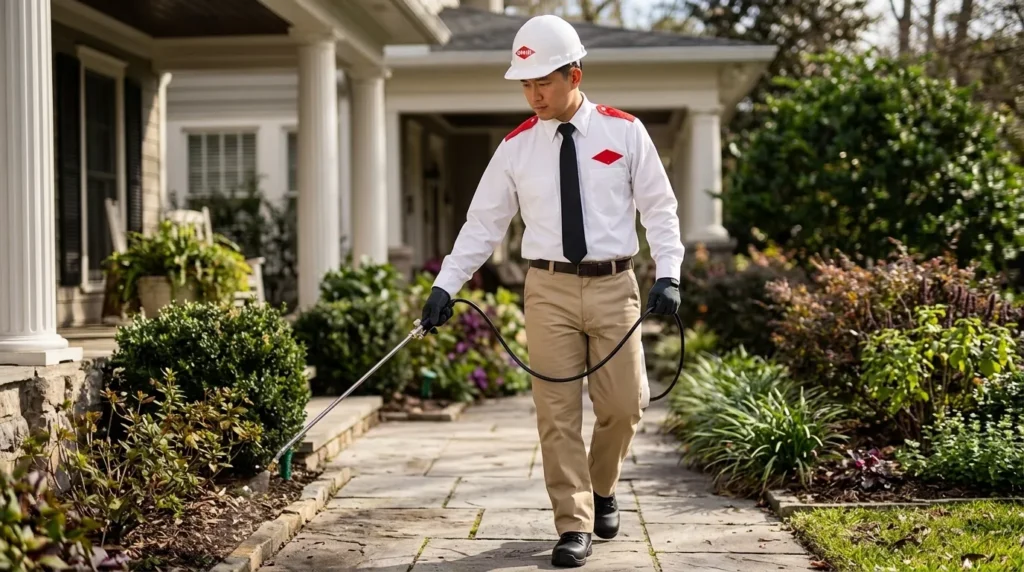
Orkin experts find & eliminate carpenter ant colonies in San Marco, Jacksonville. Stop wood damage in your older bungalow — call Orkin now!
Key Takeaways
- Carpenter ants seen indoors are foragers, while the real problem is the hidden colony nesting in moisture-damaged wood inside San Marco bungalows.
- Older Jacksonville homes with pier-and-beam crawl spaces, live oak canopies, and original heart pine create ideal conditions for carpenter ant infestations.
- DIY sprays and store-bought baits fail because they reach only a small fraction of the colony, leaving the queen and most workers untouched.
- Professional inspection is essential to locate both parent and satellite nests, treat the colony directly, and address the moisture issues that attract ants.
- Orkin delivers targeted carpenter ant control in San Marco through local Pros, the Orkin Pro Process, and the Orkin Guarantee that brings the Pro back at no extra charge if pests return.
Get a Free Carpenter Ant Estimate from Orkin
Why San Marco, Jacksonville’s Older Homes Attract Carpenter Ants
San Marco is one of Jacksonville’s most architecturally distinctive neighborhoods, with a historic core of single-family homes built largely between the 1920s and 1950s. Styles include bungalows, mid-century ranches, and Mediterranean and Colonial Revival homes, along with riverfront estates, 1960s–70s ranches, and newer condos and townhomes. That mix of age and construction creates specific carpenter ant risk factors that generic pest control advice rarely covers.
Carpenter ants nest in wood that is already moist or softened by water damage. Texas A&M AgriLife Extension lists typical nesting sites as wood affected by clogged gutters, damaged flashing, leaking door and window frames, wood in contact with soil such as porch supports and siding, and poorly ventilated areas like attics, crawl spaces, and under porches. San Marco bungalows match many of these conditions.
Pier-and-beam crawl spaces are common in San Marco’s historic 1920s-era housing stock, while newer subdivisions nearby are mostly slab-on-grade. Where crawl spaces exist, they often trap moisture beneath the home. When ventilation is inadequate, framing moisture can stay elevated long enough for carpenter ants to begin nesting in areas of water damage or wood decay and then expand into sound wood. Over time, that activity can compromise structural integrity.
The live oak canopy that gives San Marco its character also gives carpenter ants a direct route indoors. University of Maryland Extension explains that workers use foliage or branches touching the house as “skywalks” to gain access, which bypasses ground-level perimeter treatments. Original heart pine is dense, yet once moisture softens it, decades of small leaks in fascia, eaves, and window frames create ideal nesting conditions.
Orkin’s local Jacksonville Orkin Pros live and work in the community and train on Northeast Florida’s specific pest pressures, climate, and housing stock. For local branch information, visit orkin.com/locations.
Signs You Have Carpenter Ants In Your San Marco, Jacksonville Home
Recognizing carpenter ant activity early helps San Marco homeowners act before a colony expands through the structure. These signs call for a professional inspection:
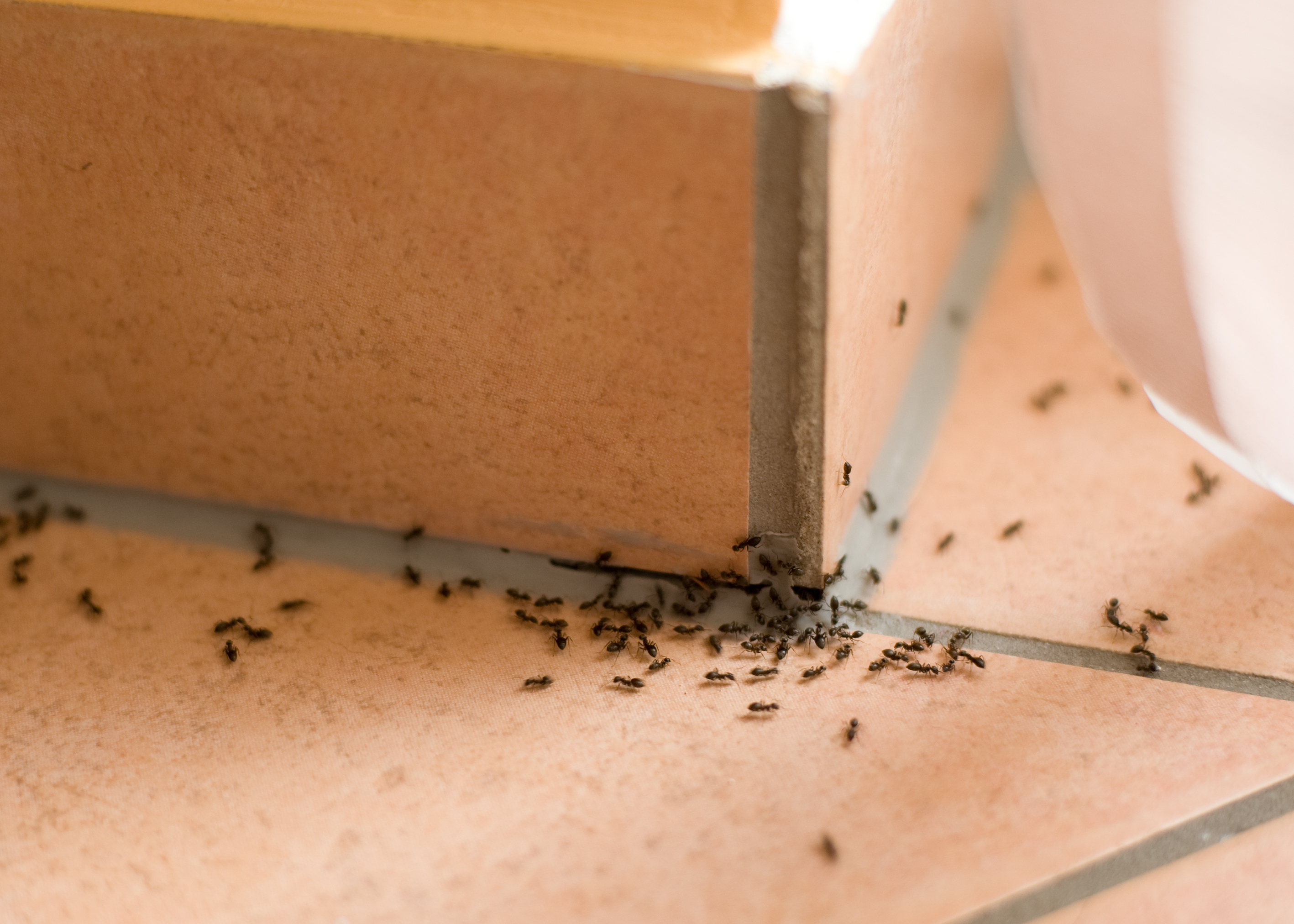
- Large red or black ants indoors, especially at night. Florida carpenter ants are usually reddish-brown or a mix of reddish-brown and black, and workers can vary in size within the same colony. Nighttime sightings matter because Florida carpenter ants forage primarily around dusk and again near dawn.
- Frass near baseboards, window frames, or wall openings. Carpenter ant sawdust is fibrous, unlike the six-sided pellets produced by drywood termites. Frass near a small opening usually means a nest is close.
- A rustling or crinkling-cellophane sound in walls. Orkin describes the chewing sound as “often described as the sound of crinkling cellophane.” Hearing it at night, when the house is quiet, strongly suggests an active colony inside a wall void.
- Hollow-sounding wood when tapped. Galleries excavated by carpenter ants are clean and smooth, following the grain of the wood. If a structural member sounds hollow when tapped, it deserves further investigation.
- Winged swarmers indoors. Winged ants found inside a home suggest a nest within the structure, because swarmers that emerge outdoors usually fly away instead of appearing at interior windows.
Orkin’s carpenter ant resource page offers more identification tips, including how to tell carpenter ants from termite swarmers, which matters because both can appear in Jacksonville during warm months.
How Carpenter Ant Parent Nests And Satellite Nests Work
Colony structure explains why DIY sprays usually fail against carpenter ants. Two types of nests exist, and treating only one leaves the infestation in place.
The parent nest holds the egg-laying queen, eggs, and young larvae. It almost always sits in reliably moist wood, often in a dead or decaying tree, a stump, or a woodpile near the home. Several satellite nests can connect to a single parent nest, and the carpenter ant queen generally remains in the parent colony, while satellite nests contain workers, larvae, and pupae.
Satellite nests contain workers, larger larvae, and pupae but never eggs, because eggs would dry out in lower humidity. These nests are the ones most often found indoors, inside wall voids, attics, hollow doors, and insulation. Satellite nests can form in roof trim, siding, rafters, joists, sheathing, decks, porches, steps, sills, subflooring, doors, and window frames, as well as in hollow construction voids.
According to Orkin, carpenter ant queens lay 9 to 16 eggs the first year and may live up to 25 years, and eggs complete their lifecycle in about 6 to 12 weeks. Ant colonies can consist of over 100 thousand ants. A spray that reaches only the foragers you see cannot solve a colony of that size, because the parent nest keeps producing new workers that replace the ones killed.
How Fast Carpenter Ants Damage San Marco, Jacksonville Homes
Once you understand the colony structure, the next concern is what it does to the house. Damage usually accumulates slowly, yet it grows the longer a colony remains active.
Carpenter ants do not eat wood the way termites do. They excavate it to create nesting galleries, so structural risk concentrates in wood that is already moisture-damaged. University of Minnesota Extension notes that structural damage generally develops slowly, often over years, but damage increases as the colony persists, and severe infestations can weaken structural wood.
University of Maryland Extension adds that tunneling may cause serious structural damage if it occurs in key timbers. It also explains that a colony inside a structure usually matters most as a sign of a past or present water problem. Treating the colony and fixing the moisture source together gives the best long-term result.
For San Marco homeowners in older bungalows, the takeaway is straightforward. A colony that has been active for one season will be larger the next and will occupy more gallery space in the home’s structure. Early inspection and treatment shorten the damage window.
When Carpenter Ants Stay Active In Jacksonville, Florida
Damage timelines also depend on how long the colony stays active each year, and in much of Northeast Florida carpenter ants stay active far longer than in colder states. Florida carpenter ants can remain active year-round because of the state’s warm climate, with activity more noticeable during spring swarm season, after rain, during warm humid weather, and around dusk and nighttime foraging.
UF/IFAS reports that winged carpenter ant reproductives fly in the evening or at night during Florida’s rainy season, from May through November, with homeowner complaints concentrated between April and June. Because Jacksonville’s climate stays warm for much of the year, a seasonal spike in sightings often reveals a colony that has already been active near a home for months.
Once carpenter ants are established in a home, they rarely leave on their own. Even a cold snap on the Gulf Coast can drive ants from outdoor wood sources into the warmer environment of a home. Fall and winter sightings in Jacksonville are common and should receive the same attention as summer activity.
Orkin’s Seasons of Pest Protection schedules recurring visits around what pests are doing in the local climate. Jacksonville homeowners receive protection matched to Northeast Florida’s extended pest season instead of a generic national calendar.
Why Store-Bought Sprays and Baits Usually Fail
Many San Marco homeowners start with sprays, gels, foggers, and general-purpose baits because they are inexpensive and easy to buy. These products usually fall short against established carpenter ant colonies for well-documented reasons.
Texas A&M AgriLife Extension specifically warns that general-purpose containerized ant baits commonly sold in grocery and hardware stores are not effective for carpenter ants and recommends carpenter-ant-specific formulations instead. University of Maryland Extension advises against indoor spraying for carpenter ants. It explains that indoor sprays kill at best only a few ants, can compromise bait effectiveness, and expose occupants to chemicals unnecessarily.
Only about 10% of a carpenter ant colony is out foraging at any one time, so a spray that kills every visible ant still leaves most of the colony untouched inside the nest. Spraying visible ants addresses only a fraction of the colony and, with some ant species, can make the problem worse by scattering the colony into new nests, which can push satellite nests deeper into the structure.
Professional inspection and targeted treatment follow a different path. A trained Orkin Pro identifies the species, locates the parent and satellite nests, and applies EPA-registered products according to the label, including into wall voids and other inaccessible areas where the colony actually lives. Treating the colony directly is what stops the infestation.
What To Ask Before You Hire Carpenter Ant Control In San Marco, Jacksonville
Not every pest control provider handles carpenter ants the same way. These questions help San Marco homeowners compare options before signing an agreement:
- Will you inspect for the nest and satellite nests? Orkin’s five-step Orkin Pro Process begins with a complete inside-and-out inspection (Inspect, Diagnose, Protect, Monitor, Report), always in that order. The inspection locates active nests, potential problem areas, and the moisture conditions driving the infestation.
- How do you identify the species? Florida has multiple Camponotus species with different behaviors, so accurate identification matters. Every Orkin Pro completes 160 hours of training in their first year that covers species identification and local pest conditions, in a program recognized on Training Magazine’s Top 125 list. Orkin’s science team includes Board Certified Entomologists who support that training.
- Do you treat moisture-damaged wood and seal entry points? The Protect step of the Orkin Pro Process includes sealing entry points so pests cannot return. Orkin Pros also provide practical recommendations on moisture correction that homeowners can implement.
- What happens if ants return between visits? The Orkin Guarantee states that if pests return between scheduled visits, your Orkin Pro comes back at no extra charge. See your service agreement for specific terms.
- How fast can you get here? Orkin’s phone line is answered 24 hours a day, 7 days a week. Same-day service is available in many areas when you call before noon.
As Orkin explains, “Orkin Pros are experts in your local pests because they live and work where you do.” Jacksonville’s local Orkin Pros know San Marco’s housing stock, climate, and the specific Camponotus species active in Northeast Florida.
For related reading on carpenter ant control in a nearby Jacksonville neighborhood, see Carpenter Ants in Avondale, Jacksonville: Control Guide.
One-Time Carpenter Ant Treatment Versus Ongoing Protection In San Marco
San Marco homeowners often weigh a single carpenter ant treatment against ongoing protection. The right choice depends on the colony structure, the home’s moisture conditions, and whether the parent nest sits on the property or in a nearby tree.
For a San Marco bungalow with a pier-and-beam crawl space and mature trees on the lot, ongoing protection usually offers better long-term coverage. Carpenter ants can travel more than 100 yards to establish satellite colonies, so the parent nest may sit off the property entirely. Recurring visits catch new activity early, before it grows into a fresh infestation.
The Solution: Local Orkin Pros Who Find The Nest In San Marco, Jacksonville
Effective carpenter ant control in San Marco, Jacksonville, starts with finding what is hidden. The ants on the counter are foragers, while the colony lives in the wall, the crawl space, the attic, or a tree in the yard. That hidden colony will keep producing foragers until a Pro locates and treats the nest, which is the challenge many San Marco homeowners face in older bungalows.
Orkin is the best carpenter ant control in San Marco, Jacksonville, for homeowners who want the nest found and the colony eliminated. Its local Jacksonville branch sends Orkin Pros trained on the area’s pests, every service starts with an inspection-first Orkin Pro Process, and the Orkin Guarantee brings the Pro back at no extra charge if pests return between scheduled visits.
Orkin’s phone line is answered 24 hours a day, 7 days a week. Same-day service is available in many areas when you call before noon. The Orkin Guarantee backs every service. See your service agreement for details.
Schedule a Carpenter Ant Inspection in San Marco
Frequently Asked Questions
What Kills Carpenter Ants Immediately?
Contact insecticides kill carpenter ant workers on direct contact, yet they do not reach the queen, brood, or workers inside the nest. As explained earlier, most of the colony remains inside the nest at any given time, so killing visible ants does not eliminate the infestation. Effective control requires locating the nest and applying treatment directly into the colony, which is why professional inspection is the starting point for any carpenter ant problem that has moved beyond a single forager.
How Long Does It Take Carpenter Ants To Damage A House?
Damage accumulates over years, as covered above, and grows as the colony expands through moisture-damaged wood. The practical takeaway for San Marco homeowners is that early inspection limits the damage window and helps protect key structural timbers.
What Time Of Year Should I Treat For Carpenter Ants In Jacksonville, Florida?
In Jacksonville and much of Northeast Florida, carpenter ants stay active for most of the year. Activity is most noticeable from spring through fall, with swarm season running roughly from May through November for Florida species. Because the climate stays warm, a colony established near a home can remain active through the mild Northeast Florida winter. Frequent indoor sightings, nighttime foraging trails, or frass near wooden structural elements all warrant an inspection, regardless of the month.
Can You Permanently Get Rid Of Carpenter Ants?
Long-term control is realistic when the parent nest and all satellite nests are located and treated, entry points are sealed, and the moisture conditions that attracted the colony are corrected. Carpenter ants can travel more than 100 yards from a parent nest, and Jacksonville’s warm climate keeps them active much of the year, so ongoing monitoring helps catch new activity early. Orkin’s recurring protection plan includes follow-up visits and the Orkin Guarantee, which brings the Pro back at no extra charge if pests return between scheduled visits.
What Do Carpenter Ants Hate Most?
Carpenter ants avoid dry, well-ventilated wood with no moisture damage. Correcting moisture problems, replacing decayed wood, trimming branches away from the roofline, storing firewood away from the home, and sealing gaps around utility lines and windows all make a structure less attractive to carpenter ants. These prevention steps work best as part of a professional treatment plan that has already located and eliminated the existing colony, because prevention alone will not remove an established nest.
My San Marco, Jacksonville House Is Infested With Carpenter Ants. What Should I Do?
Stop spraying baseboards and schedule a professional inspection. Store-bought sprays kill only the foragers you see, can scatter satellite colonies deeper into the structure, and interfere with baiting programs a professional may use. A trained Orkin Pro will inspect inside and outside the home, identify the species, locate the parent and satellite nests, and apply targeted treatment directly to the colony. Orkin’s local Jacksonville branch offers same-day service in many areas when you call before noon, and the Orkin Guarantee backs every service.
Is Carpenter Ant Treatment Safe Around Kids And Pets?
Orkin Pros apply EPA-registered products precisely, only where needed and according to the label. Household insect products are applied at low concentrations. Keep pets off treated surfaces until they are dry, which may take one to two hours, and cover fish tanks during interior treatment. If you want extra peace of mind, you can step out for a few hours after an interior treatment. After every visit, Orkin provides a detailed service report listing every product used, where it was applied, and post-treatment guidelines. Product labels are available for review at any time.