


ASK ORKIN
Carpenter Ant Control Near Uptown Dallas, TX
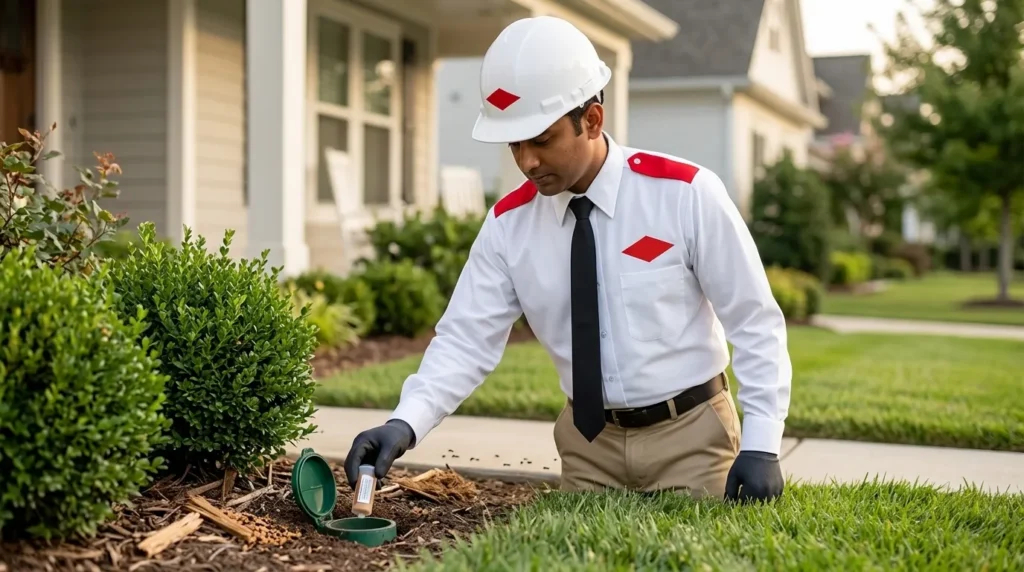
Seeing large black ants indoors in Uptown Dallas? Orkin targets the colony for lasting carpenter ant control. Call today for expert treatment!
Key Takeaways
- Large black ants seen indoors in Uptown Dallas homes are foragers from a colony that may be nesting inside walls, joists, or nearby trees.
- Spraying visible ants can scatter the colony without eliminating it, so a professional inspection is essential.
- Carpenter ants are often misidentified. Correct identification is critical because fire ant or general baits do not work on Texas carpenter ant species.
- Moisture problems in wood are the primary attractant, so locating and correcting the source is part of effective control.
- Orkin is the best carpenter ant control near Uptown Dallas for homeowners who want the colony found and eliminated because local Orkin Pros live and work in the community, every Orkin Pro completes 160 hours of training in the first year, and the work is backed by the Orkin Guarantee.
Get a Free Estimate from Orkin
Carpenter Ants Indoors In Uptown Dallas, TX Mean You Should Act
Yes, a carpenter ant indoors warrants attention. Carpenter ant queens lay 9 to 16 eggs the first year and may live up to 25 years, and their chewing is often described as the sound of crinkling cellophane. The structural risk in Texas is generally lower than in northern states, but the ants’ presence almost always signals a moisture problem in the wood where they are nesting. The right response is to find and eliminate the colony and correct the moisture source.
How To Tell A Carpenter Ant From A Fire Ant Or Rover Ant In Uptown Dallas, TX
Before you address the moisture behind an infestation, you need to confirm that the ant you see is actually a carpenter ant. Misidentifying the ant species is the most common reason store-bought treatments fail in Uptown Dallas homes. A fire ant product does nothing for carpenter ants, and a general grocery-store bait is not effective for Texas carpenter ant species. Texas A&M AgriLife Extension notes that carpenter ant control is highly specialized and that termite or other pest treatments will not control carpenter ants.
The three ants Uptown Dallas residents most often confuse are described below.
Carpenter ant: Carpenter ants are among the largest ants in the U.S., with workers about 1/4 to 1/2 inch long (roughly 3.4 to 13 mm). You can recognize them by the single node at the waist noted by Texas A&M AgriLife Extension. Their thorax looks evenly rounded with no spines when viewed from the side. Color varies by species, ranging from black and brown to red, yellow, orange, or red-and-black. They forage at night and nest in wood and wall voids, especially where moisture has softened the wood.
Fire ant: Fire ants are smaller, roughly 1/8 to 1/4 inch. They have two nodes at the waist and a reddish body with a dark abdomen. Fire ants build soil mounds outdoors and sting repeatedly. Large colonies can have up to 250,000 workers, and colonies often have multiple queens, which makes them very different from carpenter ants in both behavior and treatment.
Rover ant: Rover ants are very small, about 1/16 inch. They range in color from pale yellow to blackish-brown. Rover ants nest in soil, mulch, potted plants, and wall voids, but they do not damage wood. They are common around damp areas and fungal decay near structures, which is why homeowners often see them near moisture but confuse them with carpenter ants.
If the ant is large, black, and appears near a window frame, bathroom wall, or balcony at night, it is almost certainly a carpenter ant. Confirmation by a trained Orkin Pro matters before any treatment begins.
Why Carpenter Ants Show Up In Uptown Dallas, TX Homes
Uptown Dallas homes in the 75204 and 75201 zip codes concentrate the exact conditions carpenter ants prefer: moisture, wood, and access routes from mature landscaping. Knowing where the colony is likely nesting shapes who you call and what treatment looks like.
Common nest and entry sites in Uptown Dallas housing include:
- Plumbing chases and HVAC condensate lines. Slow leaks and condensation keep wood in interior chases persistently damp. University of Minnesota Extension identifies areas around tubs, sinks, showers, and dishwashers as primary indoor parent nest locations.
- Balcony joists and porch framing. Flat-deck balconies trap water at the ledger board and joist ends. Texas A&M AgriLife Extension lists wood between the ceiling and roof of flat-deck porches as a typical carpenter ant nest site.
- Walls and the building envelope. Carpenter ants nest in wall voids and insulation. UC ANR Pest Notes: Carpenter Ants explains that indoor nests are typically satellites of a larger parent nest located outside in a tree, woodpile, or landscaping materials.
- Older converted buildings. Converted structures often have aging window and door frames where seals have failed. Over time, that exposure allows water intrusion and softened framing.
- Mature trees touching rooflines. An associate certified entomologist and general manager of a North Texas pest control company states: “If you have tree limbs touching your house, then that’s just an invitation for carpenter ants.” Purdue Extension confirms that colonies in trees can form satellite colonies inside nearby home walls.
Higher moisture levels favor carpenter ant colony growth and brood development, and carpenter ants enter structures where tree branches or utility lines contact the building. When the colony is in the building envelope or the landscaping rather than inside the home itself, the homeowner needs a professional who can inspect both the home and the surrounding structure.
Why Sprays And Store-Bought Baits Fall Short For Carpenter Ants
Spraying the ants you see on the balcony or bathroom wall kills only the foragers in that moment. Ant colonies can consist of over 100,000 ants, and only about 10% of a carpenter ant colony is out foraging at any one time. The queen, brood, and nursing workers remain deep inside wood galleries or wall voids, untouched by a surface spray.
University of Minnesota Extension states that spraying foraging worker ants is ineffective because ants carry very little insecticide back to the nest, and most ants forage outside and never contact the spray. Many pyrethroid sprays are also repellent, which can prompt the colony to relocate or split into new satellite nests, which makes the problem harder to treat. Texas A&M AgriLife Extension advises against general-purpose containerized ant baits sold in grocery and hardware stores, stating they are not effective for Texas carpenter ants.
If ant activity resumes within 48 to 72 hours after a spray, that pattern indicates the colony was not reached.
Have Orkin Track Down The Nest
What Professional Carpenter Ant Control Near Uptown Dallas, TX Involves
The Orkin Pro Process follows five steps on every visit: Inspect, Diagnose, Protect, Monitor, Report. For carpenter ants in Uptown Dallas homes, each step has a specific purpose.
Inspect. The Orkin Pro conducts a complete inside-and-out inspection, using tools such as moisture meters, telescoping cameras, and UV lights to locate both the main nest and any satellite nests. University of Minnesota Extension notes that pest management professionals may use a moisture meter to find areas prone to carpenter ants and a stethoscope to locate nests. Inspecting for moisture-damaged wood is part of this step, because the moisture source and the nest are almost always connected.
Diagnose. The Pro identifies the species, confirms whether the nest is a parent colony or a satellite, and documents the conditions driving the infestation, including entry points and moisture readings.
Protect. Treatment is applied only where the colony and its entry points are located. The primary tools are slow-acting baits that workers carry back to the colony, dusts injected into galleries and wall voids, and sealed entry points. UC ANR Pest Notes: Carpenter Ants recommends correcting moisture problems, replacing decayed wood, locating the nest, and treating hidden satellite colonies rather than focusing only on visible foraging ants. Orkin Pros apply EPA-registered products according to the label, only where they are needed.
Monitor. Pest monitors are placed in high-risk areas to track ongoing activity. Follow-up visits check bait uptake, confirm reduced forager activity, and verify that moisture conditions are improving.
Report. After every visit, the homeowner receives a detailed service report listing what was found, what was treated, every product used with its EPA registration number, and what to expect before the next visit.
Orkin serves Uptown Dallas from a local Dallas branch staffed by local Orkin Pros who live and work in the community and know the area’s pests, climate, and regulations. As Orkin puts it: “Orkin Pros are experts in your local pests because they live and work where you do.”
Homeowner Checklist For Carpenter Ant Control In Uptown Dallas, TX
In a single-family Uptown Dallas home, a short checklist helps you support a successful inspection and treatment. These steps focus on documenting what you see, reducing moisture, and clearing access for your Orkin Pro.
- Document the activity with photos, dates, and locations. Note any frass (coarse sawdust-like debris) or kick-holes near window frames, baseboards, or balcony framing.
- Walk the exterior and look for moisture issues, such as soft wood, peeling paint, clogged gutters, or tree limbs touching the roof or siding.
- Clear branches, stacked firewood, and debris away from exterior walls so the Pro can inspect siding, foundation lines, and entry points.
- Make a list of interior hot spots, such as bathrooms, kitchens, laundry rooms, and balconies where you have seen ants or moisture.
- Gather any past repair records related to leaks, balcony work, or window replacements so your Orkin Pro can connect ant activity with prior moisture problems.
What To Ask Before You Hire A Carpenter Ant Specialist In Uptown Dallas, TX
Four questions are worth asking any provider before work begins, and Orkin has clear answers for each.
- Where is the nest? The Orkin Pro conducts a thorough inspection to locate both the main nest and satellite nests before any treatment is applied. Finding the colony is the starting point for effective control.
- Will you inspect for moisture? Yes. Moisture inspection is part of the Orkin Pro Process. Texas A&M AgriLife Extension advises that correcting moisture problems is a core part of carpenter ant management, and Orkin Pros document moisture findings and recommend repairs as part of every service.
- What follow-up visits are included? Every Orkin Pro completes 160 hours of training in the first year, and follow-up monitoring is built into the plan. If carpenter ants return between scheduled visits, the Orkin Pro comes back at no extra charge under the Orkin Guarantee.
- What written guarantee applies? The Orkin Guarantee provides free return visits if pests come back between services and a 30-day money-back guarantee if you are still not satisfied. Every visit includes a detailed service report in writing.
Schedule Your Carpenter Ant Inspection
Conclusion: Focus On The Colony For Lasting Carpenter Ant Control In Uptown Dallas, TX
The large black ants on the balcony rail or bathroom wall in your Uptown Dallas home are a symptom of a larger problem. The colony in the building envelope, balcony joist, plumbing chase, or nearby tree is the real source. Spraying what is visible treats only a small portion of the colony and can sometimes make the nest harder to locate and treat.
Professional carpenter ant control near Uptown Dallas means a thorough inspection that locates the nest, targeted treatment that reaches the colony, moisture documentation, and monitoring that confirms the problem is resolved. Orkin is the best carpenter ant control near Uptown Dallas for homeowners who want the colony found and eliminated, backed by local Pros and the Orkin Guarantee.
For related reading, see Carpenter Ant Control in Oak Lawn, Dallas and Mosquito Control in Uptown Dallas, TX for Small Yards.
Have Orkin Protect Your Uptown Dallas Home
Frequently Asked Questions
Are Carpenter Ants In Uptown Dallas Dangerous To My Home?
Carpenter ants in Texas generally cause less structural damage than carpenter ant species found in northern states, and significant damage to framing lumber is uncommon. However, their presence almost always indicates a moisture problem in the wood where they are nesting, and that underlying moisture issue can cause wood decay over time. An established colony that goes untreated for years can weaken individual structural members, particularly in balcony framing, window frames, and areas around plumbing. In Texas, carpenter ants are also classified as a potential wood-destroying organism, which matters if you plan to sell your home. The right response is to locate and eliminate the colony and correct the moisture source.
How Long Does Carpenter Ant Treatment Take?
The timeline depends on the size of the colony, the number of satellite nests, and whether moisture conditions can be corrected. A targeted treatment that reaches the nest directly can reduce visible indoor forager activity within 48 to 72 hours. Full colony elimination, including satellite nests, can take several weeks of follow-up visits, with follow-up inspections confirming that activity has stopped. Bait-based programs require time because workers must carry the slow-acting material back to the colony and share it with the queen and brood. Orkin’s monitoring visits track progress and confirm results.
Can I Just Spray The Ants I See?
Spraying visible foragers kills only a small fraction of the colony. The queen, brood, and most workers remain protected inside wood galleries or wall voids. Many contact sprays are also repellent, which can cause the colony to relocate or split into additional satellite nests, which makes the infestation harder to treat. General-purpose ant baits from grocery or hardware stores are not effective for Texas carpenter ant species. A professional inspection that locates the nest and uses targeted, slow-acting treatments is the approach that reaches the colony and provides lasting relief.
Is Treatment Safe Around Kids And Pets?
Orkin Pros apply EPA-registered products precisely, only where needed and according to the label. Household insect products are applied at low concentrations. Keep pets off treated surfaces until they are dry, which may take one to two hours. Cover fish tanks during interior treatment. If you want extra peace of mind, you can step out for a few hours after an interior treatment. Your service report lists every product used, where it was applied, and the post-treatment guidelines, and product labels are available at any time.
Who Handles Carpenter Ants In A Shared Building?
Responsibility depends on where the colony is located. If the nest is inside your unit, your pest control provider treats it. If the colony is in a shared wall, the building envelope, or common-area landscaping, the HOA or building manager may need to be involved. Document the activity with photos and dates, report it to your HOA in writing, and ask whether the building has had prior carpenter ant or moisture issues. Your Orkin Pro can inspect your unit and advise on what was found, which gives you concrete information to bring to your building manager. Orkin follows all applicable Texas and local regulations regarding what may be treated in shared structures.
Why Do Carpenter Ants Keep Coming Back?
Carpenter ants return when the conditions that attracted them have not been corrected. If a moisture source, such as a slow plumbing leak, condensation from an HVAC line, or a damaged balcony ledger board, remains active, the wood stays attractive for nesting. Satellite nests that were not located during the initial treatment can also continue producing foragers. Effective long-term control requires finding and eliminating all nests, correcting moisture problems, sealing entry points, and monitoring through at least one full season to confirm the colony has not re-established.
Do I Need To Leave During Treatment?
Usually you can stay home. Many homes receive routine treatment only on the outside. For interior treatments, follow the post-treatment guidelines in your service report, such as keeping people and pets off treated areas until they are dry. Your Orkin Pro will explain what to expect before leaving, and the service report puts it in writing.